14 facts you didn’t know about Norway
We thought it would be interesting to give you a few facts you probably haven't run across yet.
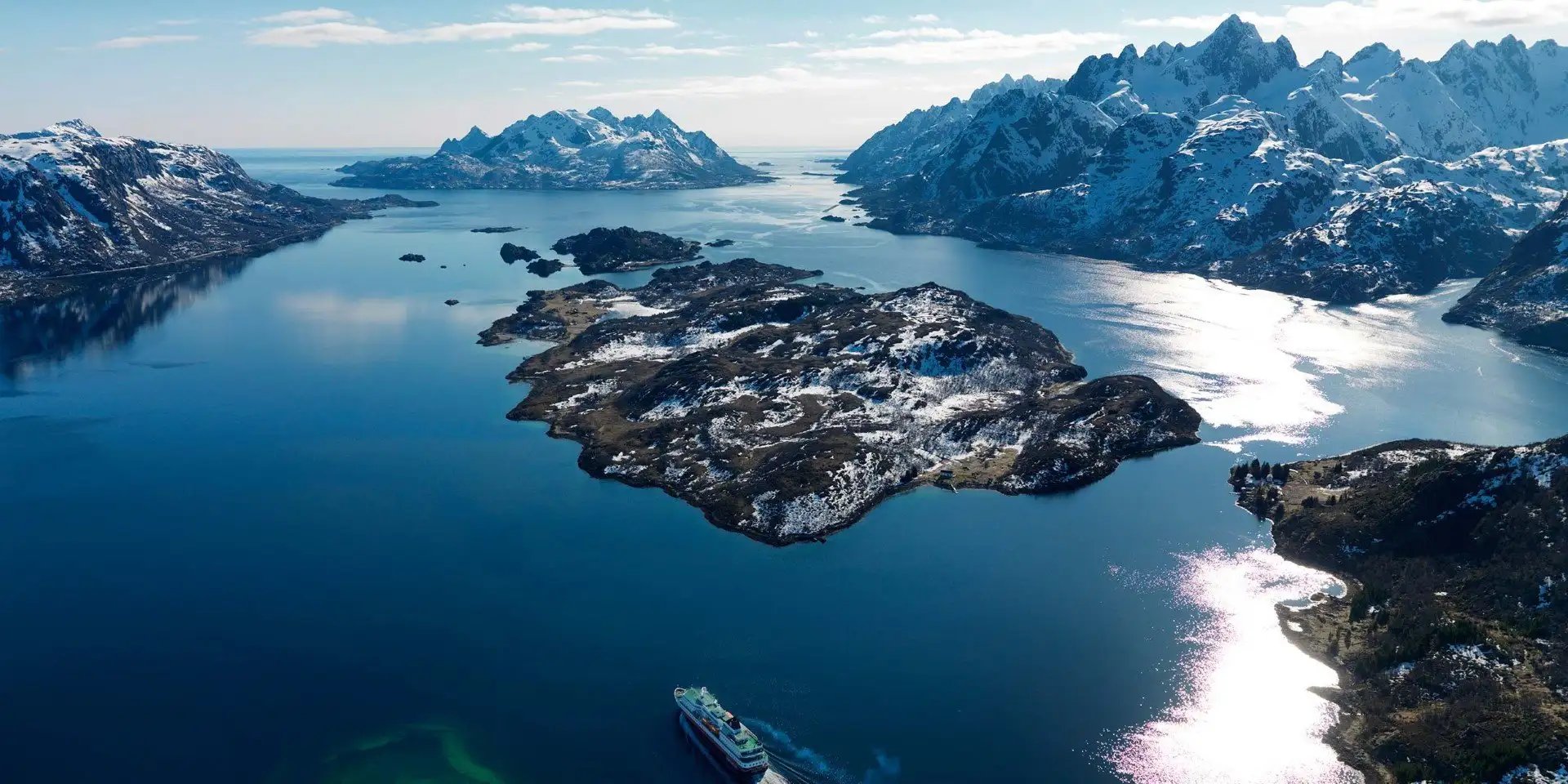
As you prepare for your cruise along the Norwegian coast, you may be combing the internet for information about the country you're about to visit. It's understandable to be excited, but we thought it would be fun to share a few fascinating facts about Norway that you may not have come across yet.
1. Kirkenes is as far east as Cairo.
The town of Kirkenes, in far northeastern Norway, is surprisingly far east. Its location is roughly on the same longitude as Cairo, Egypt, a fun geographical oddity to keep in mind as you travel along Norway's northern coast.
2. Norway is home to Europe's largest mountain plateau.
The Hardangervidda Plateau is the largest mountain plateau in Europe. It is also home to Europe's largest population of wild reindeer, which still roam across its vast mountain landscape.
3. Norse explorers reached North America around 1,000 years ago.
Leif Eriksson and other Norse explorers reached North America around the year 1,000, centuries before Christopher Columbus. Archaeological evidence at L'Anse aux Meadows in Newfoundland, Canada, confirms that Norse settlers established a base there around this time.
4. Vikings played a major role in the early history of Dublin.
Dublin wasn't actually founded by Norwegians, the area was settled before the Vikings arrived. However, Norse Vikings established a settlement in Dublin around 841 AD, and the city became an important center of Viking trade and influence in Ireland.
5. Norway is a powerhouse of Winter Olympic sports.
Norway has a remarkable history of success in the Winter Olympics, particularly in cross-country skiing, biathlon, and other Nordic sports. Its dominance continued at the 2026 Winter Olympics, where Norwegian cross-country skier Johannes Høsflot Klæbo added several more gold medals to his collection.
Norway also has a remarkably long history of skiing. Archaeological discoveries in the country include skis that are thousands of years old, demonstrating how deeply skiing is connected to Norwegian history and culture.
6. Almost 90% of Norway's electricity comes from hydropower.
Norway's mountainous landscape, abundant rainfall, rivers, and waterfalls make it ideally suited to hydroelectric power. Hydropower provides nearly 90% of Norway's electricity generation, making it the country's dominant source of electricity. (NVE)
7. King Harald and Queen Sonja have a remarkable love story.
The romance between King Harald V and Queen Sonja is one of Norway's best-known royal love stories. The couple dated for nine years before marrying in 1968. Sonja Haraldsen was the daughter of a clothing merchant and did not come from a royal or aristocratic family, making their eventual marriage unusual for the time.
King Olav V ultimately gave his permission for the couple to marry, and Sonja became Norway's queen when Harald ascended to the throne in 1991.
8. Norway has eight UNESCO World Heritage sites.
Norway is home to eight UNESCO World Heritage sites, including the historic Bryggen wharf in Bergen, the mining town of Røros, and the West Norwegian Fjords of Geirangerfjord and Nærøyfjord. These sites showcase everything from Norway's Viking-era heritage and traditional architecture to its spectacular natural landscapes. (UNESCO World Heritage Center)
For cruise passengers, the UNESCO-listed Geirangerfjord and Nærøyfjord are particularly fascinating. UNESCO describes them as classic examples of fjord landscapes and among the world's most scenically outstanding natural areas. (UNESCO World Heritage Center)
9. Norway helped bring salmon sushi to Japan.
Salmon may seem like an obvious sushi ingredient today, but raw salmon wasn't traditionally a major part of Japanese sushi. During the 1980s, Norwegian seafood exporters launched an effort known as Project Japan to introduce Norwegian Atlantic salmon to the Japanese market.
The campaign helped establish salmon as a popular ingredient for sushi and sashimi in Japan and eventually around the world.
10. More than one-third of Norway's population has higher education.
Norway has a highly educated population. According to Statistics Norway, 38.3% of people aged 16 and older had completed higher education in 2025. Another 3.4% had completed tertiary vocational education. (SSB)
Rather than simply calling Norway the "best-educated country in Europe," these current figures give a more accurate picture of the country's high level of educational attainment.
11. Norway has a generous parental-leave system.
Norway is well known for policies designed to help parents balance work and family life. Eligible parents can receive parental benefits for 49 weeks at 100% compensation or 59 weeks at 80% compensation, with portions of the leave reserved for each parent and a shared period that can be divided between them. (Arbeid og Velferd)
The exact rules and eligibility requirements can change, so current Norwegian regulations should always be checked for the latest information.
12. Norway's spectacular fjords were carved by glaciers.
Norway's famous fjords weren't simply formed by rivers or erosion, they were carved over thousands of years by massive glaciers. As the glaciers moved through the landscape, they cut deep, U-shaped valleys into the mountains. When the ice retreated, seawater flooded the valleys, creating the dramatic fjords we see today.
The Geirangerfjord and Nærøyfjord are particularly spectacular examples. Their steep rock walls rise as much as 4,600 ft (1,400 m) above the water in places, while the fjords themselves extend hundreds of feet below sea level. (UNESCO World Heritage Center)
13. Norway has a strong reading culture.
Norway has a long and vibrant literary tradition, from medieval Norse sagas to contemporary Norwegian authors. Reading remains an important part of Norwegian culture, and the country's publishing industry produces thousands of new titles each year.
So, if you enjoy reading while traveling, consider bringing along a Norwegian novel (or an English translation of a classic Norwegian work) to accompany your cruise.
14. Svalbard is one of the world's northernmost inhabited places.
Far above mainland Norway lies the Arctic archipelago of Svalbard. Its largest settlement, Longyearbyen, is one of the world's northernmost permanent settlements.
Svalbard is a dramatically different side of Norway, with glaciers, snow-covered mountains, Arctic wildlife, and vast stretches of wilderness. The archipelago is home to species including polar bears, Arctic foxes, Svalbard reindeer, seals, and numerous seabirds. Svalbard is also on UNESCO's Tentative List for potential future World Heritage status. (UNESCO World Heritage Center)
From Viking history and royal romance to world-class winter sports, renewable energy, UNESCO-listed fjords, and Arctic wilderness, Norway has plenty of fascinating stories waiting to be discovered. We hope these facts give you an even greater appreciation for the country, and make you even more excited for your Norwegian cruise.