Itinerary

The Coastal Express – South

The southbound leg on our classic coastal voyage, exploring beautiful archipelagos & fjordlands

Day 1

Kirkenes

All Aboard!

Setting out from Kirkenes, where cultures, histories and the coastline converge.

Welcome to Kirkenes, where our journey south begins. A frontier town located close to the border, Kirkenes is positioned at the crossroads of Norwegian, Sámi, Finnish and Russian influences. As such, it has a fascinating history shaped by trade, diplomacy and life in the far north. If you have time in the morning before departure, why not spend some time exploring this unique town. Local museums will provide insight into the region's wartime history and multicultural heritage. During the Second World War, Kirkenes was one of the most heavily bombed places in Europe, and traces of this history remain visible throughout the area. Sailing the Barents Sea In the afternoon we sail northeast along the Varanger coast. The region reveals a striking landscape of rocky shorelines, fishing villages and wide-open skies. This is a prime area for birdlife, so have your binoculars at the ready as we pass the bird island of Hornøya. Depending on the season, this can be a prime spot to see species such as puffins, gannets, guillemots, razorbills, kittiwakes and arctic terns, while sea eagles are often spotted gliding above the cliffs year-round. Later, we call once more at Båtsfjord, where fishing vessels and their associated industry reflect the enduring importance of the seafood sector in northern Norway. Life here remains closely connected to the sea, much as it has for generations. After Båtsfjord, we continue on our journey, calling next at Berlevåg.
Also stopping at:
Vardø • Båtsfjord
Read more
Day 2

Hammerfest

From the Top of Europe

Explore Arctic communities from Hammerfest to Tromsø along Norway's northern coast.

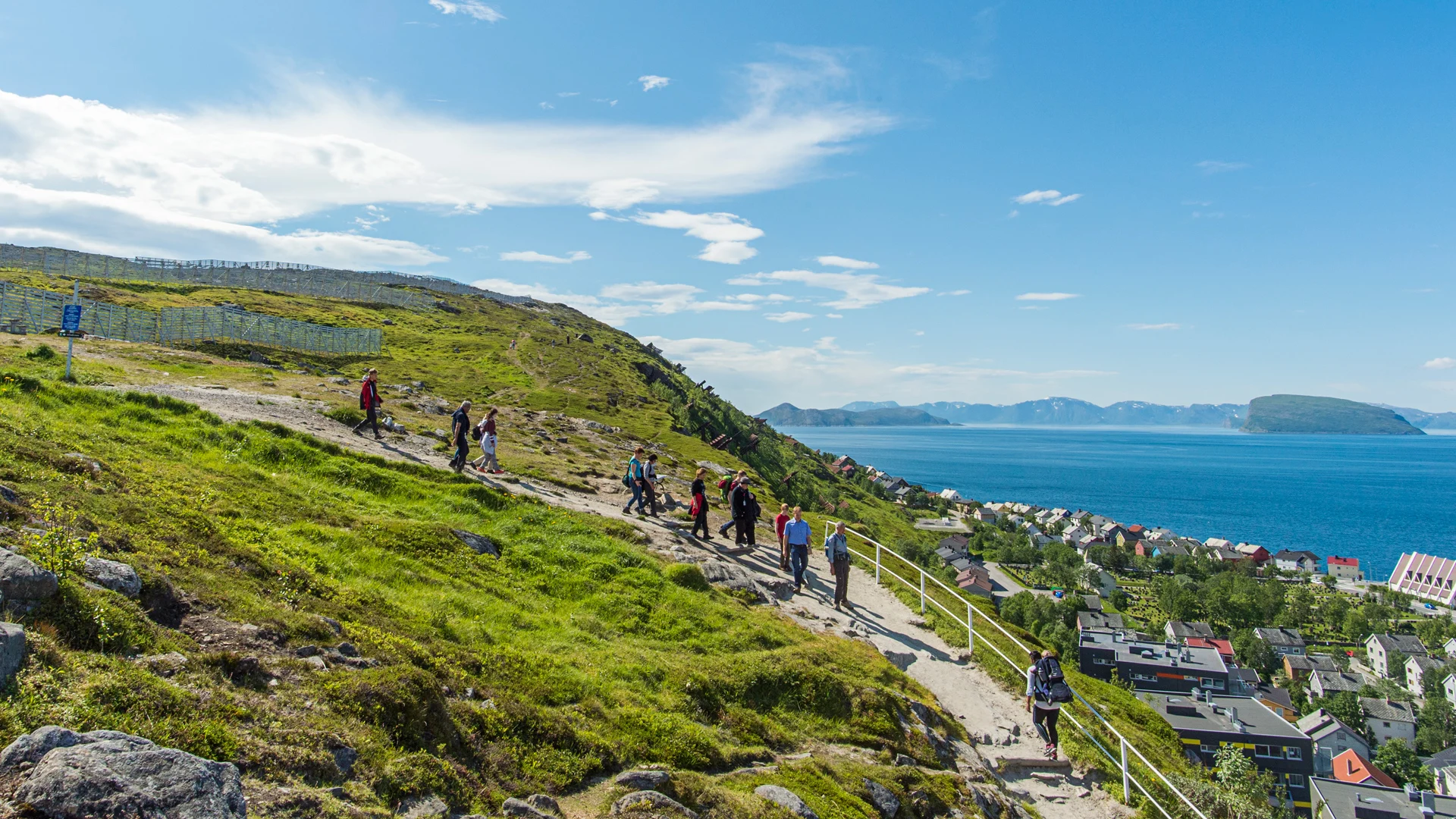
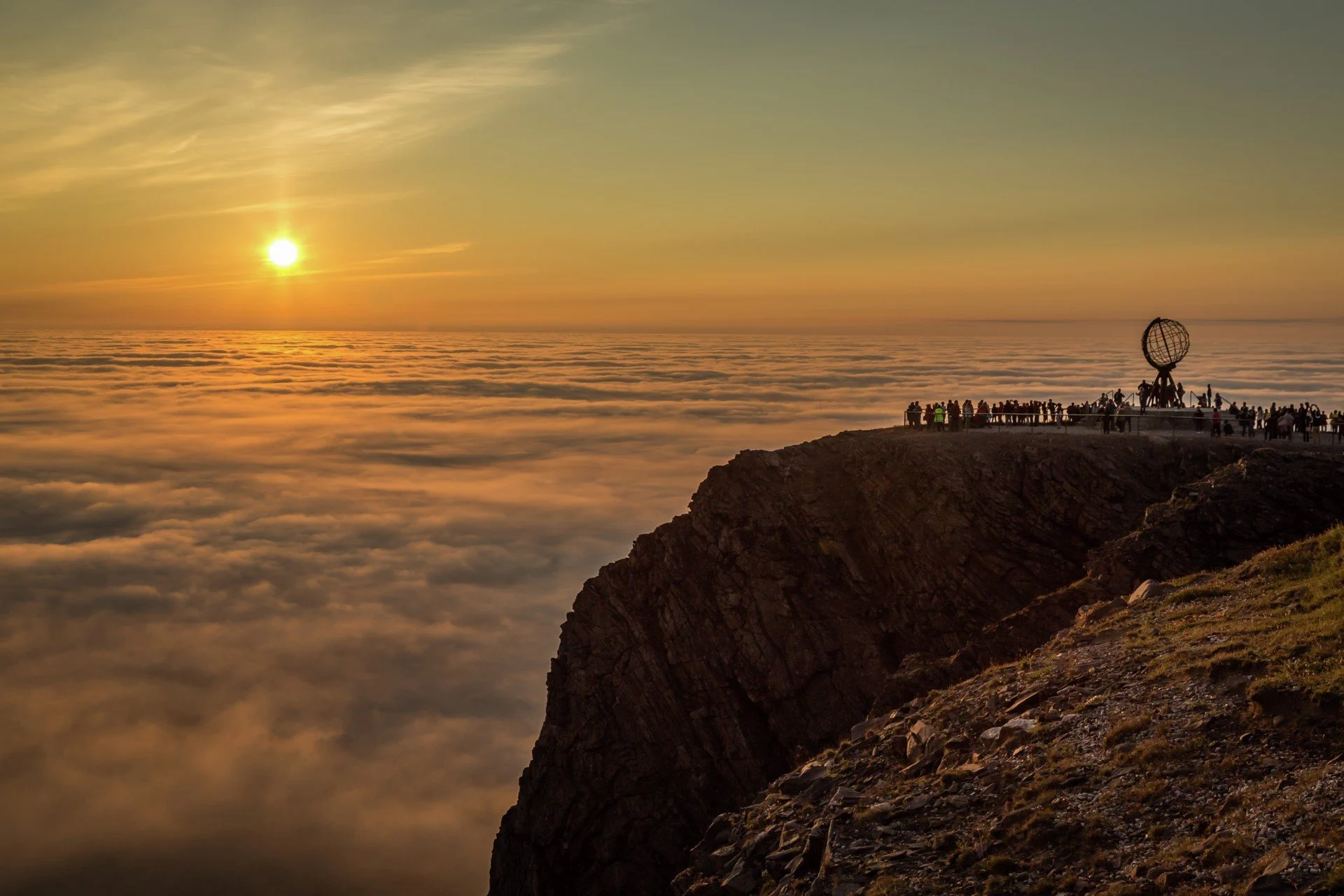
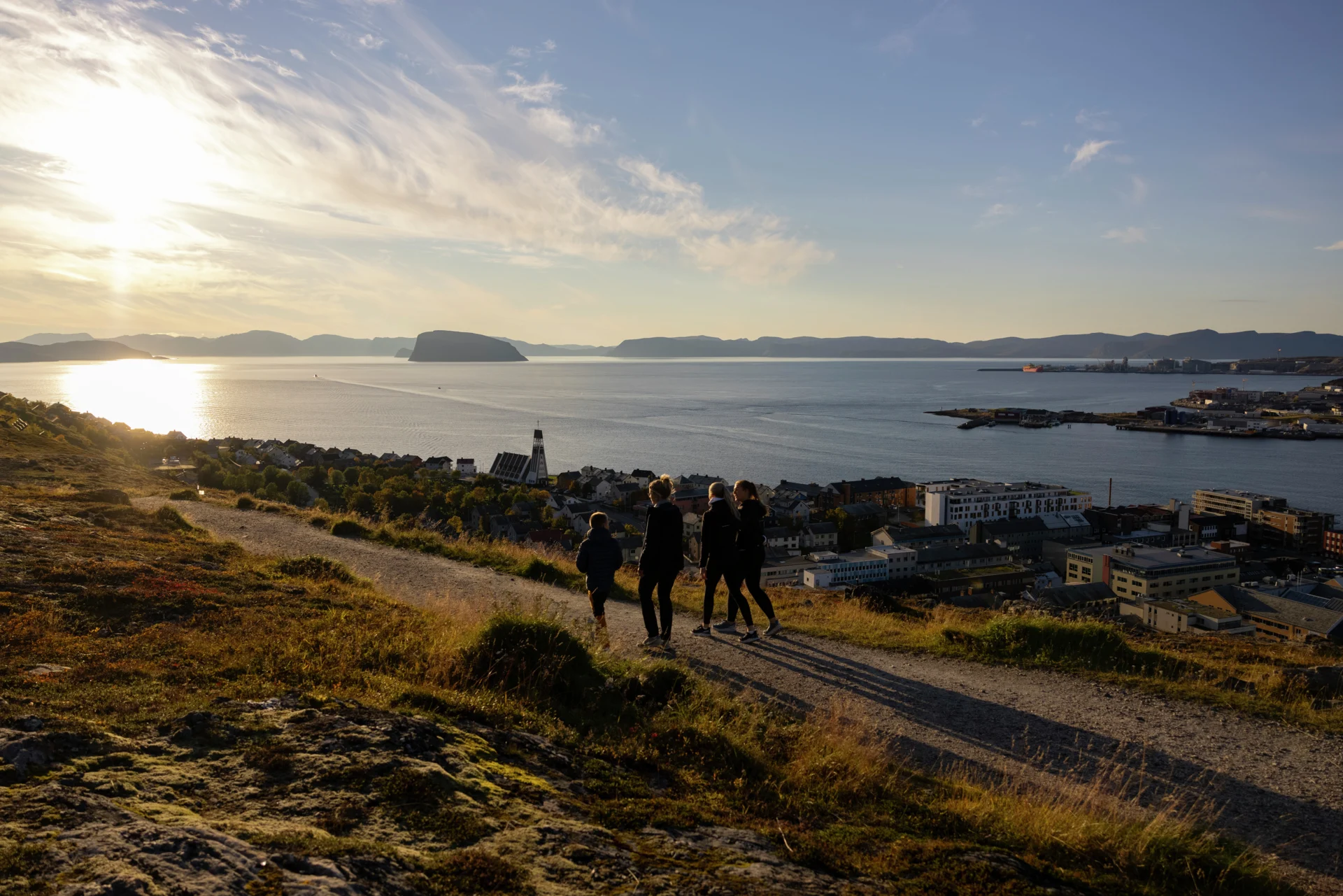
Long before breakfast, we call at Mehamn and Kjøllefjord, two fishing communities on the edge of the Barents Sea. By early morning, we arrive in Honningsvåg, where you will get a chance to visit the North Cape, if you haven’t already done so on the northern leg of the journey. Later Havøysund, passing through a landscape where wide tundra plateaus meet rugged coastlines.  Along the coast of Finnmark  This stretch of coastline offers a fascinating glimpse into life in Norway's far north. Fishing remains at the heart of many communities here, just as it has for centuries. As we sail south, keep watch for seabirds wheeling overhead and, in the warmer months, perhaps reindeer grazing on the open landscapes beyond the shore.  Hammerfest  By late morning, we reach Hammerfest. Long associated with Arctic exploration, hunting and fishing, Hammerfest occupies an important place in the history of the far north. Today, it's also a prime hub of Norway's energy industry, giving it a bustling, modern port atmosphere.  You'll have time to explore independently and discover some of the town's highlights. The Meridian Column, recognised by UNESCO, commemorates the Struve Geodetic Arc, an ambitious scientific project that helped measure the size and shape of the planet. Nearby, the Polar Bear Society celebrates the town's Arctic heritage and offers an opportunity to browse local crafts.  For those seeking a little exercise (conditions permitting), a walk up Mount Salen rewards you with sweeping views across the town, surrounding islands and the waters of the coast.  Through mountain and fjord landscapes  In the afternoon, we continue to Øksfjord, a small community surrounded by dramatic mountain scenery. The landscape gradually changes as we leave the open expanses of Finnmark behind and enter regions where steep peaks once again dominate the horizon.  Later, we arrive at Skjervøy, an island community with a long and proud fishing tradition. As the waters cool through autumn and winter, herring begin to gather around Skjervøy, drawing orcas and humpback whales that follow them. These nutrient-rich seas support an abundance of marine life year-round.  Towards Tromsø  As evening progresses, we continue south through some of northern Norway's most spectacular coastal scenery. Off to the east, the jagged peaks of the Lyngen Alps rise dramatically above the fjords.   Approaching Tromsø late in the evening, the city appears as a scattering of lights beneath the mountains, creating one of the most atmospheric approaches of the voyage. 
Also stopping at:
Tromsø
Read more
Day 3

Svolvær

High Peaks and Idyllic Islands

Explore Lofoten and Vesterålen, sail into Trollfjord and visit the birthplace of Hurtigruten.

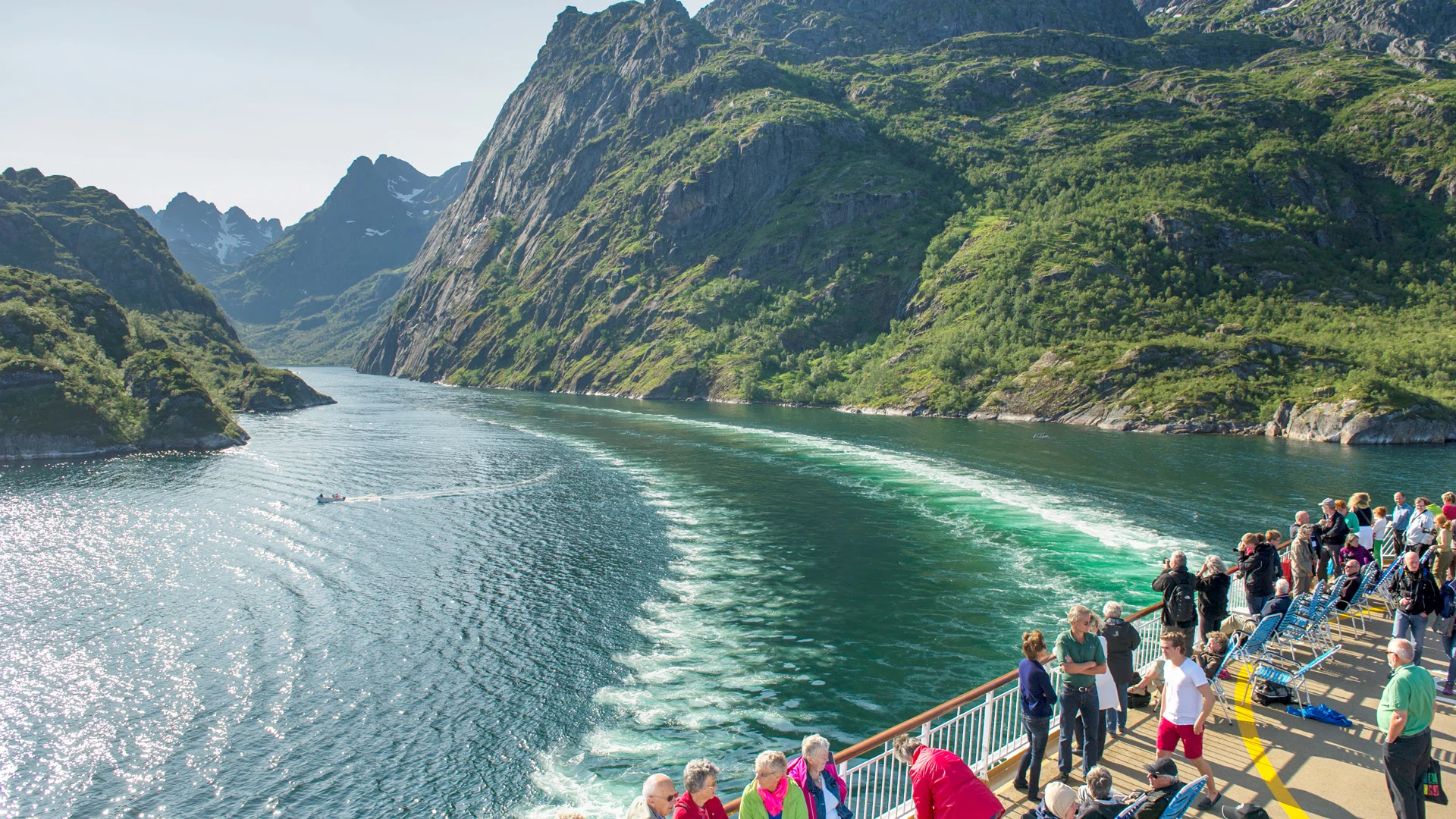
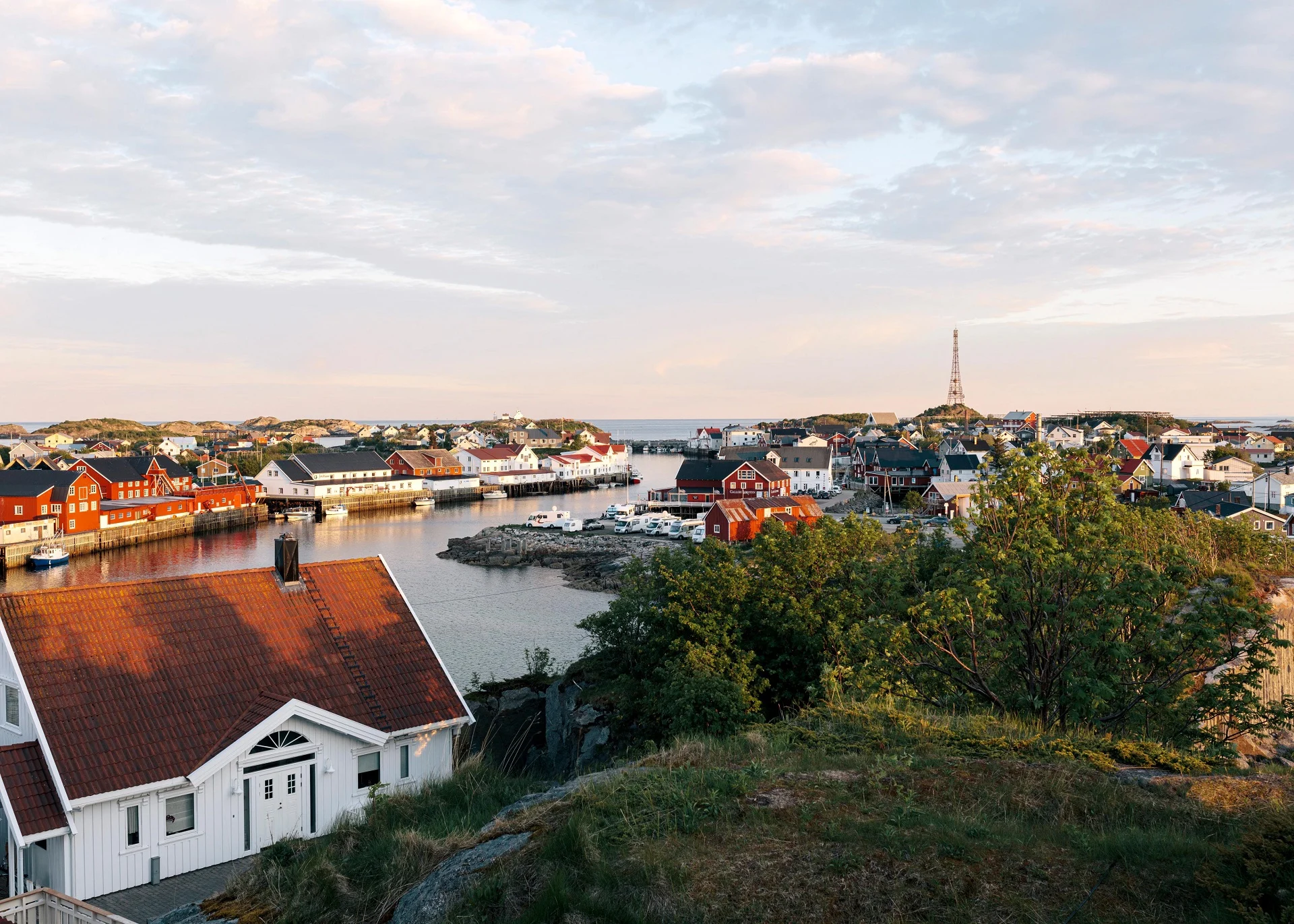
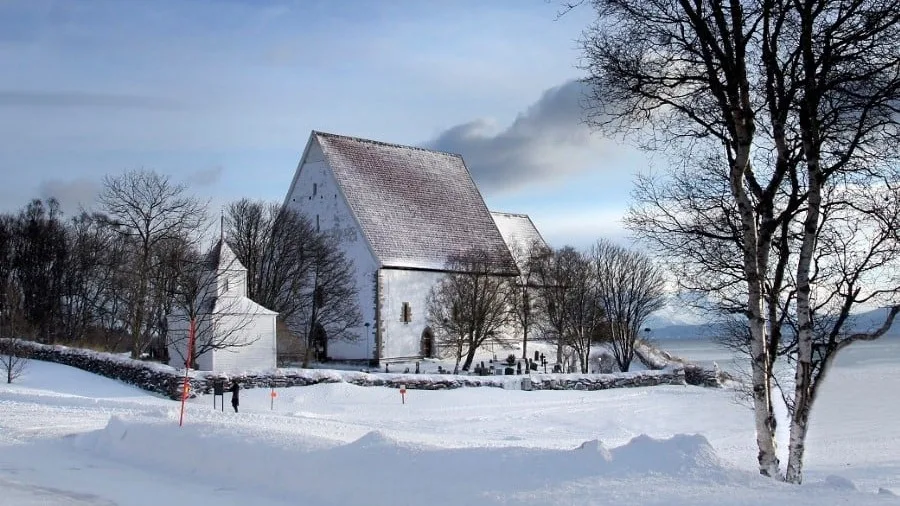
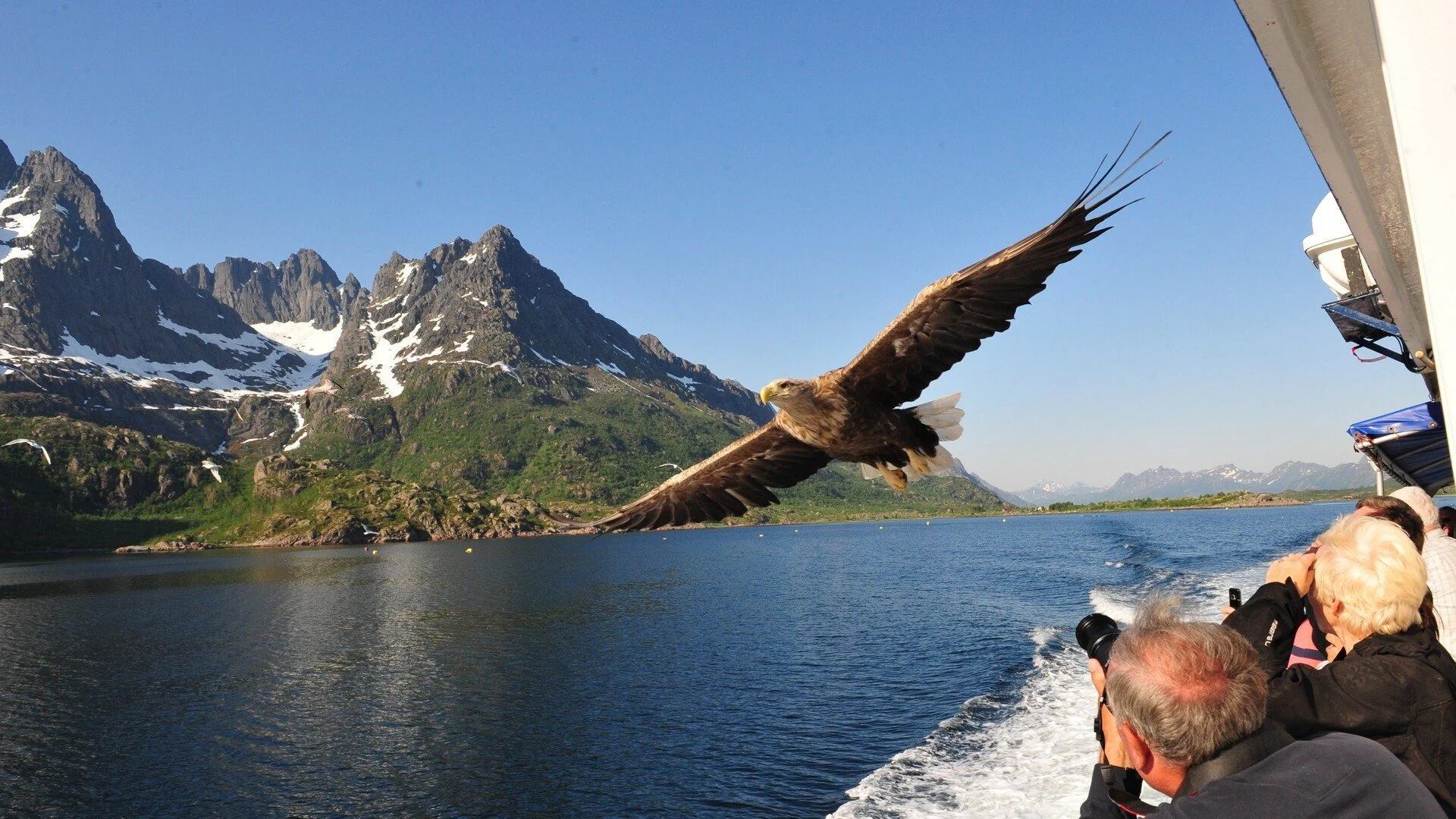
Today's voyage takes us through the spectacular archipelagos of Vesterålen and Lofoten.  Harstad and northern heritage  After an early call at Finnsnes, we continue to Harstad, located on Norway's largest island, Hinnøya. Just beyond the town stands Trondenes Church, the world's northernmost medieval stone church. Dating from the 13th century, it serves as a reminder of the region's long history as a centre for trade, faith and coastal life.  Further west, we call briefly at Risøyhamn, the smallest port on the route, before arriving in Sortland, sometimes called the “Blue City” thanks to its distinctive colour scheme. As we continue through Vesterålen, the landscape begins to change. Rolling hills give way to sharper peaks, and the mountains become increasingly dramatic as we approach Lofoten.  Stokmarknes: our birthplace  In the afternoon, we arrive in Stokmarknes, the birthplace of Hurtigruten’s Coastal Express. It was here in 1893 that Captain Richard With launched a service that would transform travel and communication along the Norwegian coast.  You'll have time to visit the remarkable Hurtigrutemuseet, where the history of Hurtigruten comes to life through exhibitions, stories and the beautifully preserved MS Finnmarken, built in 1956. Housed within a striking glass structure resembling a ship in a bottle, the museum offers fascinating insight into how coastal communities have depended on these voyages for more than a century.  Entering Trollfjord  Leaving Stokmarknes, we sail through the narrow Raftsund strait. Weather, conditions and time of year permitting, the Captain may take the opportunity to navigate into the spectacular Trollfjord, one of the most dramatic waterways in Norway.  Just two kilometres long and barely 100 metres wide at its entrance, Trollfjord is surrounded by towering mountain walls that rise almost vertically from the water. From the deck, it can feel as though the cliffs are close enough to touch. To leave the fjord, the ship performs a remarkable turning manoeuvre before sailing back into the Raftsund.  Keep watch overhead for sea eagles in this area, which are frequently spotted gliding between the peaks and searching the waters below.  Svolvær and Lofoten  By evening, we arrive in Svolvær, the largest town in the Lofoten Islands. Surrounded by steep mountains and sheltered harbours, it has long been a centre for fishing, trade and maritime culture. Look towards the distinctive twin-peaked formation known as the Svolvær Goat, one of the region's most famous landmarks.    As we continue to Stamsund, traditional fishing villages and red-painted rorbuer line the shore. Beyond them rises the magnificent Lofoten Wall, a seemingly endless chain of granite peaks stretching across the horizon.  
Also stopping at:
Harstad • Sortland • Stokmarknes
Read more
Day 4

Brønnøysund

A Landscape of Trolls

Sail into a panorama of mountains and islands along the spectacular Helgeland Coast.

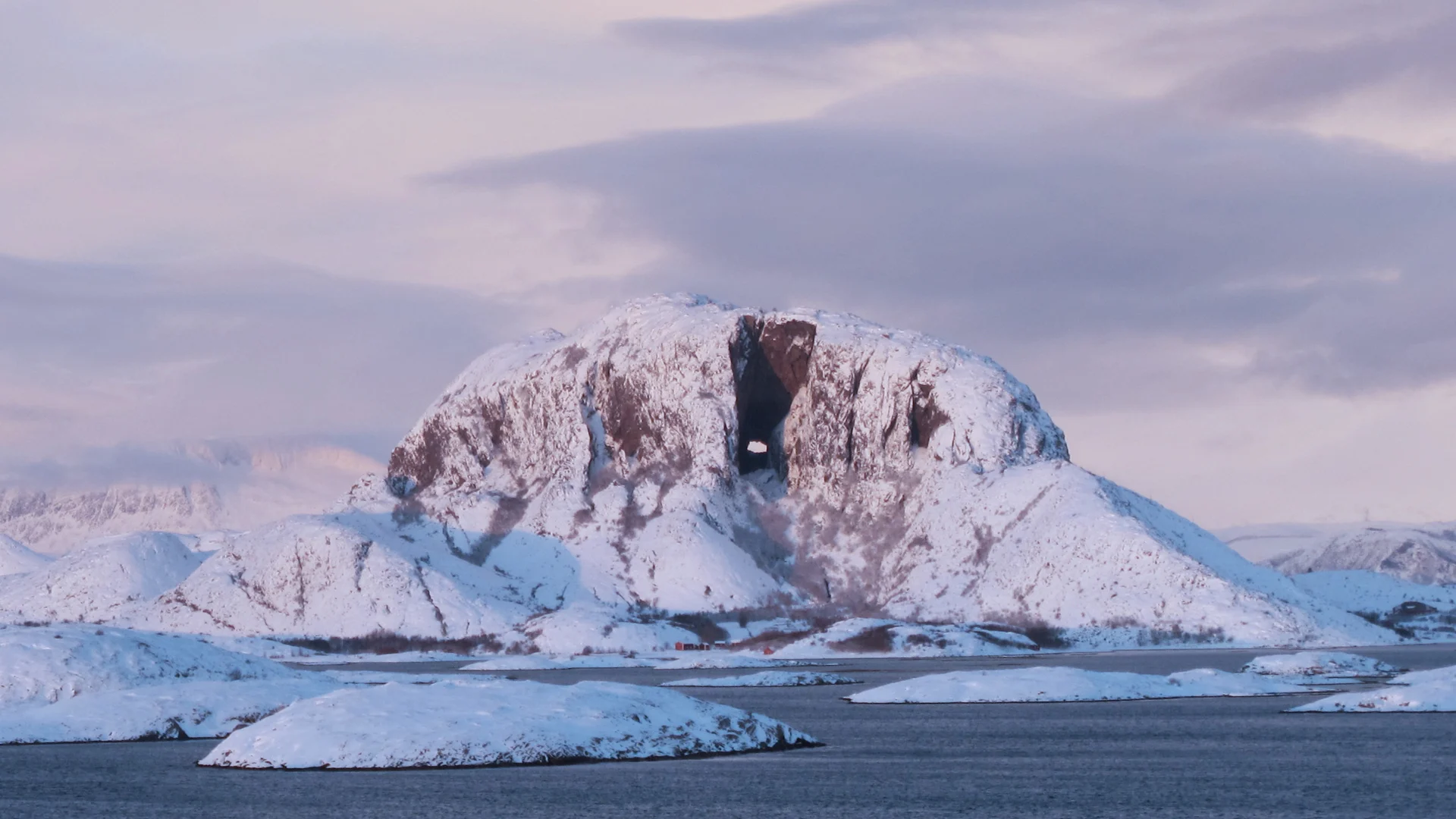
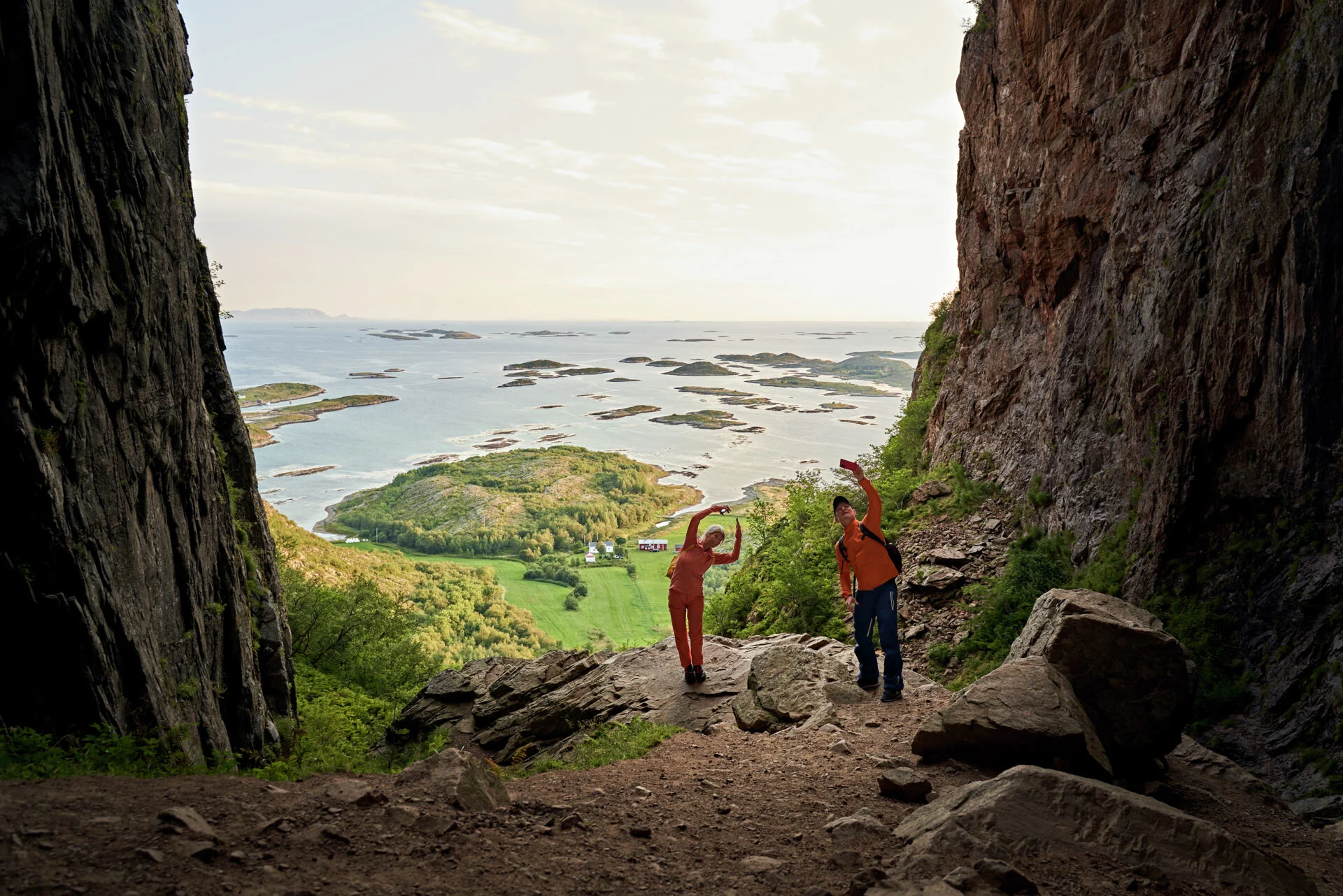
During the early hours, we call at Bodø before continuing south to Ørnes. This morning marks another memorable milestone as we cross the Arctic Circle, leaving the far north behind and returning to the southern reaches of Arctic Norway.   Along the coast of Helgeland  As we continue south, the scenery begins to change once again. Thousands of islands, skerries and sheltered waterways characterise the Helgeland Coast. The route through this intricate coastal seascape has provided safe passage for seafarers for centuries.  Following a brief call at Nesna, we arrive in Sandnessjøen, gateway to a region rich in both natural beauty and folklore.  The Seven Sisters  Rising dramatically are the peaks of the Seven Sisters, one of Norway's most recognisable mountain ranges. According to local legend, these seven mountains were once troll princesses fleeing an unwanted suitor. Caught by the rising sun, they were turned to stone, remaining forever as guardians of the coast.  Whether or not this is to be taken literally, there is something undeniably magical about seeing these peaks emerge above the islands and fjords. The mountains form part of a landscape where nature and mythology are deeply intertwined.  Brønnøysund  By mid-afternoon, we arrive in Brønnøysund, a quiet coastal town set amid islands, mountains and sheltered waterways. With more than two hours ashore, there is time to explore independently.  Why not take a stroll along the marina and waterfront, where fishing vessels and pleasure craft sit side by side. In the town centre, you'll find Brønnøy Church, an elegant Neo-Gothic stone church dating from 1870 and one of the area's most notable landmarks. Cafés, local shops and quiet streets offer a glimpse of everyday life in this peaceful coastal community.   Torghatten  Later in the day, we pass one of Norway's most unusual landmarks. Torghatten Mountain, sitting on a small island, rises from the sea and features a remarkable hole that pierces straight through its centre. The Captain will manoeuvre the ship so that we can get a view right through the centre of the hole.  Geologists explain the formation as the result of thousands of years of erosion, but local folklore offers a more colourful explanation involving trolls, arrows and dramatic pursuits across the landscape. Ask the Expedition Team about the legend and decide for yourself which version you prefer.   Through the Vikna archipelago  In the evening, we continue to Rørvik, nestled within the island-rich Vikna archipelago. For centuries, skilled sailors have navigated these protected waters, weaving between islands that seem to stretch endlessly towards the horizon. 
Also stopping at:
Bodø • Sandnessjøen • Rørvik
Read more
Day 5

Trondheim

Coastal Communities and Klippfisk

Historic cities, island communities and a special food heritage.

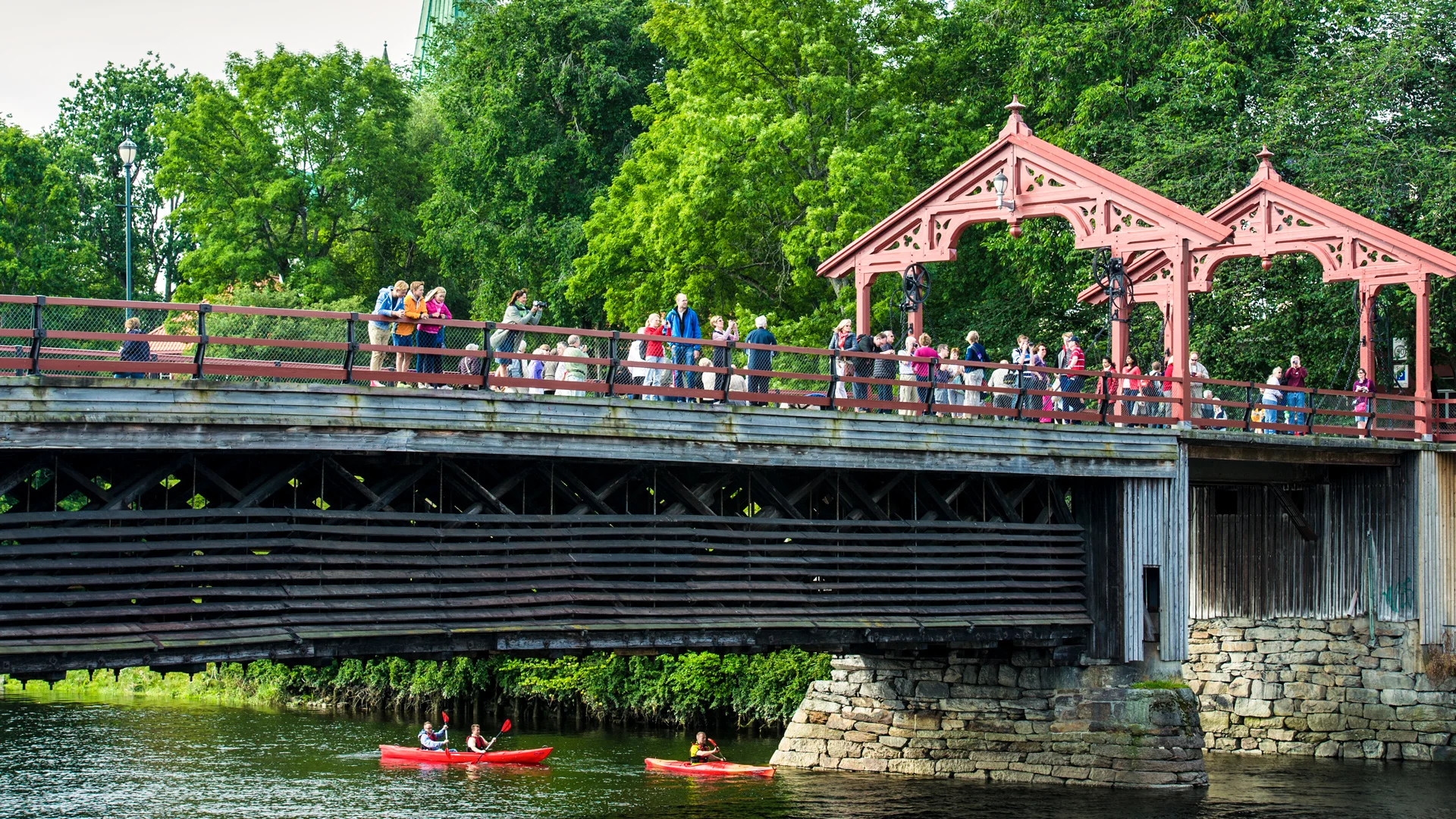
This morning, we spend several hours in Trondheim, one of Norway's most historic and characterful cities.  If you didn't explore Trondheim on the northbound leg, this is the perfect opportunity to discover why it was once Norway's Viking capital. A look at the outside of Nidaros Cathedral is highly recommended. Built over the burial site of St Olav, Norway's patron saint, it remains the country's most important medieval building. Nearby, the elegant Gamle Bybro bridge leads into the charming district of Bakklandet, where colourful wooden houses line the riverbanks and cosy cafés begin to welcome the morning's first visitors.  If this is your second visit, then why not experience a different side of the city. Enjoy a leisurely breakfast or coffee in Bakklandet, browse independent shops before they become busy, or take a walk up to Kristiansten Fort for panoramic views across the city and Trondheimsfjord. The nearby riverside paths also offer a peaceful way to start the day while watching Trondheim gradually come to life.  Island-dotted waters  Back on board, we continue west through the broad Trondheimsfjord before returning to the open coast. Throughout the day, the scenery shifts between fertile farmland, low-lying islands and small coastal communities.  This is a region where fishing, farming and maritime trade have shaped daily life for generations. Many of the settlements visible from the ship can only truly be appreciated from the water, offering a perspective land travellers miss out on.  Kristiansund and the klippfisk trade  By late afternoon, we arrive in Kristiansund, one of Norway's most important fishing ports and a town built across four islands linked by bridges and ferries.  Kristiansund is particularly famous for klippfisk, salted cod traditionally dried on exposed coastal rocks. For centuries, this preserved fish was exported across Europe and became especially important in Portugal and Spain – bacalao – and remains a key ingredient in many traditional dishes.  Take a stroll through the harbour area, where colourful waterfront buildings reflect the town's long relationship with the sea. Check out the statues of the klippfiskkjerringa and sildegutten, or ‘the klippfisk woman’ and ‘herring boy’, erected to honour the women and children from times past who worked in the local fishing trade, thus helping to build the city of today.  Molde, the City of Roses  In the evening, we arrive in Molde, beautifully situated on the shores of the Romsdalsfjord. Known as the “City of Roses”, Molde enjoys a mild climate perfectly suited to growing roses, with thousands of varieties flourishing across the town for much of the year.  Across the fjord rises the famous Molde Panorama, a remarkable chain of more than 200 mountain peaks forming one of Norway's most celebrated views. On clear evenings, the mountains seem to stretch endlessly across the horizon, creating a spectacular backdrop as the ship continues south along the coast. 
Also stopping at:
Kristiansund • Molde
Read more
Day 6

Bergen

Until Next Time

Sail past fjords, islands and lighthouses as the voyage comes to an end in Bergen.

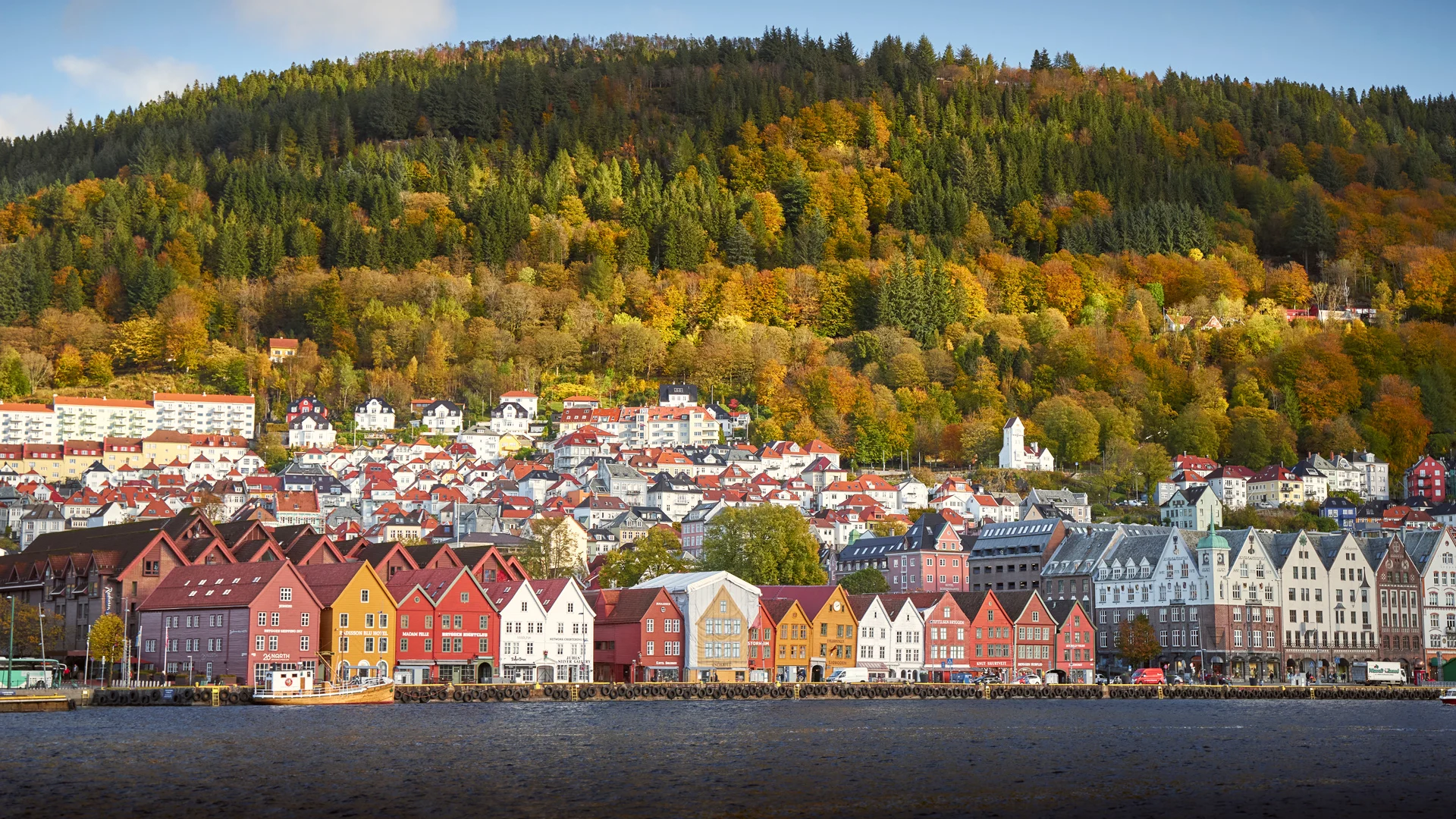
During the night, we call at Ålesund and Torvik before continuing south through the island-dotted waters of western Norway. There is just enough time for a quick stroll around the harbour in Ålesund, for those who are good at staying up late. A morning of fjords and islands As dawn breaks, we arrive at Måløy, one of Norway's most important fishing ports. From here, the voyage continues through landscapes shaped by glaciers, mountains and the sea. Keep watch for views towards the Nordfjord, one of Norway's longest and most beautiful fjords. Stretching deep inland beneath towering mountains, the fjord leads towards the immense Jostedalsbreen, the largest glacier on mainland Europe. Though the glacier itself lies far inland, its influence can be seen throughout the surrounding landscape, carved by ice over thousands of years. Later in the morning, we call briefly at Florø, Norway's westernmost town. Built on islands exposed to the sea, Florø remains closely connected to fishing, shipping and offshore industries. The harbour and marina offer another glimpse into everyday coastal life before we continue south. Along the western coast Leaving Florø, we pass the photogenic Stabben Lighthouse, perched on a tiny rocky outcrop at the edge of the sea. One of Norway's most distinctive lighthouses, it has guided sailors safely through these waters for more than a century. Soon afterwards, we cross the mouth of the Sognefjord, Norway's longest and deepest fjord. Extending more than 200 kilometres inland, this vast waterway cuts deep into the Norwegian landscape. As the day progresses, the scenery gradually becomes gentler and with more signs of settlement. Islands, skerries and sheltered channels accompany us southward, offering a final reminder of why this journey is sometimes called “the world’s most beautiful voyage.” Welcome to Bergen In the afternoon, the ship makes its final approach to Bergen via the Hjeltefjord. Colourful houses begin to appear along the shoreline as we navigate through the last islands of the voyage. Whether you've travelled the full Coastal Express route or joined us for only part of the journey, you've experienced some of Norway's most remarkable landscapes, islands and communities. Along the way, the coast has revealed its many faces: vibrant cities and remote fishing villages, deep fjords and open sea, Arctic landscapes and fertile farmland. As we arrive in Bergen, it’s time to say farewell to the ship, crew and fellow travellers. But the journey need not end here. Whether you choose to spend more time exploring Bergen, venture further into the fjords, or begin planning your next coastal voyage, we hope the memories of Norway's coast will remain with you long after you step ashore. Until next time.
Also stopping at:
Ålesund
Read more