Guest Favourite
Bergen – Kirkenes – Bergen (Roundtrip)
The Coastal Express
The original Norwegian coastal voyage – connecting fjords, towns & people since 1893
- Regular departures
- 12 days
- 34 Ports
- Full board (breakfast, lunch, dinner)
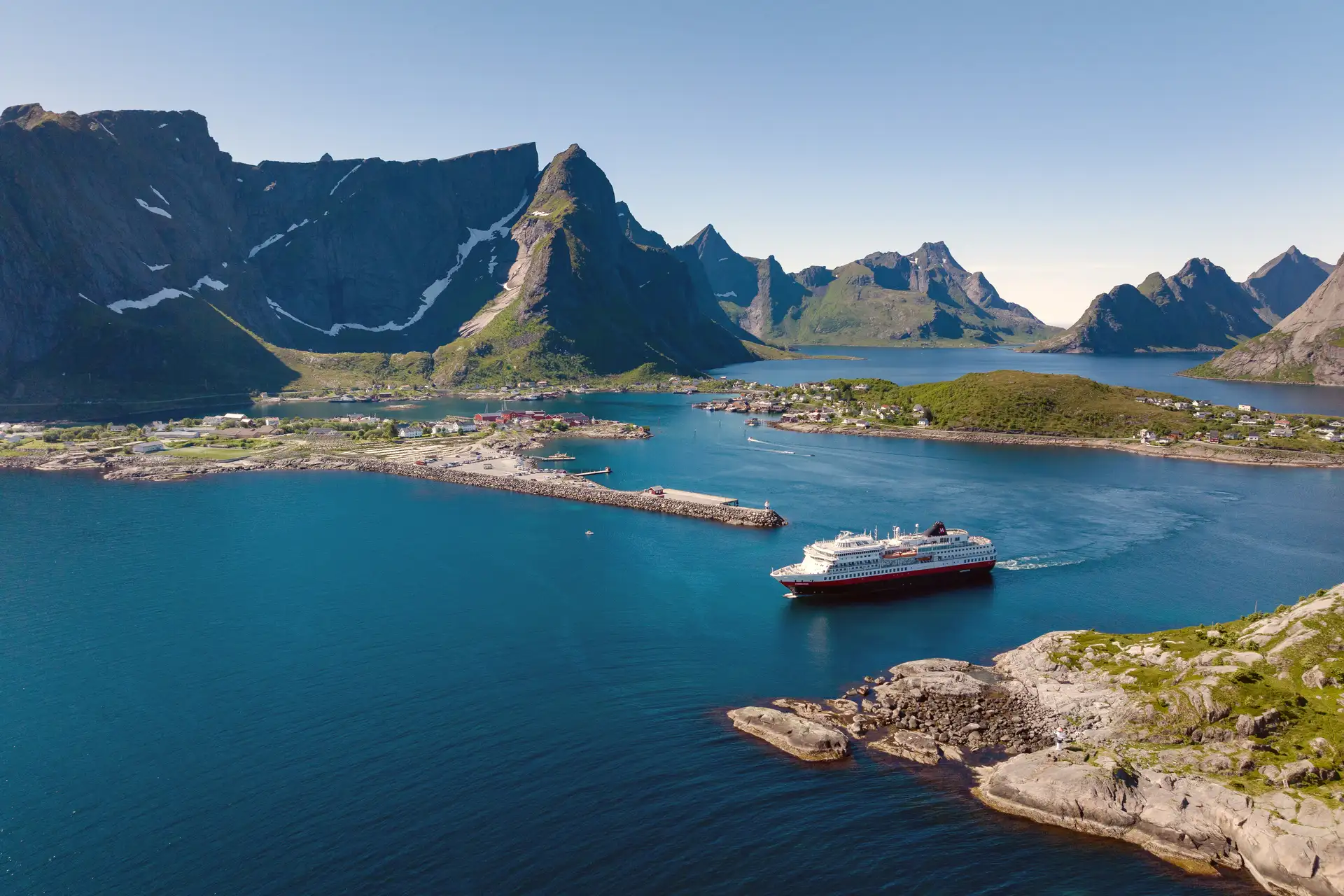
With jagged mountains rising out of the sea, small fishing towns and sandy beaches fringed by fjords, the Lofoten Islands are often billed as one of the most picturesque parts of the Norwegian coast.

Whenever you see a postcard of the Norwegian coast, with scarlet-red cabins on wooden stilts and craggy peaks rising from the shoreline, it’s probably the Lofoten Islands.
Known for Viking history, generations of fishing communities and the tørrfisk (stockfish made from dried cod) industry, Lofoten is a hub for coastal culture. But there’s also boundless nature to soak up – with hiking trails, pristine beaches and expansive sea views wherever you look.
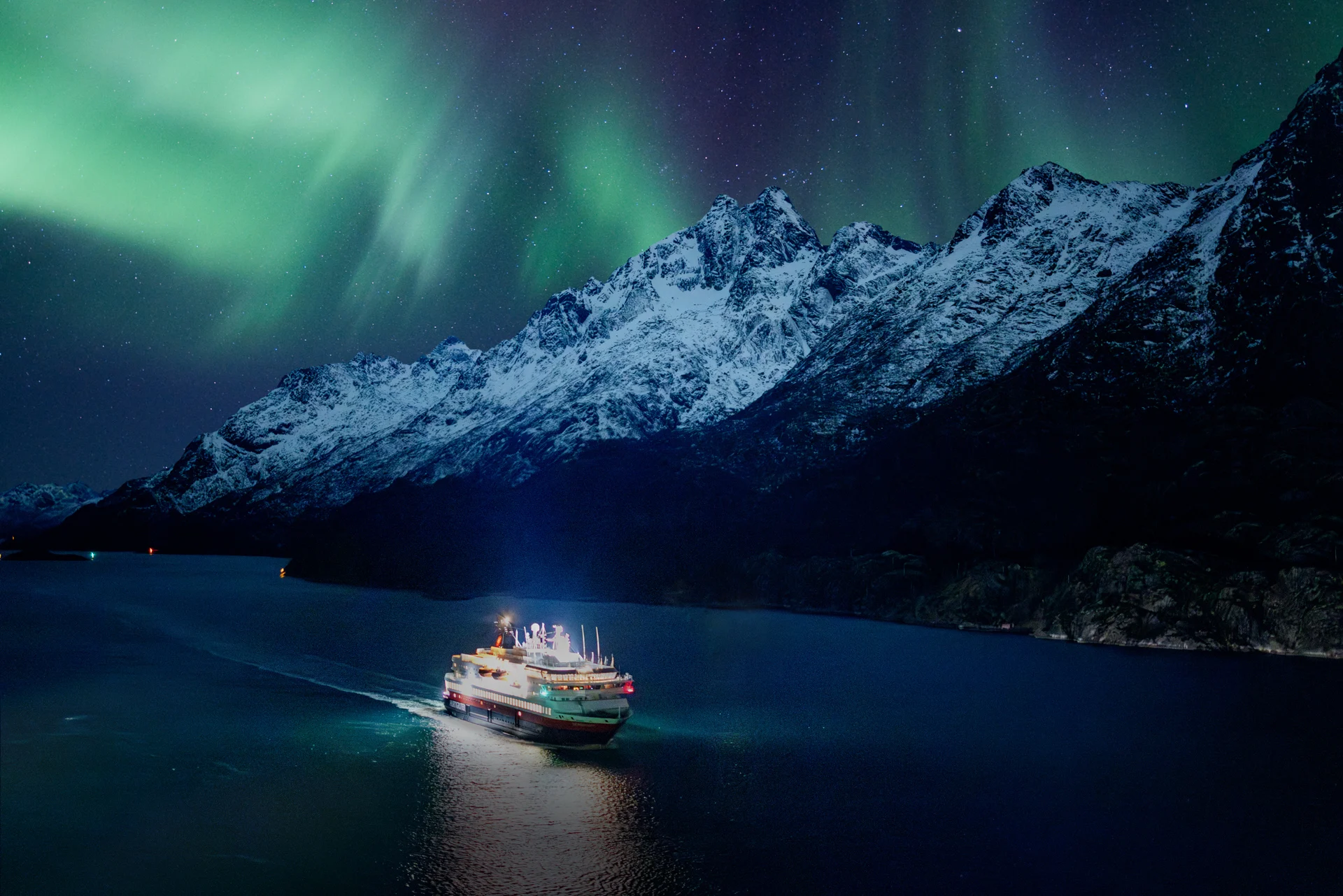
When you sail the length of Norway’s coastline with Hurtigruten, whether it’s on a Signature or Original voyage, you’ll pass through the Lofoten Islands. This is the place to go fishing for metre-long cod, witness the magic of the Northern Lights or stay in an authentic fisherman’s hut.
The Lofoten Islands are located off the northwest coast of mainland Norway. Extending for around 175 kilometres, the archipelago consists of seven main islands (along with tens of smaller islets) and is administered by the municipalities of Vågan, Vestvågøy, Flakstad, Moskenes, Værøy and little Røst, far out in the ocean to the southwest.
Despite its location above the Arctic Circle – at the same latitude as Greenland – Lofoten experiences a warmer climate thanks to the circulation of the Gulf Stream. This makes it a great destination for summer outdoor activities, such as hiking and kayaking.
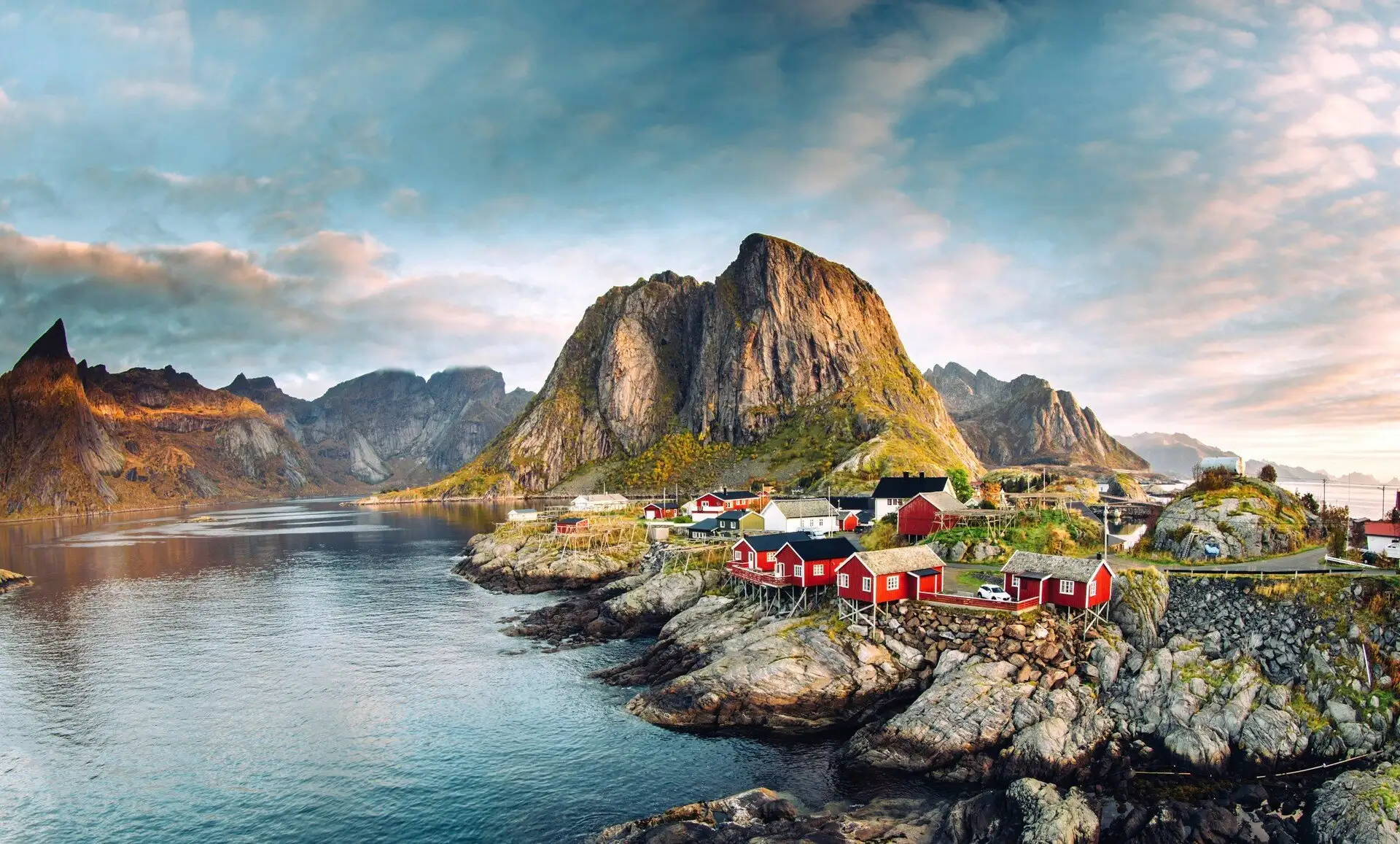
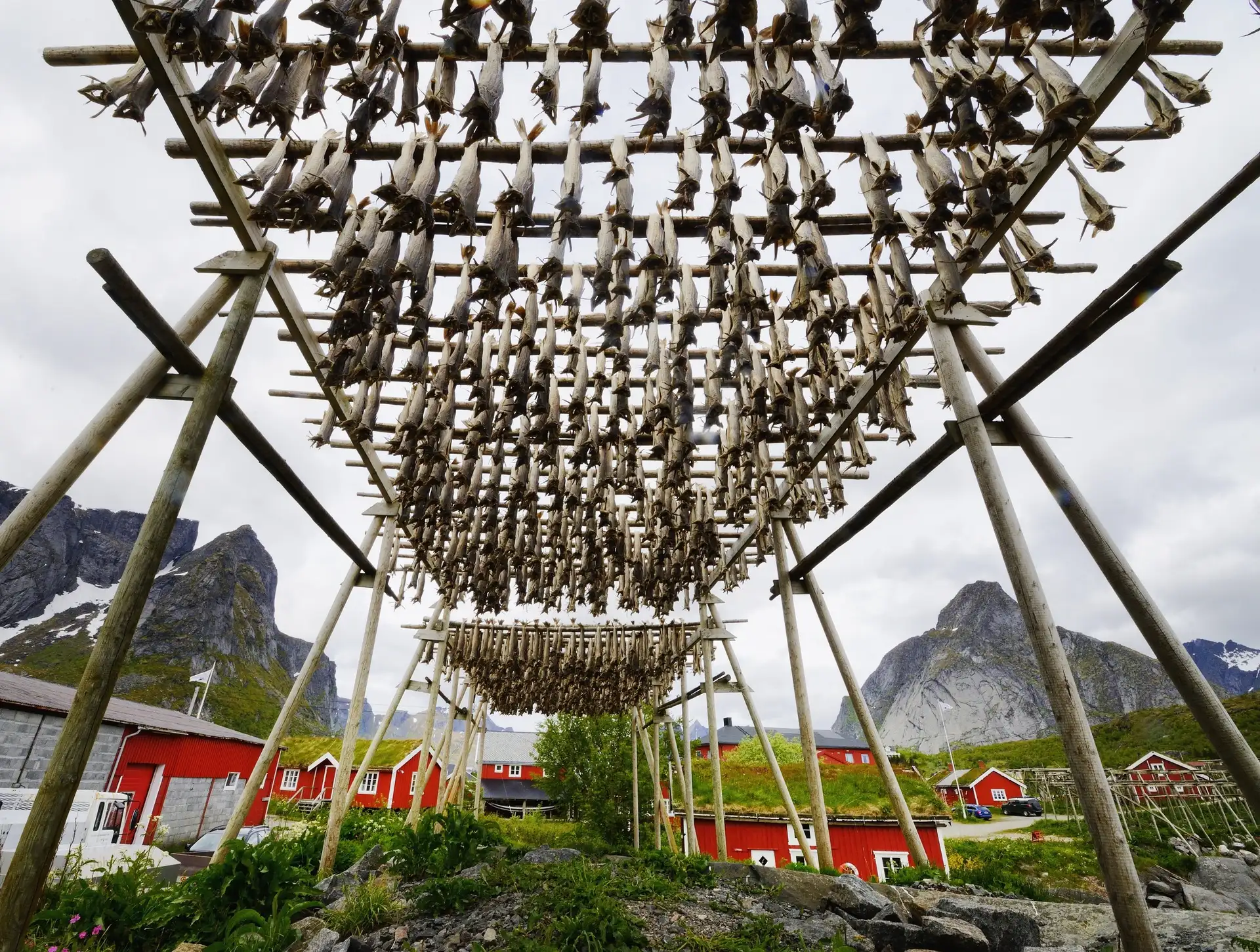
Spring in Lofoten is a time of sharp contrasts. Crisp, Arctic air meets longer days and melting snow. Expect brightening skies, crystal-clear water and racks of drying skrei (Norwegian Arctic cod). This is also a good time to experience Norwegian culture, as Lofoten residents heartily celebrate Syttende Mai (Constitution Day) on 17 May.
Our Arctic Circle Explorer and North Cape Line cruises sail to the Lofoten Islands in March and April. There are also multiple spring sailings on the Coastal Express.

The Lofoten Islands in summer offers warmer weather and endless light. Between late May and mid-July, the Midnight Sun bathes this region in a constant glow, as the sun never dips below the horizon. The extended daylight hours make it even easier to go hiking, fishing and kayaking for longer, with late-night sauna and swim sessions not uncommon.
We sail to Lofoten in the summer months on the Svalbard Line and the Coastal Express, calling at Reine, Stamsund or Svolvær depending on which voyage and direction you choose.

Autumn in Lofoten is short but beautiful. The weather becomes cooler and the scenery changes, with deep red sunsets and colourful foliage as the leaves fade. Autumn is also the perfect time for foodie experiences. Go foraging for mushrooms and berries, and try Lofotlam (Lofoten lamb) – this regional lamb is awarded Protected Geographical Indication (PGI) labelling for its unique flavour and quality.
Our North Cape Line cruise has two departures in October and the Coastal Express sails throughout autumn.
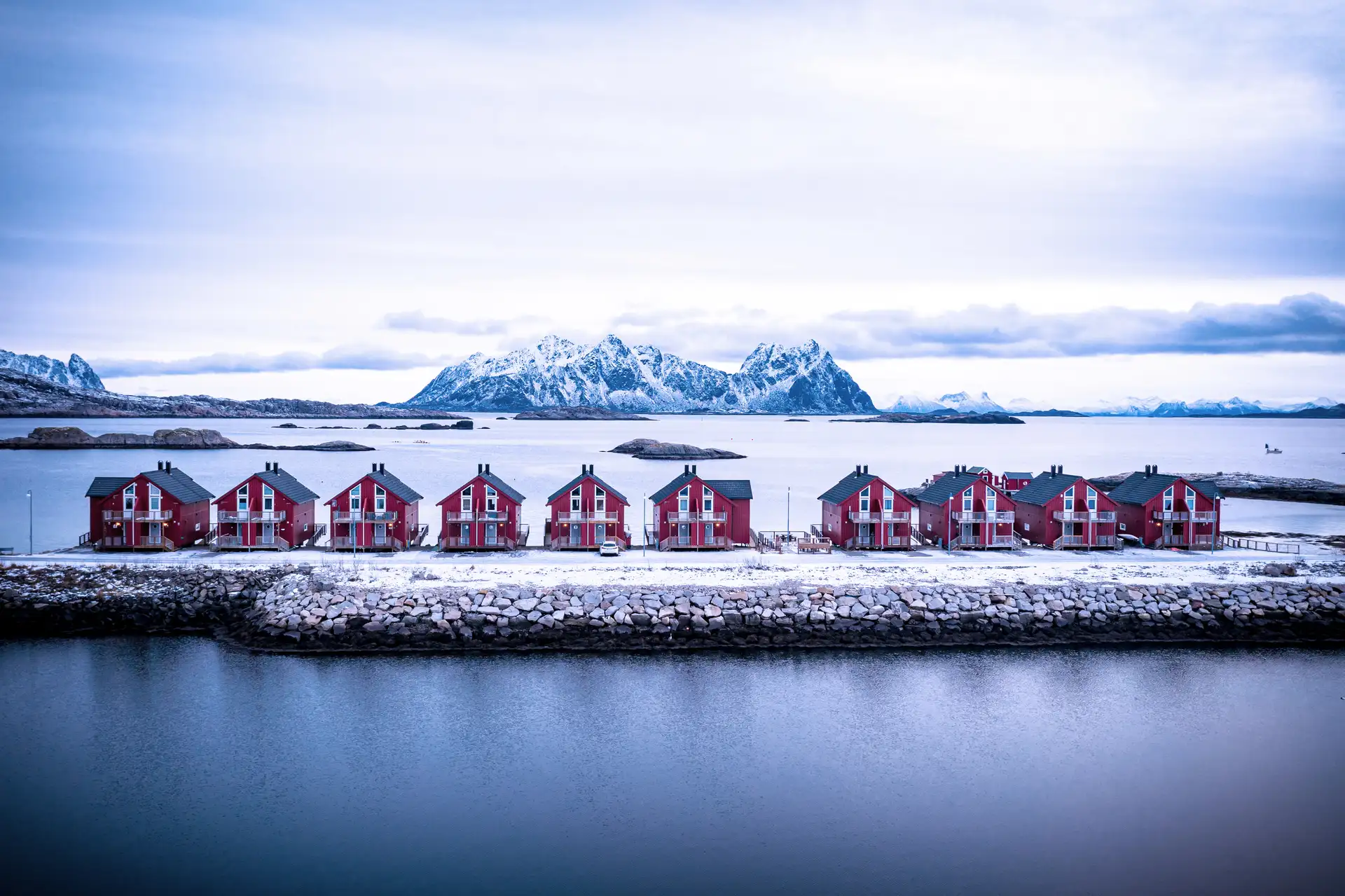
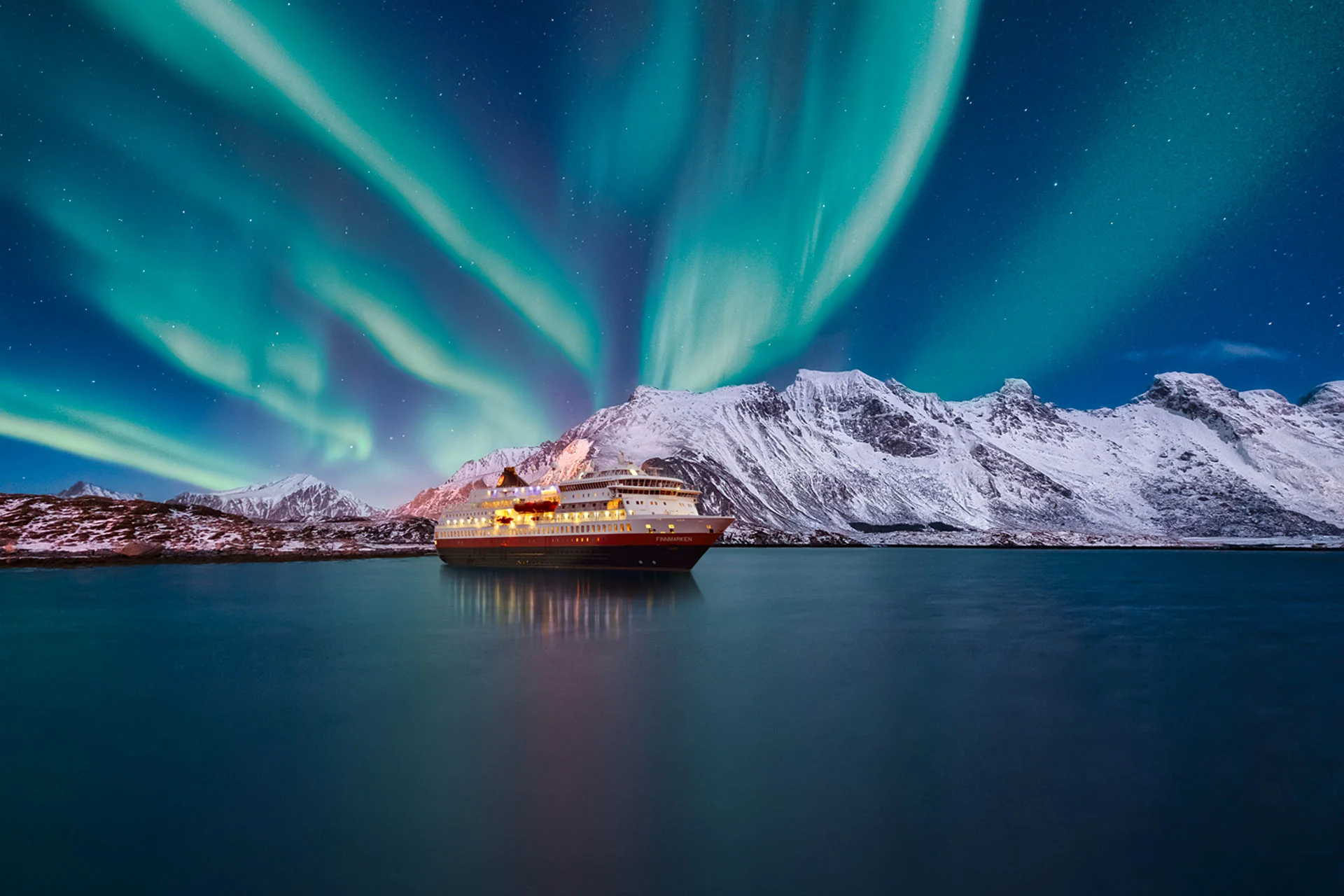
The Lofoten Islands in winter are moody yet magical. Storms from the Atlantic Ocean provide awesome shows for those staying in fishermen's huts. And the Northern Lights paint the sky most nights. Between 7 December and 5 January, Svolvær is cloaked in 24-hour darkness during the Polar Night, giving visitors the best chance of seeing the aurora shimmering in the star-studded sky.
We visit the Lofoten Islands in winter on the North Cape Line, with regular sailings on the Coastal Express too.

Lofoten and fishing are inseparable. The long chain of islands and inlets have long supported fishing villages who relied on the harvest of the ocean for their livelihood. Today, fishing boats still provide Norway (and kitchens around the world) with skrei and more.
On our winter North Cape Line voyages, you can board a traditional fishing boat to go deep-sea fishing for yourself. Try your hand at catching your own skrei and learn how to prepare it from the experts.

With its sheltered coves and winding shoreline, the geography of an archipelago lends itself to marine adventures – and there are plenty of those to be had in Lofoten.
Go kayaking around the waters of Svolvær while learning about the area’s nature, history and culture from a guide paddling alongside you. For more thrills, join a RIB adventure tour to speed around the rugged landscapes of Lofoten in a nimble boat. Or simply enjoy the serenity of fjord cruising on one of our ships.
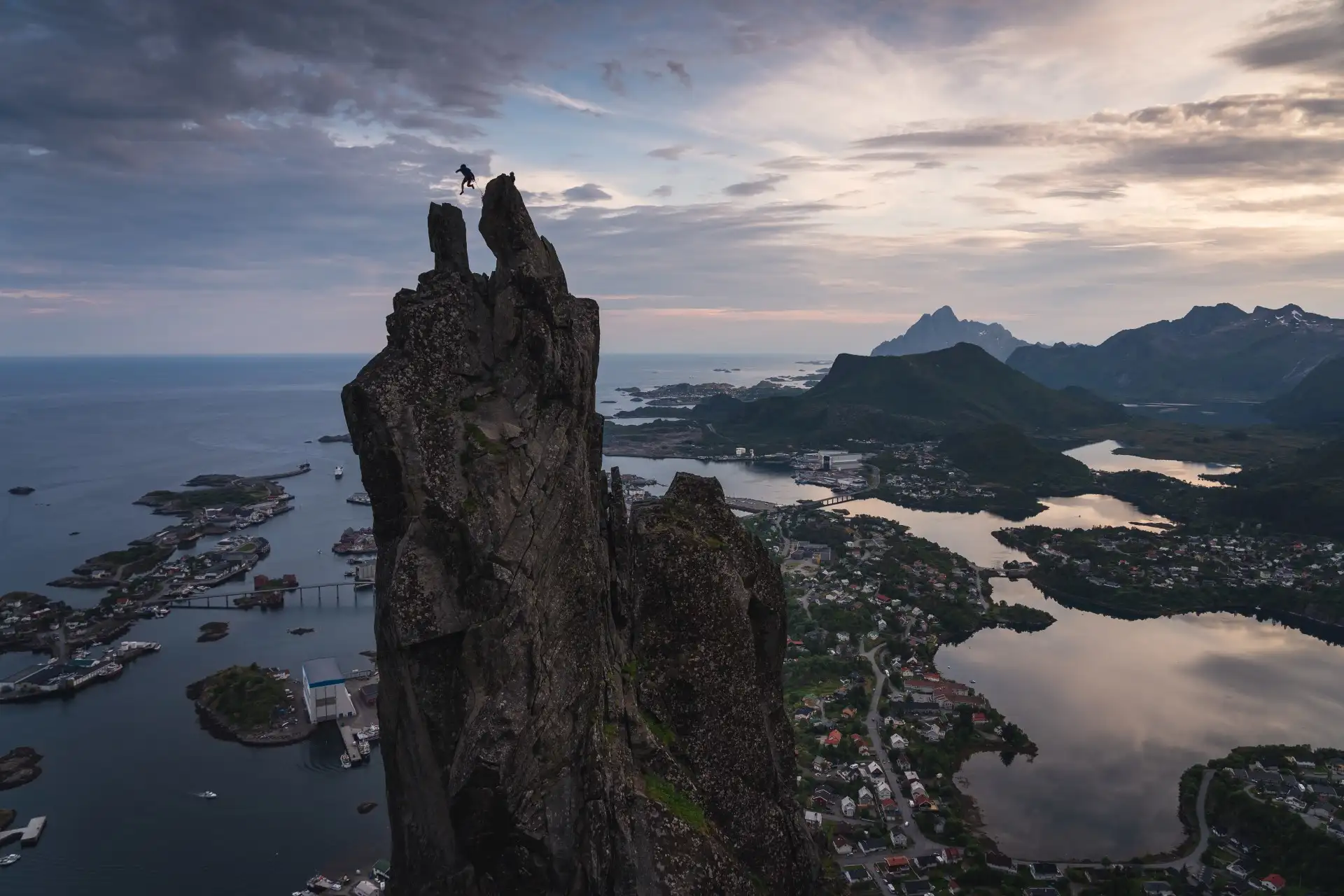
No visitor to Svolvær, Lofoten’s largest settlement, could possibly miss the sight of Svolværgeita (the Svolvær Goat): two rock formations shaped like goat horns that loom over the town. This double peak, 590 metres above sea level, caps off nearby Mount Fløya.
There are several climbing routes up the mountainside, and if you’re brave enough, you can even jump the metre and a half from one goat’s horn to the other!

From artisan cheese to seaweed harvested by hand, Lofoten has much to offer when it comes to delicious produce and world-class dining. In fact, the whole archipelago lies within the county of Nordland, which has been named the European Region of Gastronomy for 2028.
On a Hurtigruten voyage, you can visit a family-run farm to learn about traditional farming methods and to taste fresh cheeses made onsite. You can also sample Lofoten Seaweed's products on board in our restaurants or in our shop, including fresh and dried seaweed, and seaweed salt.

Most visitors to Norway want to see Atlantic Puffins, and there is no better place to do so than Røst. Lying at the southernmost tip of Lofoten, this tiny island is home to the country’s largest puffin colony – providing the perfect opportunity to see these adorable birds in the wild.
The region is also home to a large population of Sea Eagles. Join a Sea Eagle Tour by RIB to see these magnificent birds hunting in the waters around the islands.
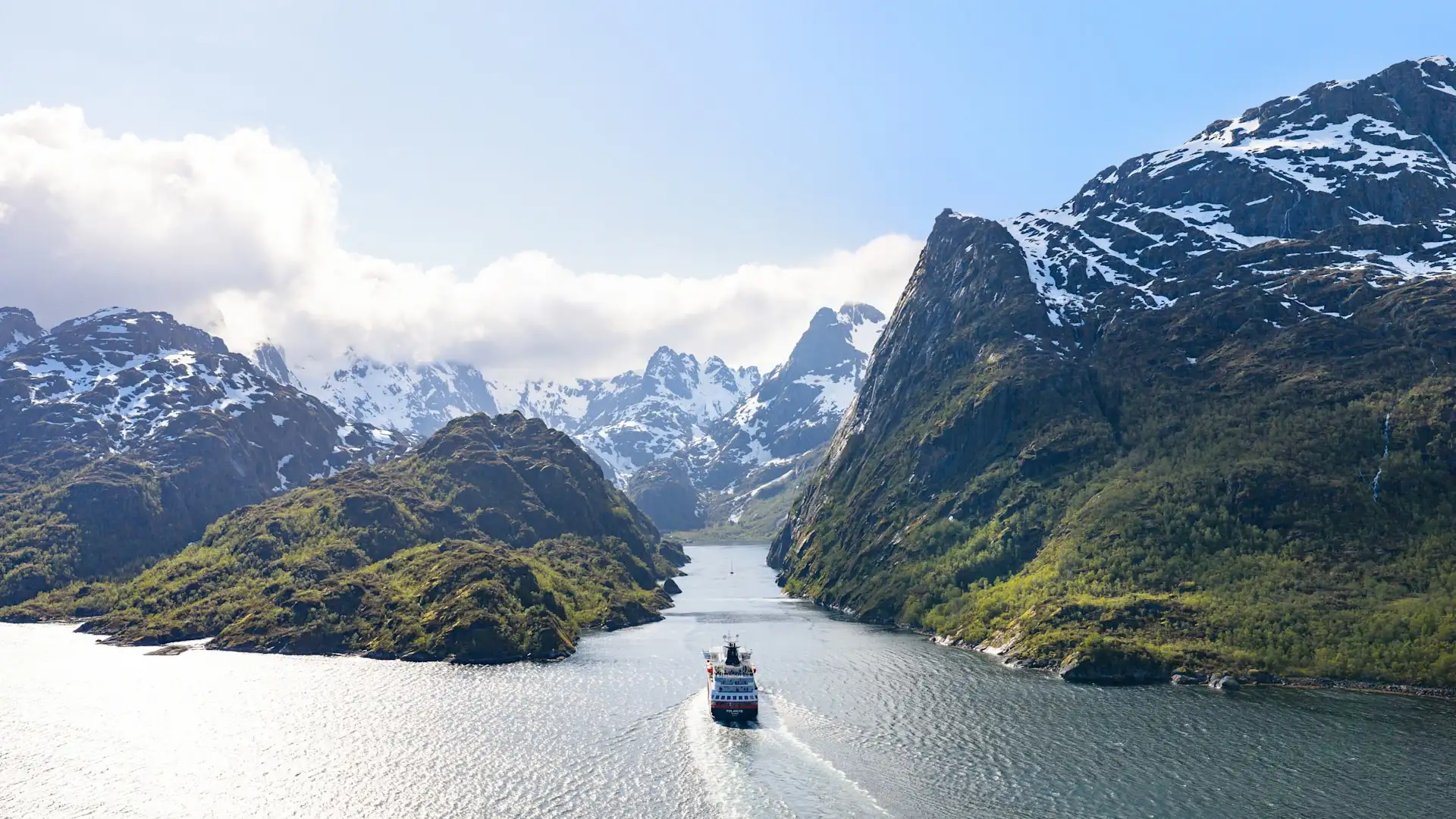
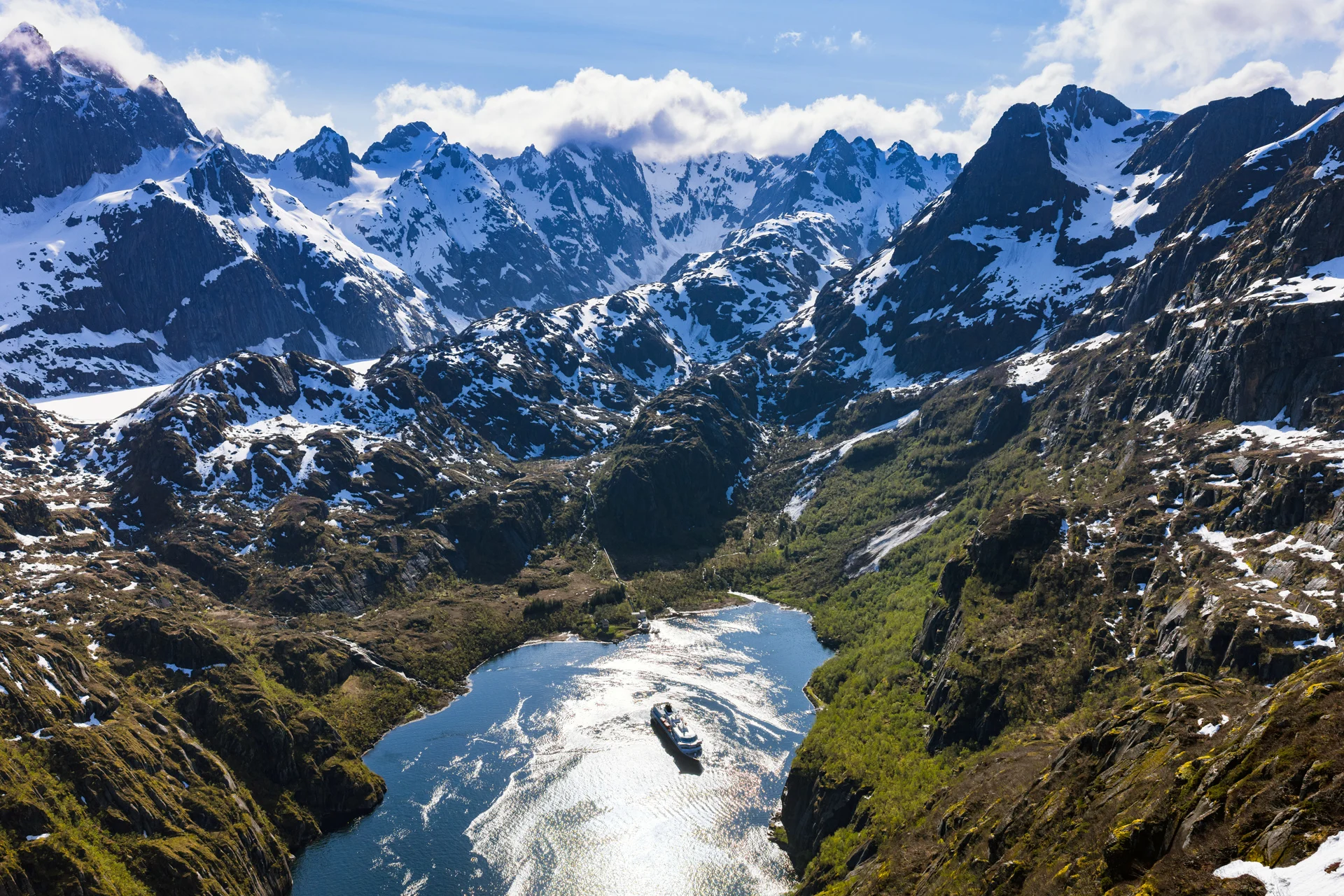
With an entrance only 100 metres wide and cliffs rising almost vertically from the water – some towering 1,100 metres overhead – Trollfjord is one of the most dramatic fjords in Norway. And a highlight for Hurtigruten guests who sail into its narrow passage.
Our ships are some of the only ones that can sail into this fjord, as most other cruise ships are too large to traverse its narrow passage. So sit back, enjoy the scenery and marvel at the captain’s steering prowess.

Though you’ll find rorbu (fishermen’s cabins) all along the Norwegian coast, they are most associated with the Lofoten Islands. Most notable at the water’s edge, they are often built atop sturdy timber piles and originally provided a place for fishermen to shelter for the night.
The cabins now attract tourists from near and far, and many rorbu serve as cafés and restaurants or are rented out as charming accommodation.
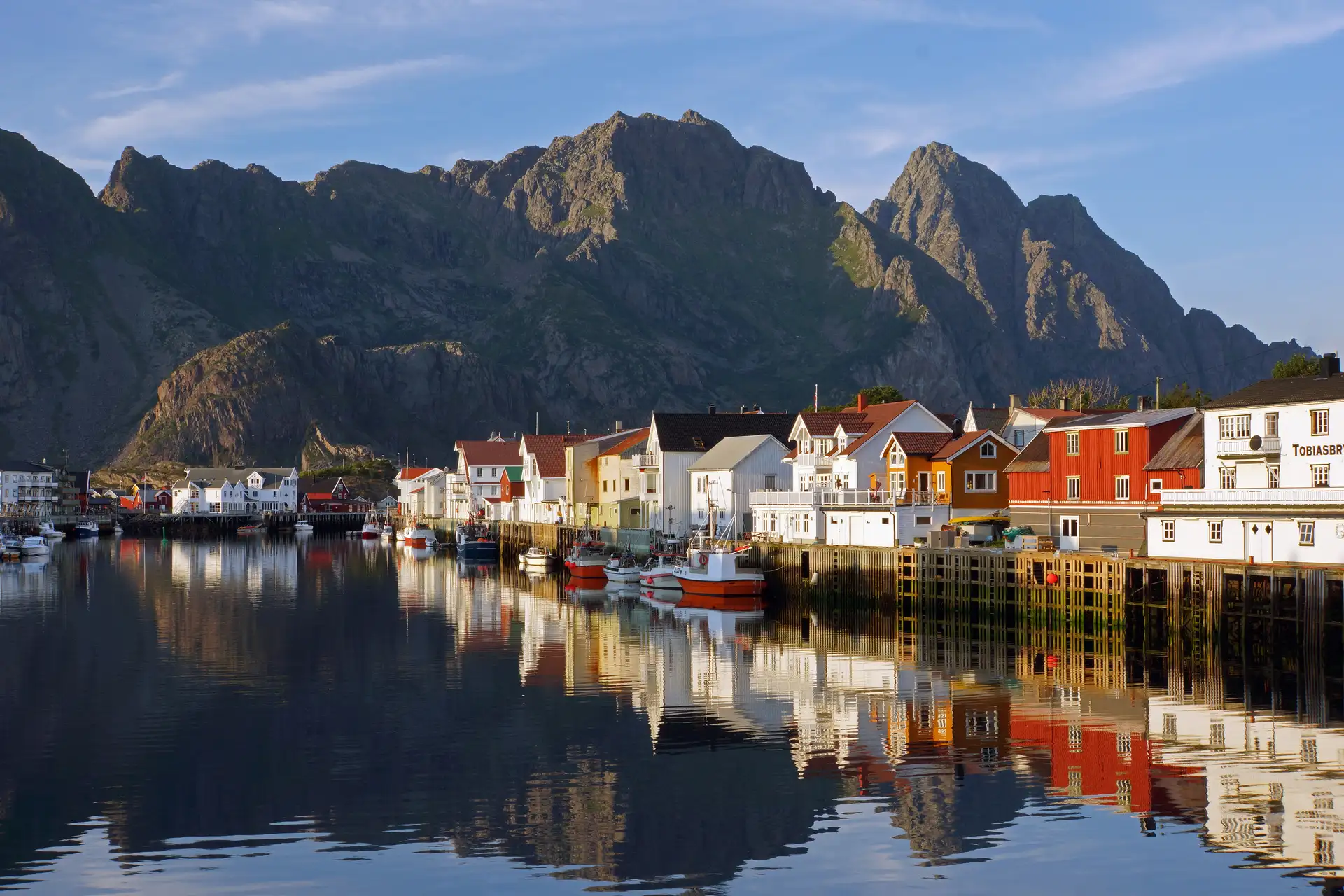
A collection of scattered islands at the edge of one of the archipelago’s arms, Henningsvær is a compact hub of art and culture. Discover stylish boutiques, cute coffee shops and one of the largest wooden churches in the country, Vågan Church.
Join us on an guided tour of Henningsvær, with a visit to Gallery Lofoten – which houses the world's largest collection of North Norwegian paintings from the 20th century.

The archipelago’s western beaches, such as Utakleiv and Eggum on Vestvågøy Island, are renowned for their white or golden sands and spectacular views. Also on the island is Unstad Beach, a popular spot for surfers as there are good waves during stormy weather.
Elsewhere, the northern island of Gimsøy features a series of small but delightful beaches that wouldn’t look out of place in the Caribbean.
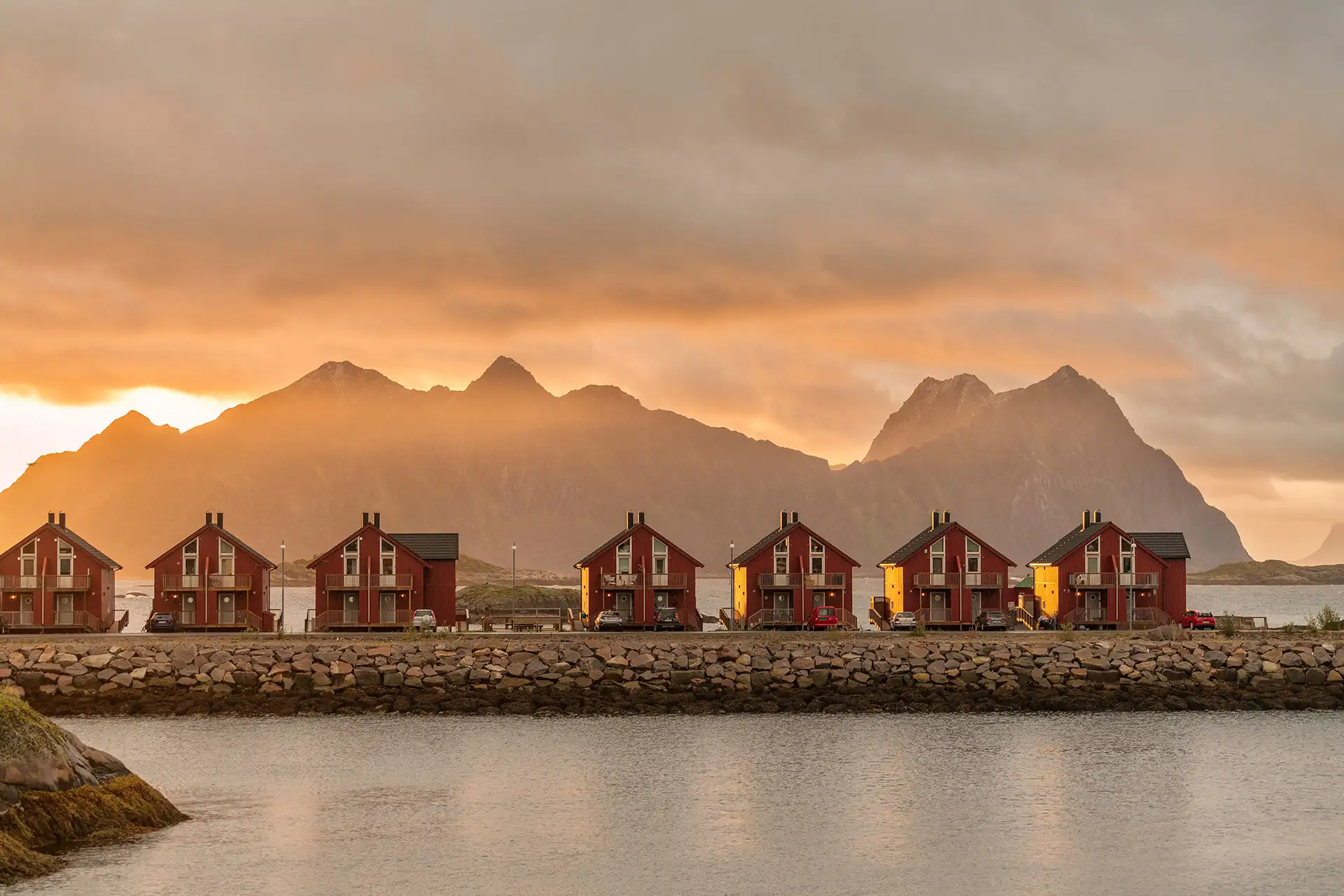
The largest town in the Lofoten Islands, Svolvær is the ideal hub to base yourself from to explore this region. Expect awe-inspiring mountain views, outdoor adventures like whale watching and hiking, and a rich cultural scene with museums, galleries and restaurants.
We call at Svolvær on all our cruises, including our newest Signature itineraries: the Arctic Line and the Arctic Circle Explorer.
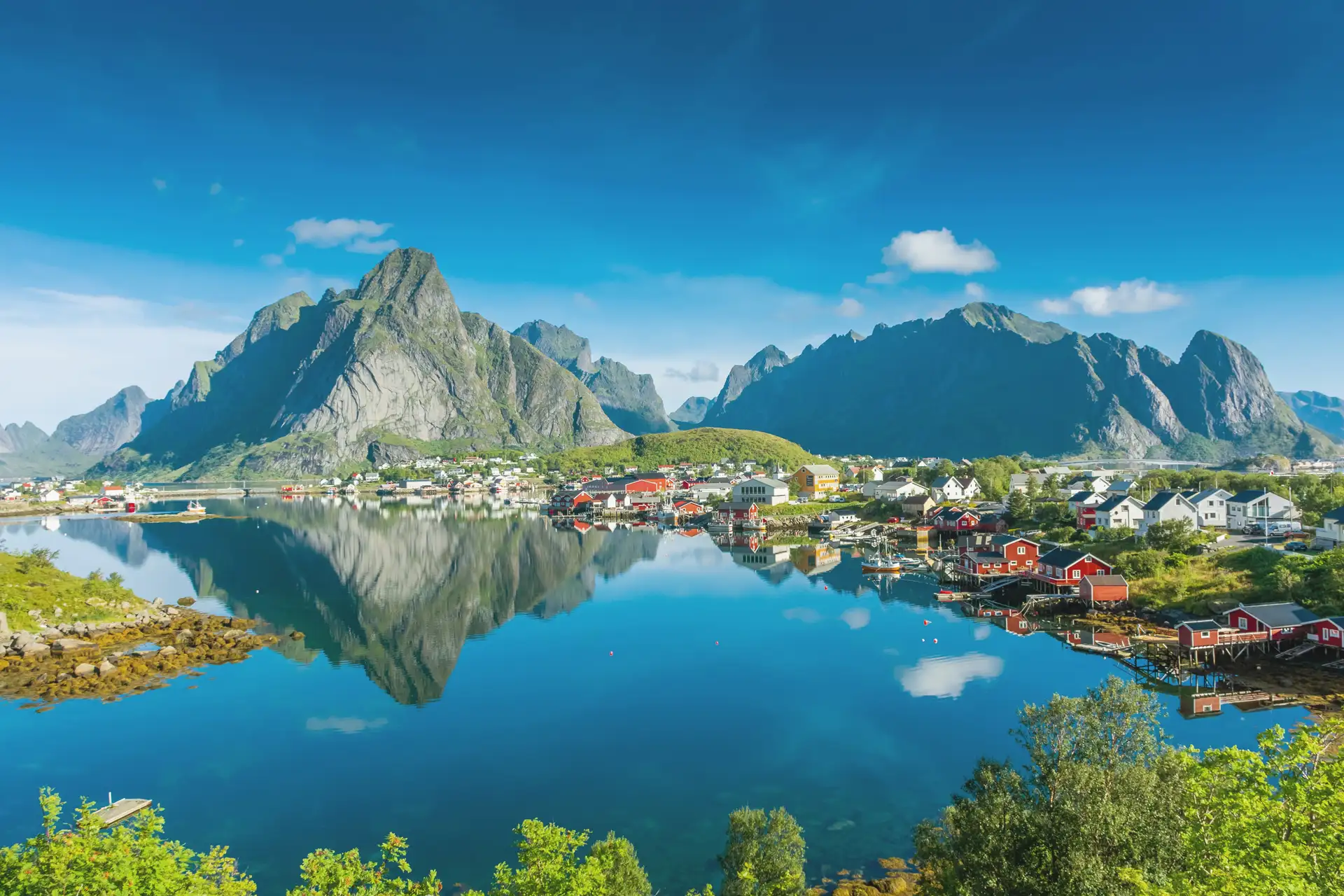
This small fishing village in the municipality of Moskenes is a postcard-perfect example of Lofoten scenery. The village is located on a chain of small islands connected by winding roads and bridges, with rorbu fringing the shore and soaring peaks around every corner. Go hiking or try freshly caught seafood at a local restaurant.
We sail to Reine in summer on the northbound portion of the Svalbard Line.

Located on the southern shore of Vestvågøy island, Stamsund is a small fishing village with plenty of character. This is a working port where you can watch fishing boats unloading their catch and skrei drying on racks around the harbour. It's a peaceful place to soak up Lofoten life.
We stop at Stamsund year-round on the Coastal Express.
The best way to get to the Lofoten Islands is by ship, making the journey part of the experience. You can sail with Hurtigruten from Oslo along the Norwegian coast on the North Cape Line and wake up to Lofoten’s jagged peaks and fishing villages. If you have less time, another option is to fly to Bodø (a classic gateway to Lofoten) and take the ferry across to the islands.
Alternatively, you can travel north by train or plane to the Arctic capital of Tromsø, then continue from Tromsø to Lofoten on the Arctic Circle Explorer, a round-trip cruise showcasing the highlights of northern Norway.
Bergen – Kirkenes – Bergen (Roundtrip)
The original Norwegian coastal voyage – connecting fjords, towns & people since 1893
Absolutely! Lofoten is one of the most memorable places in Norway. Expect dramatic scenery, with steep mountains rising straight from the sea, sheltered bays and white-sand beaches.
The best time to visit the Lofoten Islands depends on the experience you're chasing. For longer days and green scenery, late spring and summer are ideal. Many excursions and guided trips run in this period (typically April to August). Autumn is quieter and just as scenic, while winter offers serene snowscapes and the Northern Lights.
Whenever you decide to visit, Lofoten is a year-round destination with something extraordinary to offer in every season. See our monthly travel guides to see when the best time to visit Norway is for you.
A good minimum is 3 to 4 days if you want to see a couple of villages, do a few short hikes or beach walks, and take a boat trip or kayaking excursion. Our 15-day Svalbard Line summer voyage sails through Lofoten twice, once northbound and again sailing southbound, offering two days to step ashore and explore.
Yes, but planning is key. The easiest way to experience Lofoten without worrying about logistics is to sail with us on a coastal voyage, such as the Coastal Express, and join guided shore excursions in places like Svolvær and Stamsund.
Lofoten is a great place to look for Sea Eagles and other seabirds, like puffins, and you may also spot marine life out on the water. On some of our voyages, it’s possible to join a Sea Eagle safari excursion to maximise your chances of seeing these birds.
Receive special offers, exciting new itineraries and fascinating articles delivered straight to your inbox.