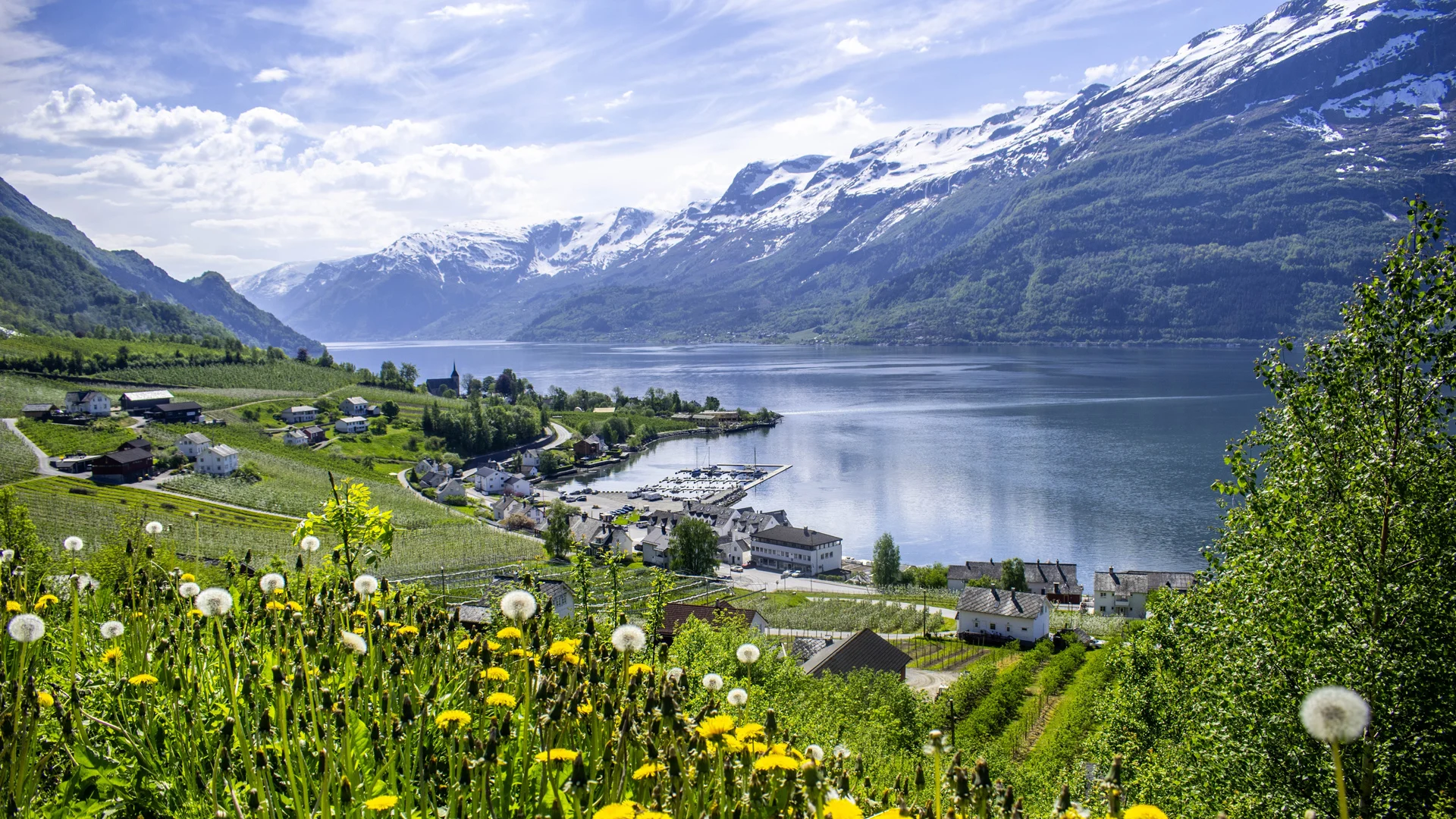
Bergen - Ålesund - Bergen (Full-trip)
The Inner Fjords Explorer
Limited Collection voyage around Norway’s iconic Western Fjords
- September 2027 - May 2028
- 8 days
- 6 Stops
- All meals & unlimited select drinks
The longest and deepest of Norway’s fjords, Sognefjord effortlessly earns its nickname: king of the fjords.
Located in Norway’s famous Western Fjords region, Sognefjord evokes a sense of pride in every Norwegian. At 127 miles (205 km) long and over four thousand feet (1,300 m) deep, this is our record-breaking fjord – the longest and deepest fjord in Norway – and the second-longest in the world, after Scoresby Sund in Greenland.
The vast waters of Sognefjord run from just north of Bergen inland to the village of Skjolden and the base of Jotunheimen, Jostedalsbreen and Breheimen national parks. Along the way, the fjord branches off into smaller (but no less stunning) arms, including the UNESCO-listed Nærøyfjord and the unbelievably narrow Aurlandsfjord, which is only 2km wide in parts.
Sognefjord is the place to experience fjord life of past and present, to visit medieval churches, to learn about Viking history, and to sample local cheese and wine. But not before enjoying some friluftsliv (open-air life) by hiking, cycling and kayaking around its awe-inspiring landscapes.
As with our other spectacular fjords in this region, such as Nordfjord, the best way to see them is from the water. Join us on our Inner Fjords Explorer cruise to discover secluded inlets, soaring cliffs and charming villages. This is Norway in all its postcard-perfect wonder.
Like most of the Norwegian fjords, Sognefjord formed during the last ice age, 10,000 to 15,000 years ago. Giant glaciers carved the deep valley you see today. The fjord remains home to Jostedalsbreen, the largest glacier on the European mainland.
People have congregated on Sognefjord’s shores right back to the Stone Age. Archaeological sites and rock carvings found near the fjord indicate that those early inhabitants used this area for hunting, fishing and gathering. By the Iron Age, farming had begun to develop in the fertile valley.
Later, Vikings traveled around Sognefjord for travel, trade and raids. Poised at the head of the Nærøyfjord branch of Sognefjord, the village of Gudvangen is a particularly notable site, with burial mounds and other artefacts from the Viking age.

(Image copyright: Øyvind Heen - fjords.com)
Christianity reached Norway around the turn of the first millennium, and several early Christian churches were established along the fjord. One of the oldest is the UNESCO-listed Urnes Stave Church, dating back to the 12th century.
The late-19th century brought tourism. Sognefjord’s breathtaking scenery made it a prime destination for those seeking adventure in nature, and the building of roads and railways – including the Flåm Railway, completed in 1940 – made access to the fjord easier. Locals and international tourists alike began to flock to see the ‘king of the fjords’.
From kayaking and hiking to scenic cruising, these are our top activities in Sognefjord.

Kayaking in the Norwegian fjords is nothing short of sublime. Gliding low on the waters of Sognefjord is one of the best ways to see the landscape in all its breathtaking grandeur. There are numerous paddling routes, with shorter and longer options. The Nærøyfjord is popular for kayaking due to its narrow, dramatic landscape – it’s a core part of the UNESCO World Heritage Site, after all.
For beginners, calmer sections near villages like Flåm and Balestrand are ideal. More experienced kayakers venture to the deeper parts of the fjord.
(Image copyright: Øyvind Heen - fjords.com)
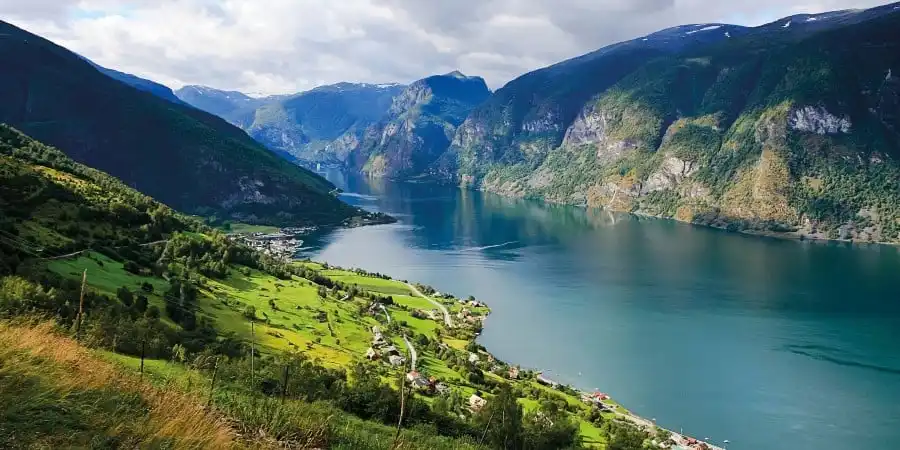
Cruising is the best way to experience Norway’s longest fjord in its entirety. Our Inner Fjords Explorer cruise from Bergen sails deep into the heart of Sognefjord, journeying over 100 miles (200 km) inland past sheer rock cliffs, tumbling waterfalls and picturesque fishing cabins, before reaching Skjolden. This village at the end of the Lusterfjord arm is a hub for outdoor activities.
Hike to the nearby Feigefossen waterfall, cycle to visit the Urnes Stave Church, hit the waves on an exhilarating RIB tour or sample locally sourced cuisine at the Skjolden Hotel, with panoramic views across Lake Eidsvatnet and out to the fjord.
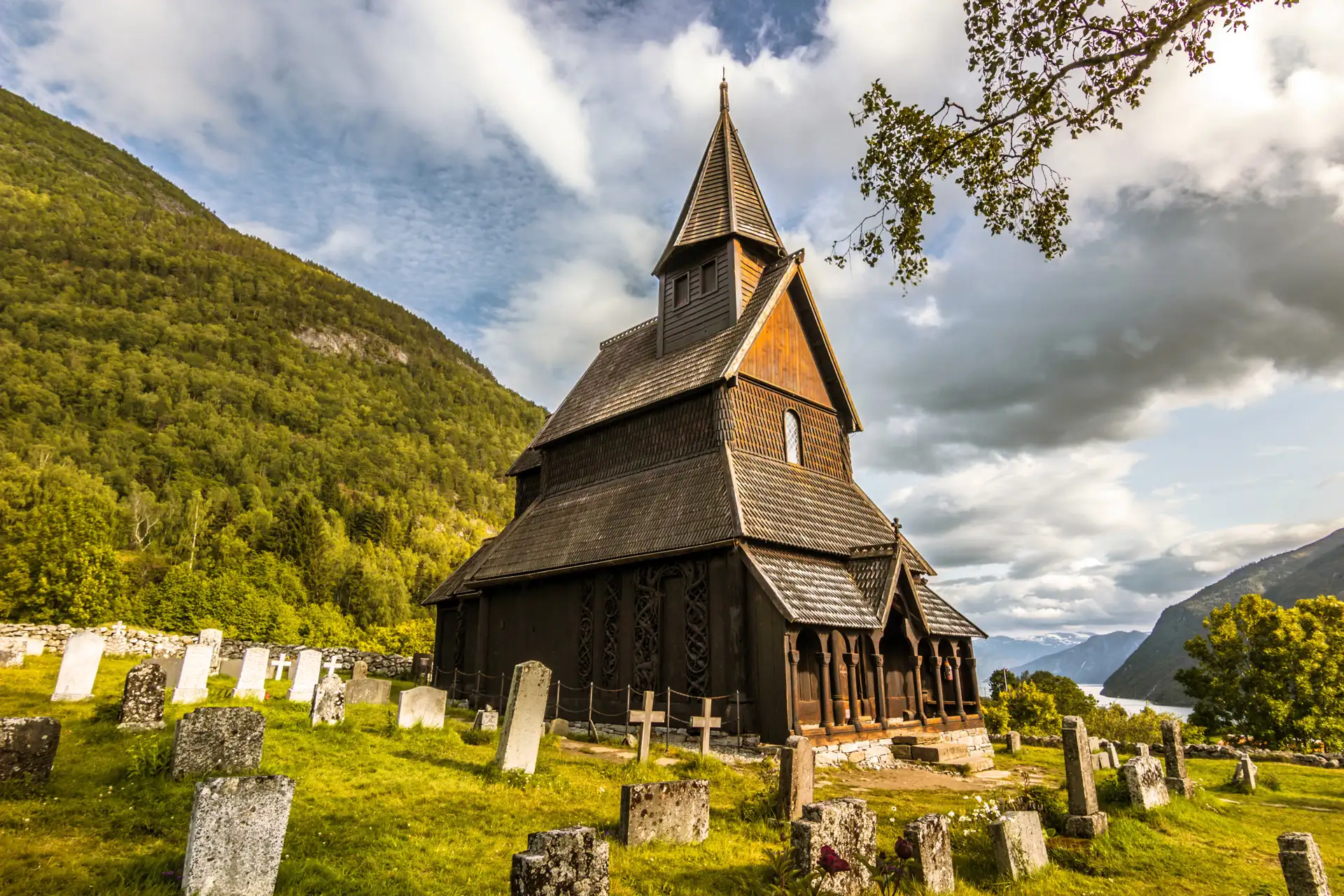
Built around 1190, Urnes Stave Church is Norway’s oldest stave church, medieval buildings known for their unique post and lintel construction. Visiting this incredible structure transports you back in time, its ornate carvings and dimly lit interior evoking images of the 12th-century Christian settlers who worshipped here. And the backdrop – the Lusterfjord arm of Sognefjord, with deep blue waters and green valleys – only adds to the sense of awe.
Visit this UNESCO World Heritage Site on our Inner Fjords Explorer itinerary, sailing to Sognefjord in spring and autumn. The stave church is open for visits from May to September (ideal timing for our voyages), but the exterior can be admired year-round.
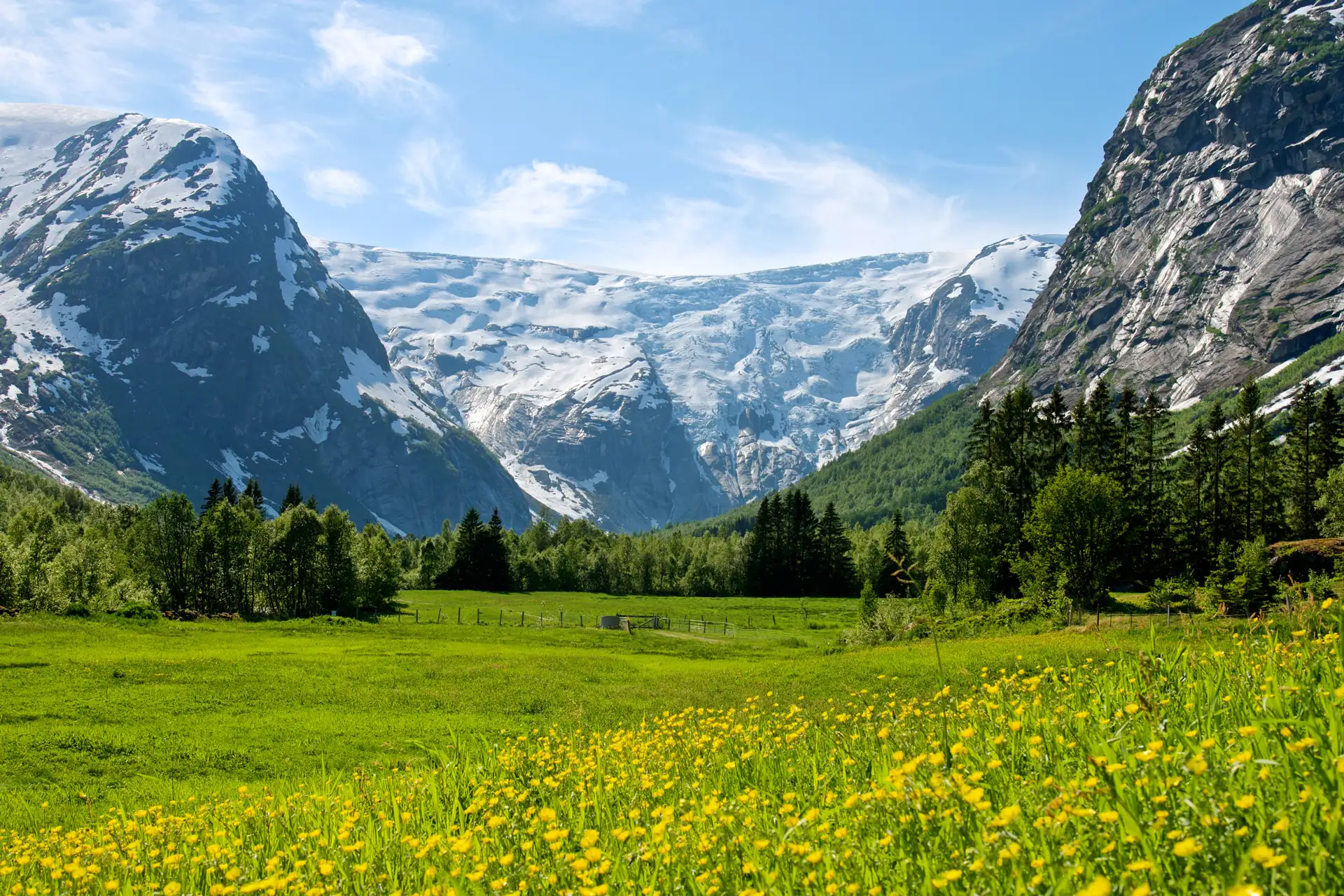
Crowning the peaks just to the north of Sognefjord is the largest glacier on the European mainland. Jostedalsbreen is a must-see if you want to explore Norway’s rugged, icy wilderness. Surrounded by lush valleys, waterfalls and towering mountains, the glacier is accessible via hiking trails, boat trips and guided walks. Its sweeping ice field is divided into several smaller glaciers, with the most famous being the Nigardsbreen and Briksdalsbreen.
The Nigardsbreen glacier is one of the most popular access points. Here you can walk on the ice or take a boat trip to get closer to the glacier's edge.
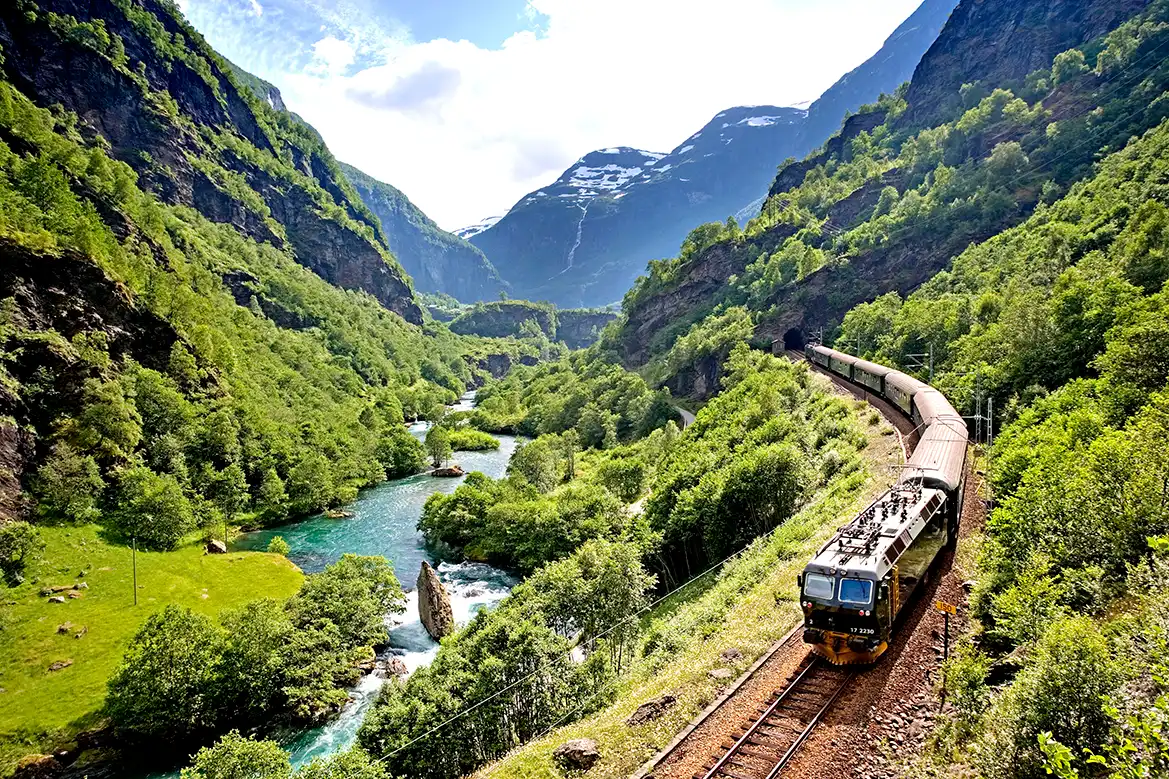
Sit tight: this is one of the steepest railways in the world. Since 1940, this historic train has departed from Flåm, a small village at the end of the Aurlandsfjord branch, and climbed up to Myrdal on the Bergen Line, over 2,800 ft (867 m) above sea level.
The 1-hour journey winds through mountains and valleys with nonstop views the entire way. Seeing Kjosfossen (a 300ft-/93m-high waterfall) up close is a highlight. And it’s only accessible by rail, as the train stops at a viewing platform built for guests to admire the powerful falls.
From wildflowers to golden leaves, each season brings different scenery and activities to enjoy.

Though quieter than summer, spring is when the Sognefjord starts to come alive with fresh green foliage and wildflowers. This is a great time for hiking, kayaking and inhaling the peace before summer crowds descend. Experience the tranquility of springtime on our Inner Fjords Explorer cruise, with sailings in April and May.
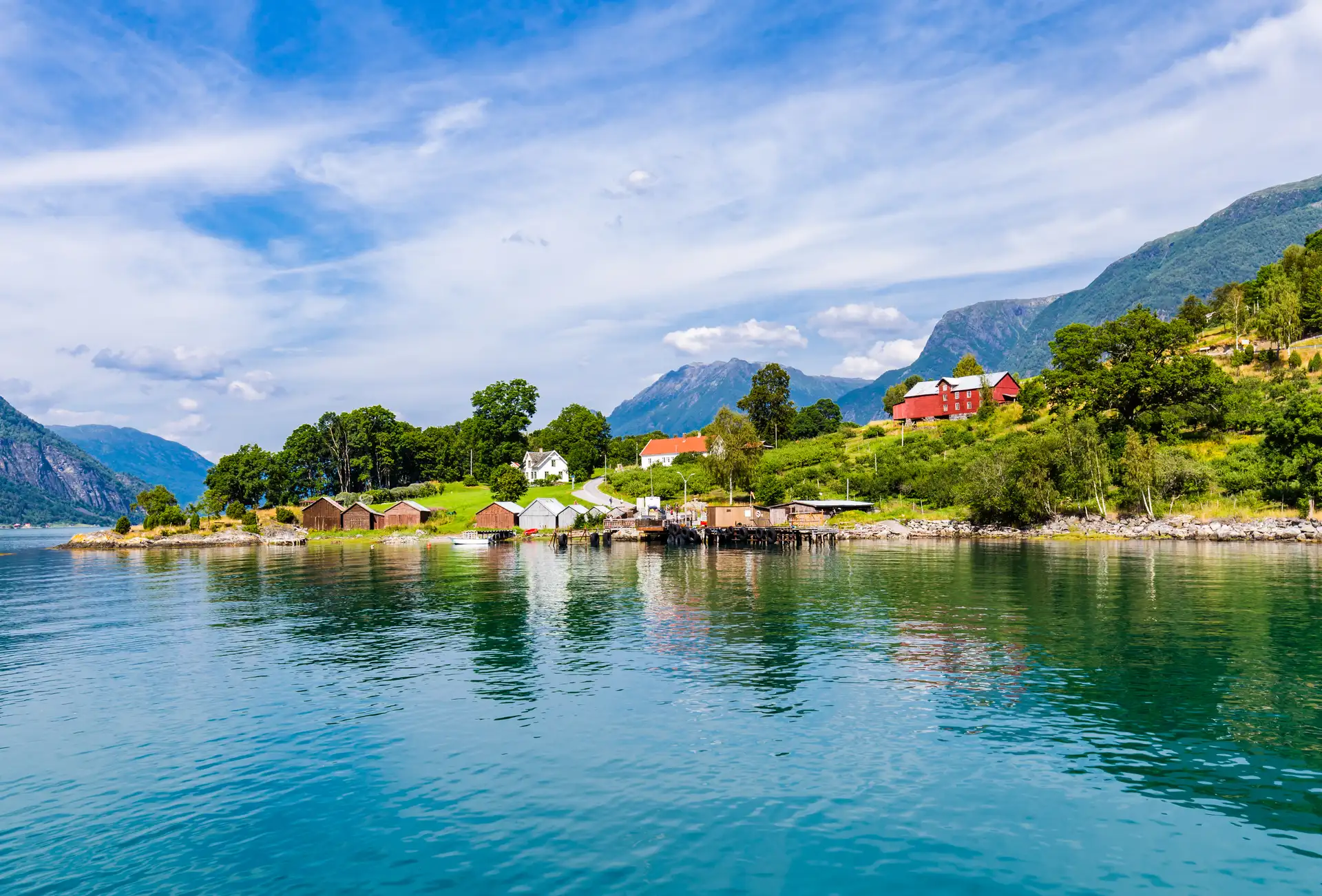
In summer, the weather is more reliable for outdoor activities. The days are long – up to 18 hours of daylight in June – giving you plenty of time to explore the fjord’s verdant landscapes. It’s peak tourist season, so expect plenty of fellow visitors to keep you company.

It’s still mild in Sognefjord in early fall, which sees the leaves of the trees turn shades of copper, red and amber. The quieter pace is a bonus, too. Our Inner Fjords Explorer itinerary sails to Sognefjord in September, showcasing autumn in the fjord before the cold weather draws in. Some tours and activities may start to close in mid-October, but it’s still a beautiful and calm time to visit.
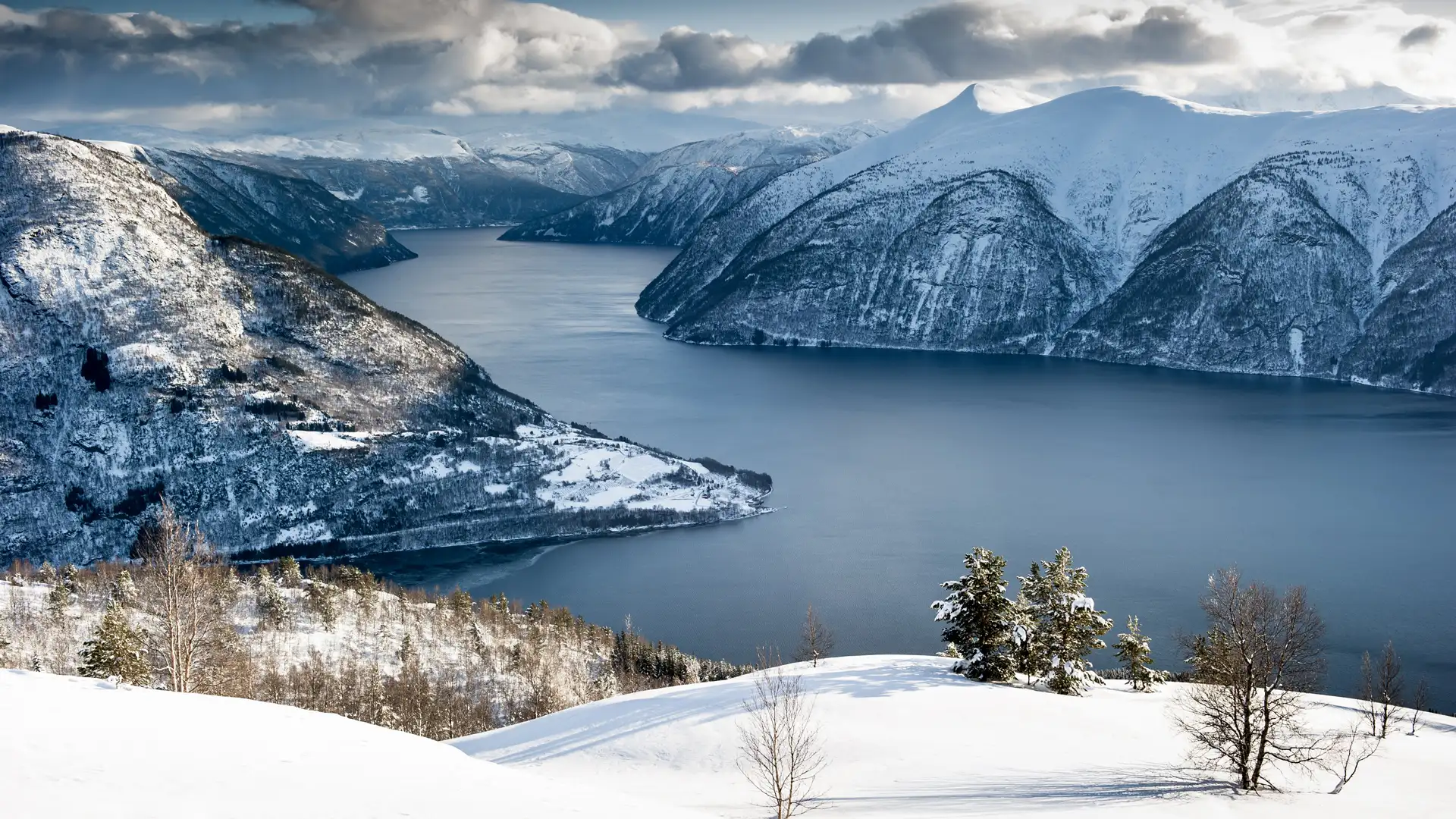
Predictably, winter can be cold, with temperatures often below freezing – from 23°F to 41°F (-5°C to 5°C). Snow and ice are common in the mountains and the fjord itself can freeze, especially in the more remote parts. This the perfect time for winter sports in nearby areas like Sogndal and Gaupne. Look out for the Northern Lights on an inky clear night.
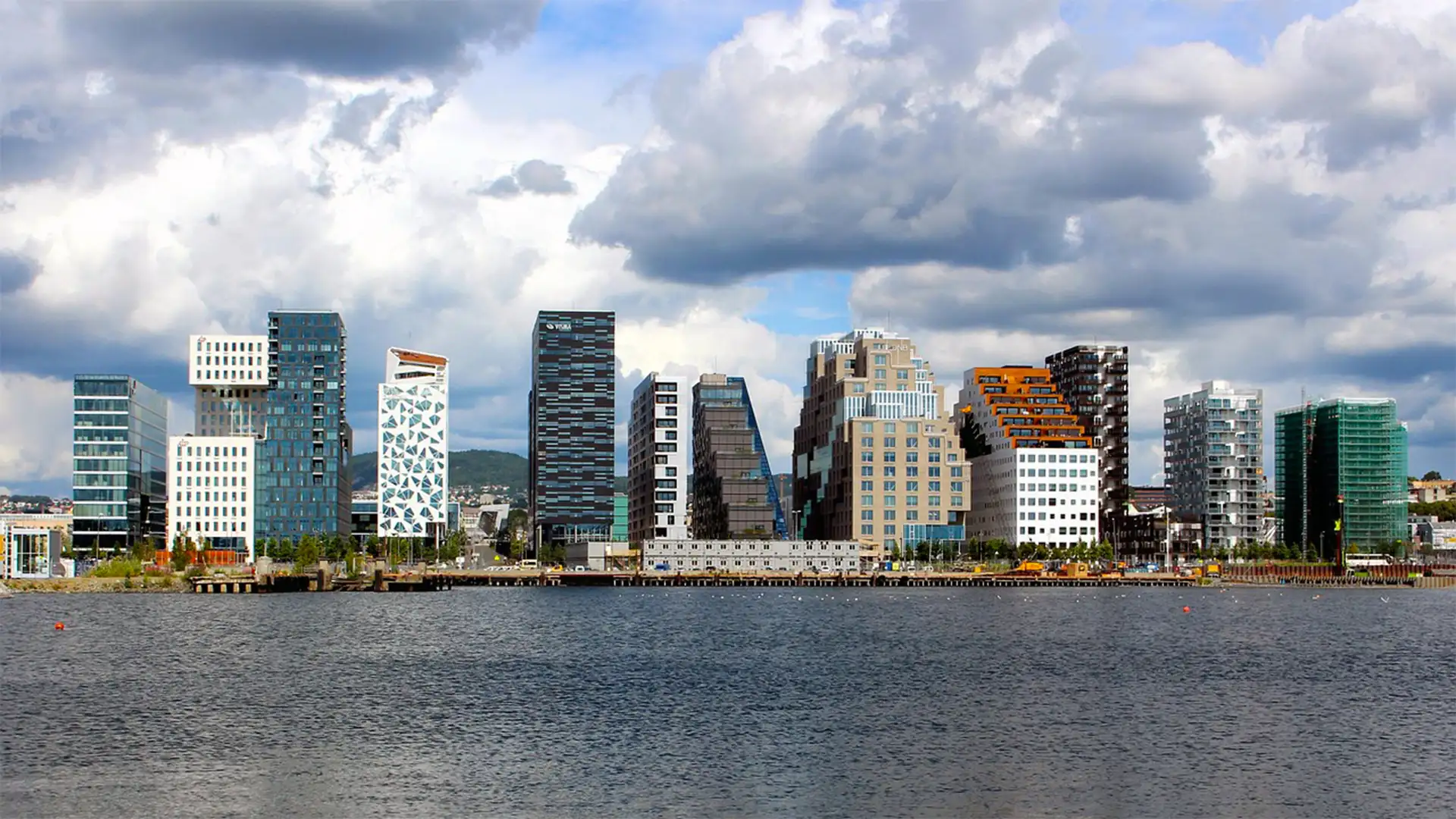
Fly or take the train to Bergen and join a fjord cruise to experience the whole length of Sognefjord.
Our Inner Fjords Explorer voyage departs from Bergen in spring and fall 2027.
Our Signature Limited Collection voyage, the Inner Fjords Explorer, sails to Sognefjord in spring and fall.
Our ships have sailed these fjords for more than 130 years. Step aboard and see Norway the way it's meant to be seen – from the water.
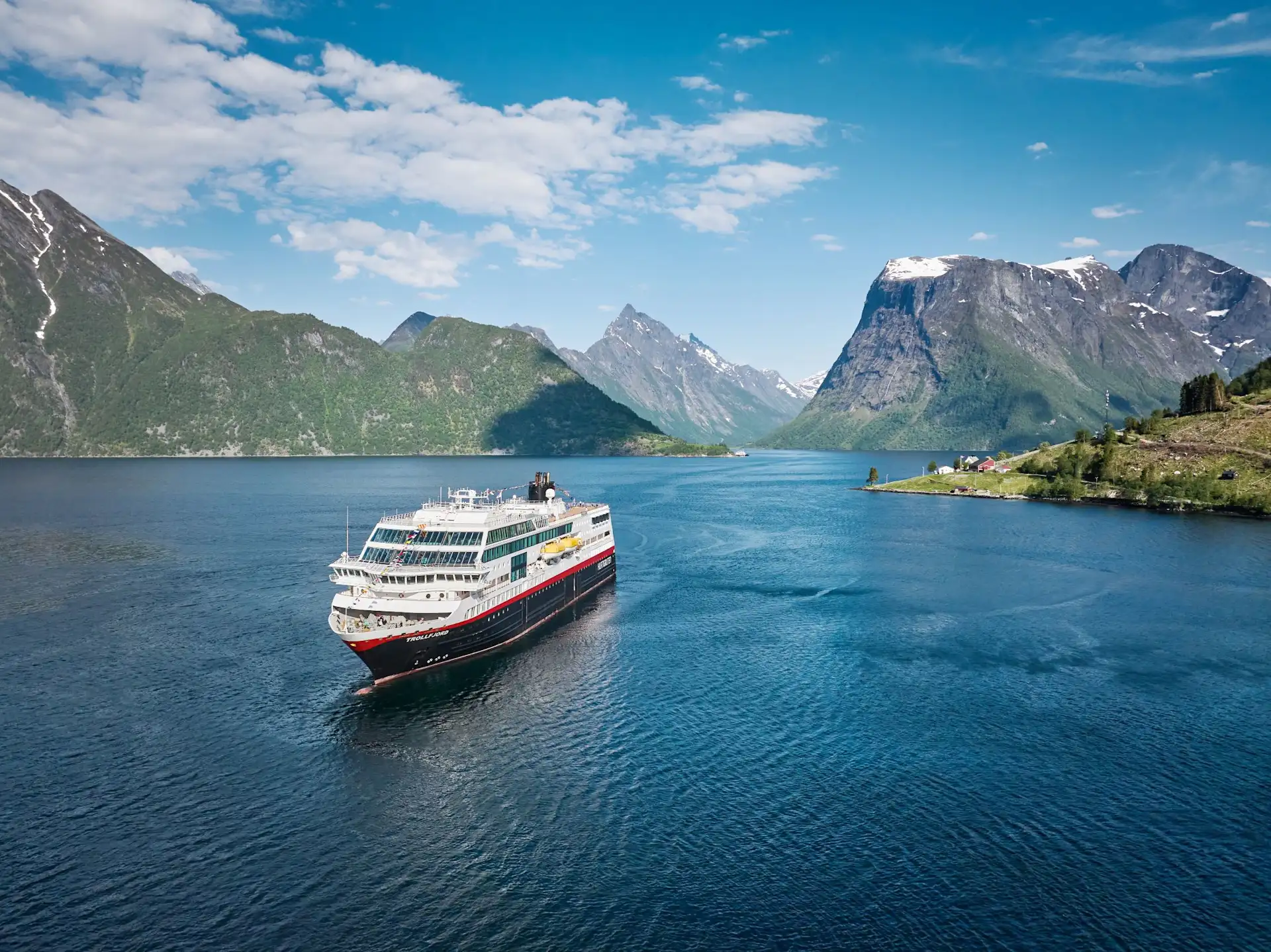

Only 328 feet (100 meters) wide at its narrowest point, this deep-blue fjord is one of Norway's most majestic.

A fjord surrounded by soaring mountain peaks and far from the crowds, it’s no wonder this dramatic fjord is a national treasure.

Stretching for 66 miles (106 km), Nordfjord is the sixth-longest fjord in Norway and one of the longest in Sogn og Fjordane County.
Receive special offers, exciting new itineraries and fascinating articles delivered straight to your inbox.