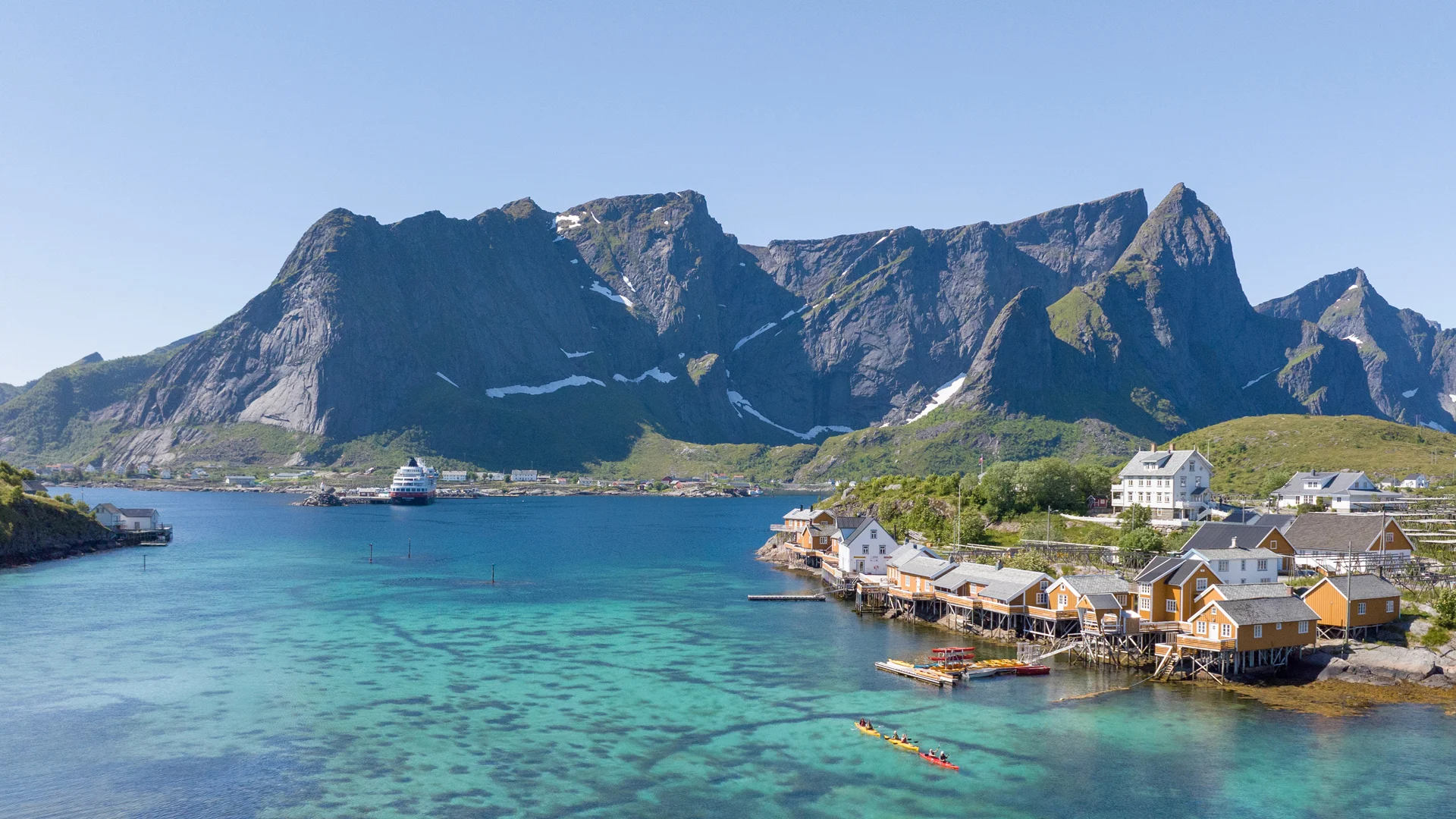
Guest Favourite
Bergen - Svalbard - Bergen (Roundtrip)
The Svalbard Line
All-inclusive Arctic cruise to Svalbard & back, with fjords, wildlife & Midnight Sun
- May - September 2027
- 15 days
- 14 Places
- All-inclusive
Resilient, opportunistic and incredibly adapted to the harsh conditions of the Arctic: meet the Arctic fox, master of survival.
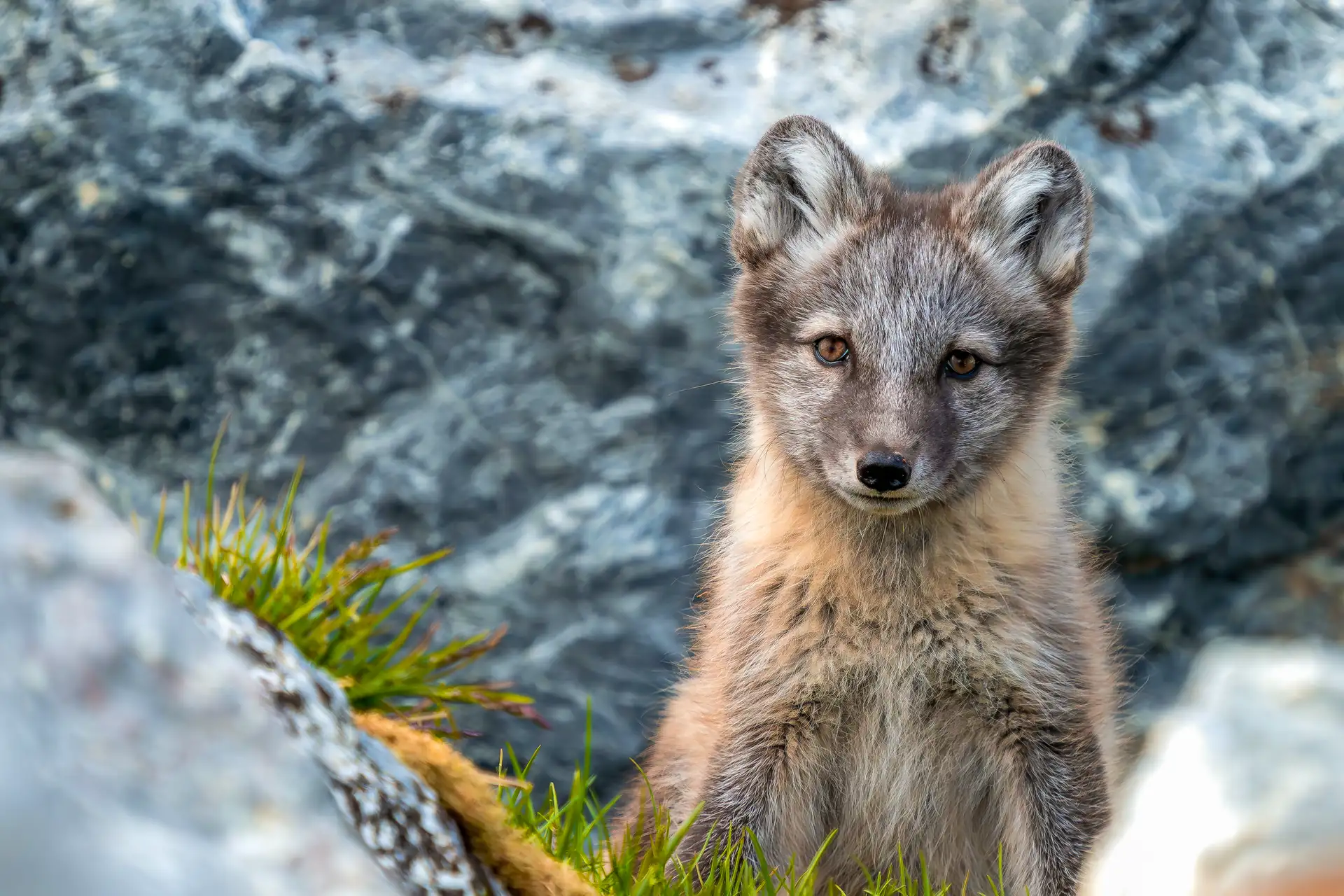
Few animals are better adapted to life in the snow and ice than the Arctic fox. Also known as the polar fox or snow fox, this small predator thrives in conditions that would challenge almost any other mammal.
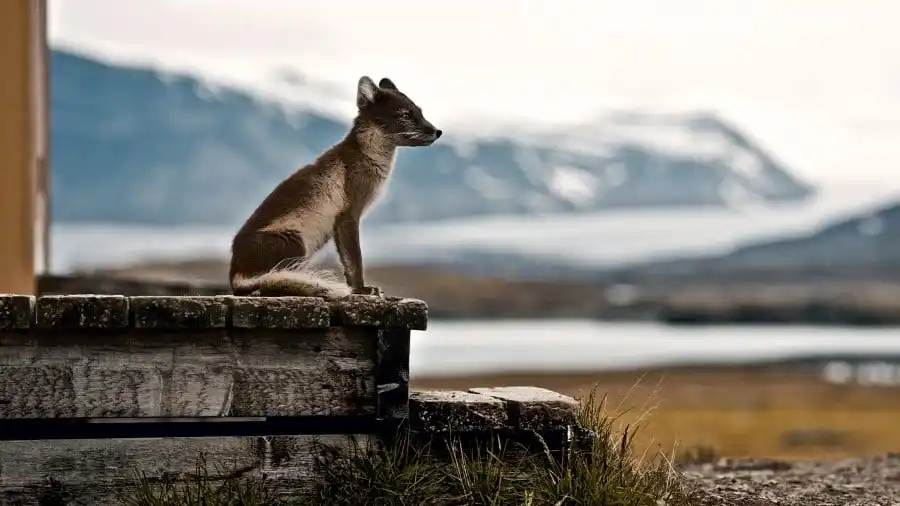
The Arctic fox is found throughout Svalbard, the remote Norwegian archipelago deep within the Arctic Circle that Hurtigruten sails to on selected voyages. Whether trotting along a beach beneath towering cliffs or weaving across the grassy tundra, seeing this tenacious predator is a special and memorable experience.
Technically, Arctic foxes can be found on the Scandinavian mainland, but seeing one is extremely unlikely due to low numbers. In Svalbard, the Arctic fox population is healthy, and the island (along with Iceland) is one of the most reliable places to see these animals in the wild.
The Arctic fox (Vulpes lagopus) is a mammal native to the Arctic regions of the Northern Hemisphere. Like all mammals, it is warm-blooded, gives birth to live young and feeds its pups with milk.
A close relative of the red fox, the Arctic fox has evolved a more compact shape for life in extreme cold. Its ears are smaller, its snout is shorter and its body is stockier, helping to minimise heat loss in freezing conditions.
Adult Arctic foxes measure around 55 to 60 centimetres in body length, with a tail of approximately 28 to 30 centimetres. Most weigh between 2.5 and 5 kilograms, making them roughly the size of a large domestic cat.
Despite their modest size, Arctic foxes possess the warmest coat of any mammal. Their winter fur consists of dense underfur beneath longer guard hairs, creating exceptional insulation that allows them to withstand temperatures as low as -50°C without increasing their metabolic rate. It's this winter coat (and snow boots!) that allow them to hunt for prey in thick snow cover.
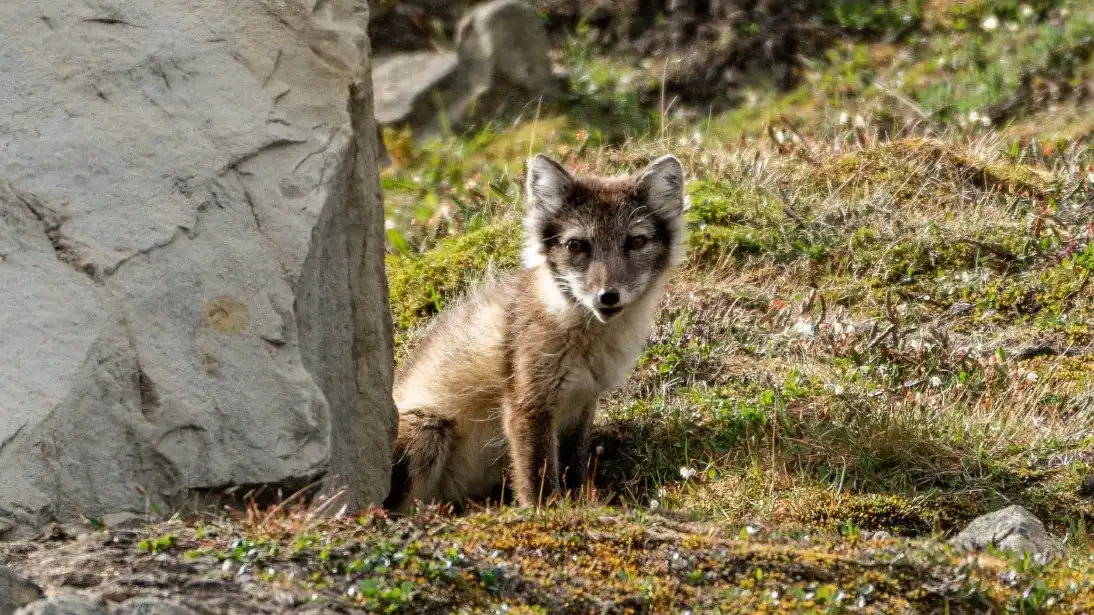
Arctic foxes have a circumpolar distribution, meaning they are found across the Arctic regions of the Northern Hemisphere. Their range stretches across Alaska, Canada, Greenland, Iceland, Russia, Scandinavia, Jan Mayen and Svalbard.
Arctic fox habitats span the Arctic tundra, coastal areas, pack ice and mountain regions, and have even been recorded travelling across sea ice close to the North Pole.
Scientists generally recognise two broad ecological lifestyles. Inland populations depend heavily on lemmings and other small rodents, with fox numbers rising and falling alongside cyclical lemming populations. Coastal populations, including those in Svalbard, rely more on seabirds, carrion and fish.
In Svalbard, Arctic foxes can be found almost everywhere. They roam coastlines, glaciers, mountain valleys, bird cliffs and even drifting sea ice. Alongside the Svalbard reindeer and polar bear, they are one of just three terrestrial mammals that remain on the archipelago throughout the year.
In 2019, researchers tracked a young female arctic fox that travelled from Svalbard to Canada. The fox covered an astonishing 3,506 kilometres in just 76 days, crossing sea ice and reaching speeds of up to 155 kilometres in a single day.
For an animal weighing just a few kilograms, it remains one of the most impressive wildlife journeys ever recorded.
Svalbard is one of the best places in Norway (and the world) to see Arctic foxes.
Unlike many Arctic animals, foxes are relatively common and it’s likely that you will see at least one during a visit to the archipelago.
Their curiosity, combined with the lack of natural predators in Svalbard, sometimes makes them appear surprisingly relaxed around humans.
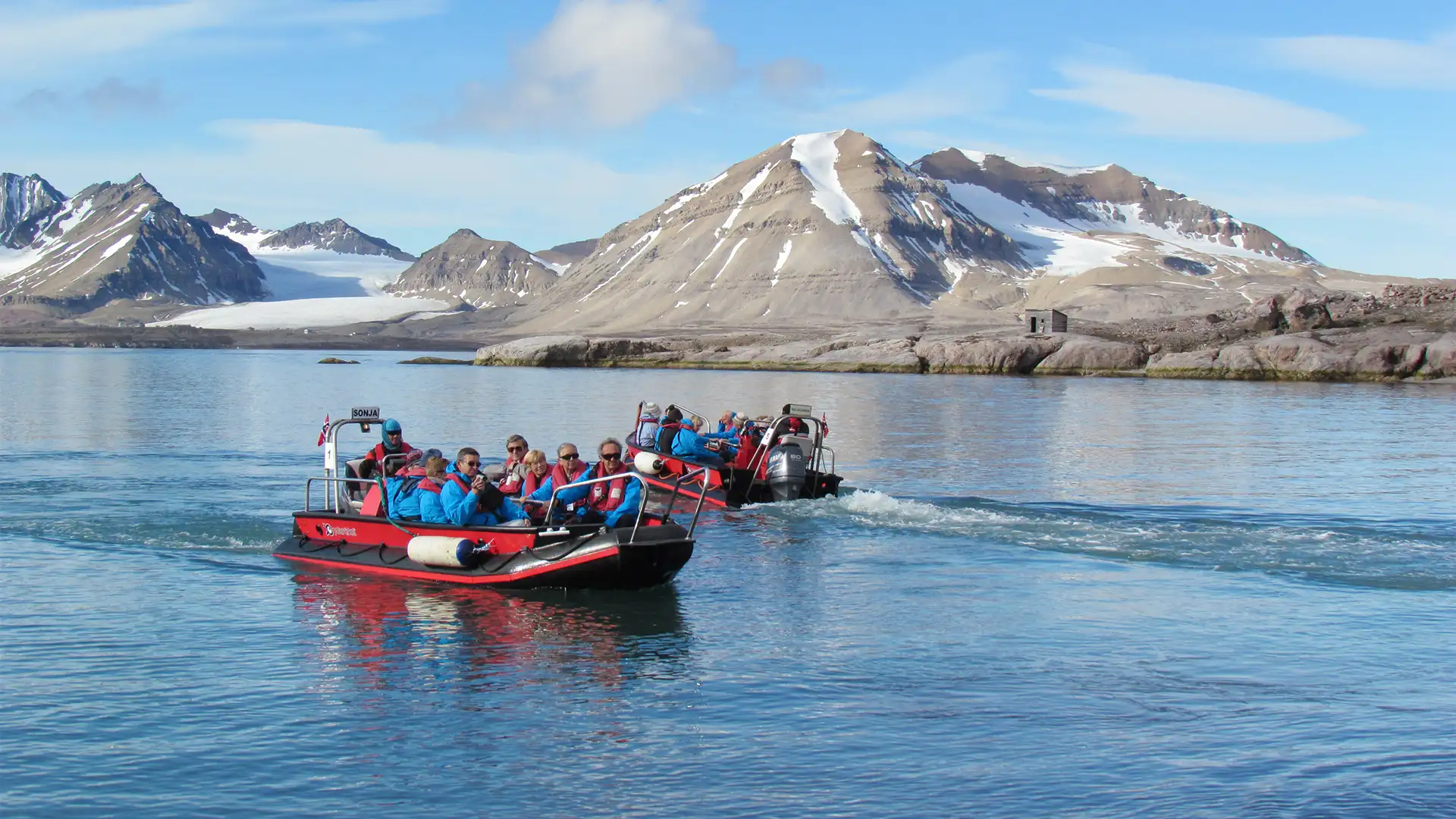
Arctic foxes are occasionally visible from the deck of a ship, particularly near seabird colonies and coastal feeding areas.
Summer is often the most rewarding season, as bird cliffs become bustling centres of activity. Foxes patrol beneath nesting seabirds, searching for eggs, chicks and other food sources.
Wildlife encounters can never be guaranteed, but watching from the deck in known sighting areas is a good idea. On our Svalbard Line voyages (sailing from May to September), the Expedition Team will alert everyone onboard if they see an Arctic fox – and they’ll keep a lookout for whales, dolphins and even polar bears too.
Guided hikes in Svalbard provide opportunities to observe Arctic foxes in their natural habitat. Sightings are particularly common near bird cliffs, tundra areas and denning sites. Expert local guides will ensure no animals are approached or disturbed.
On The Svalbard Line, you can join our Hike and Fossil Hunt excursion for the best chance of seeing Arctic foxes. But it’s even possible to see foxes in the town centre on our Historical Walking Tour in Longyearbyen excursion too.
Remember, all wildlife encounters are down to chance, but that makes it all the more special if a fox does appear.
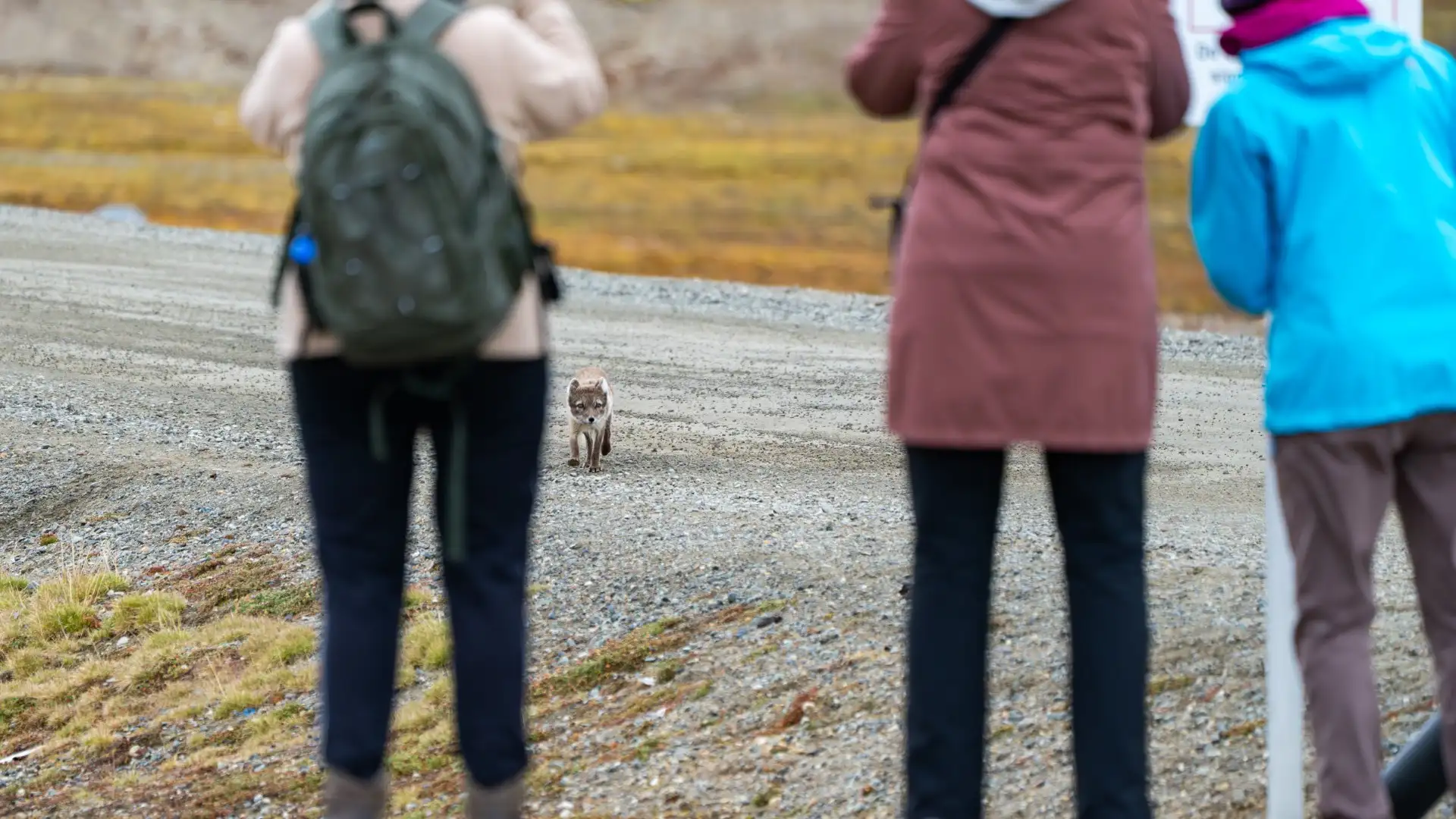

While Arctic foxes remain active throughout the year, summer and early autumn generally offer the most reliable sightings – and this period aligns with the sailing season for our Svalbard Line voyages. During summer, seabird colonies are flourishing, food is abundant and fox families may be raising pups nearby.
Winter sightings can be less predictable, and Svalbard can only be reached by plane during the winter season, but seeing a fox in its brilliant white winter coat against a snowy Arctic landscape is an unforgettable experience.
One of the most striking features of the Arctic fox is its seasonal camouflage.
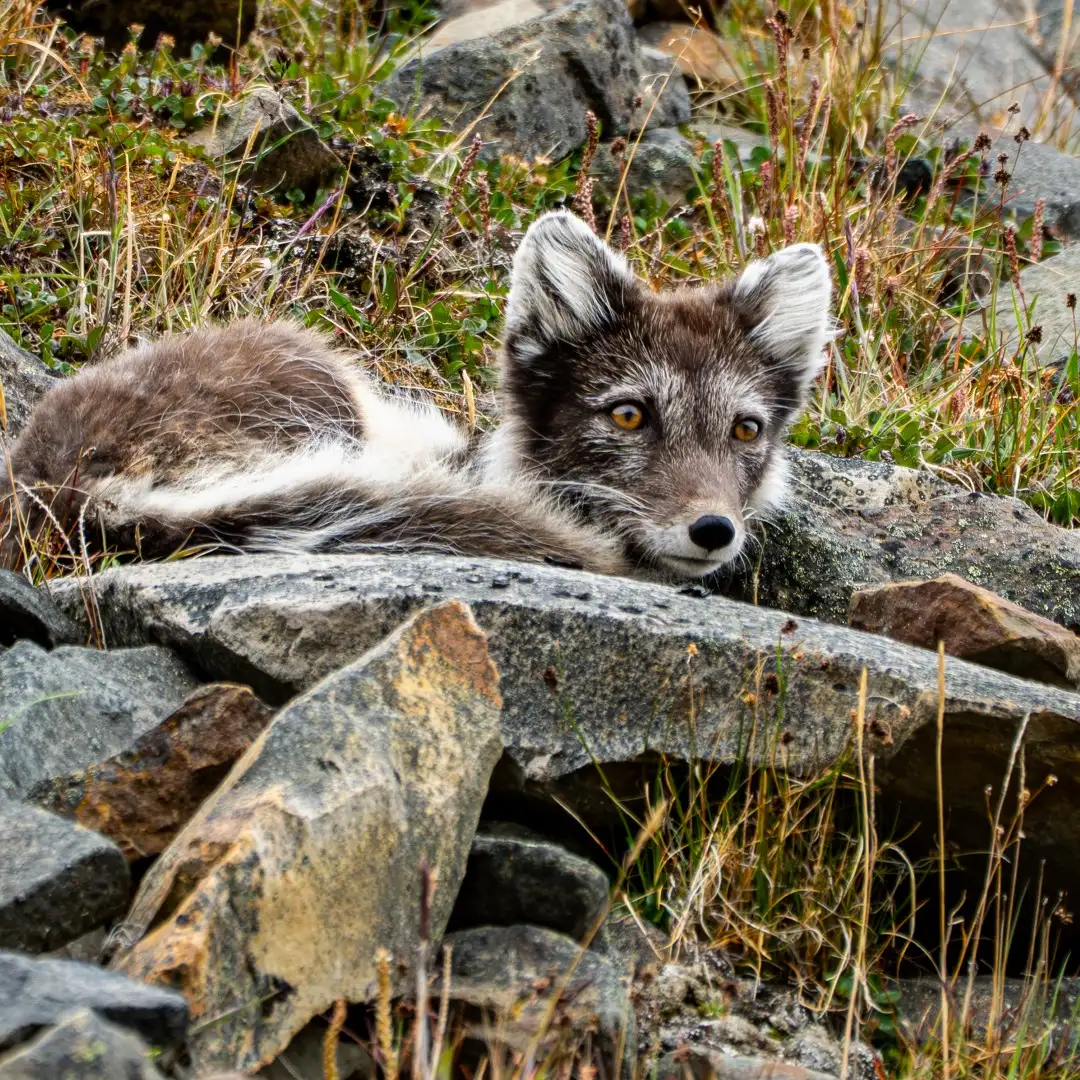
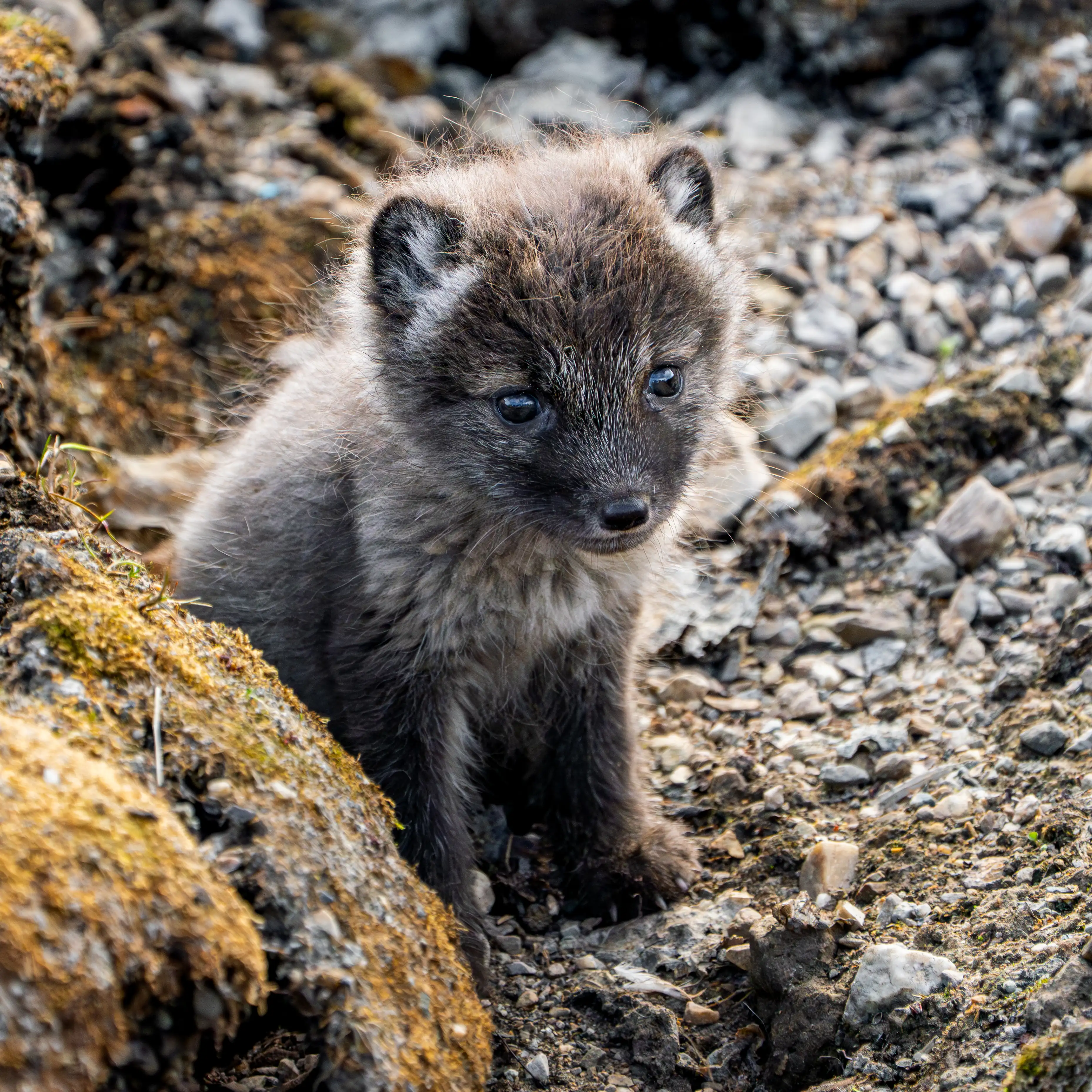
Most Svalbard foxes belong to the white colour morph. During winter, they develop a brilliant white coat that blends seamlessly with snow-covered landscapes – helping them to remain undetected from prey. As summer approaches, the coat changes to shades of brown, grey and cream to match the tundra terrain.
A smaller proportion belongs to the blue morph. These foxes retain darker charcoal-grey or blue-grey colouring throughout the year, becoming only slightly lighter in winter.
The transformation takes place twice annually. Summer fur usually develops by July, while the thick winter coat is fully established by late autumn. It's one of nature's most effective camouflage systems and a key reason for the fox's success across the Arctic.
Arctic foxes are opportunistic feeders, meaning they eat almost anything available. An Arctic fox's diet can include:
Lemmings and voles
Seabirds and bird eggs
Berries
Insects and other invertebrates
Seal pups
Carrion
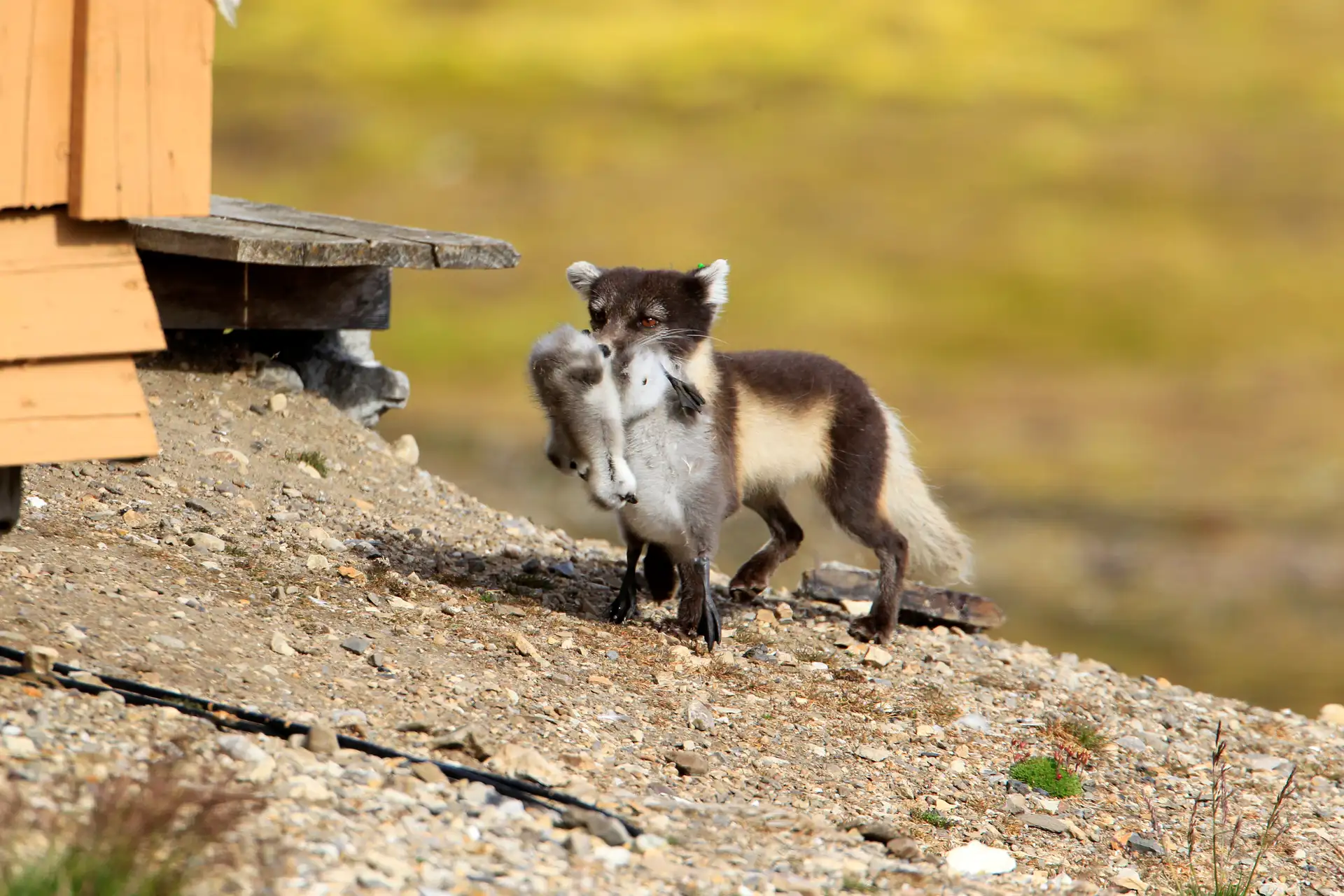
In Svalbard, the absence of lemmings means Arctic fox diets consist heavily of seabirds and reindeer carcasses. They are skilled hunters of seabird colonies, often patrolling beneath cliffs during the breeding season.
In areas with lemming populations, such as Iceland, Arctic foxes use remarkable hearing to detect prey beneath the snow. After locating movement underground, they leap into the air and plunge headfirst through the snow surface to catch their target.
They are also accomplished scavengers. In Svalbard, foxes sometimes follow polar bears and feed on the remains of seal kills after the bear has finished eating.
When food is plentiful, Arctic foxes save surplus supplies for harder times. They hide food in burrows, beneath rocks and across their territories, creating extensive caches that can sustain them through winter. Researchers have observed individual foxes storing thousands of food items during productive seasons.
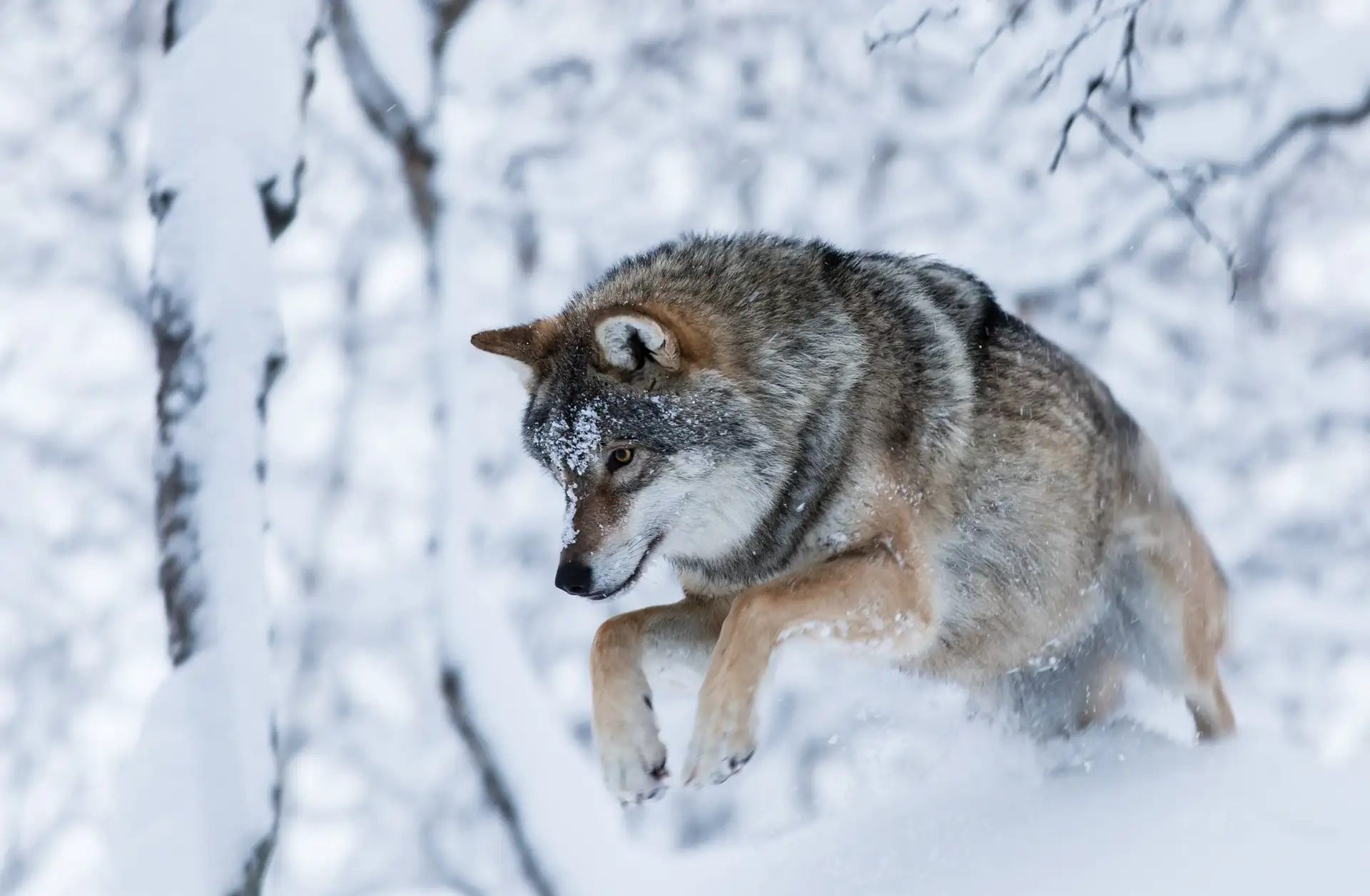
The answer depends on where the fox lives. On the Scandinavian mainland, Arctic foxes face significant pressure from larger red foxes, which compete for food and territory. Golden eagles, wolves and wolverines may also prey on them.
In Svalbard, Arctic foxes have no natural predators and no competitors on the archipelago. This helps explain why they can seem unusually inquisitive and confident compared with fox populations elsewhere.
Globally, no. The Arctic fox is classified as a species of Least Concern, with a large and widely distributed population across the Arctic.
But on the Scandinavian mainland, where increased competition, predators and reduced food availability threaten fox populations, this changes to Endangered. Across Norway, Sweden and Finland, the total adult population is estimated at fewer than 200 individuals. As a result, mainland Arctic foxes remain among the most threatened mammals in Northern Europe.
Across the world, Arctic foxes are threatened by climate change. Unpredictable weather patterns not only affect food resources, but also the fox’s camouflage. The fox’s coat changes colour in line with circadian cycles at roughly the same time each year, so when snowfall comes later than expected due to warmer temperatures, the fox is not camouflaged – impacting hunting and predation.
Norway, Sweden and Finland have invested heavily in conservation programmes designed to help mainland Arctic fox populations recover. These initiatives include supplementary feeding stations, habitat management and captive breeding programmes that have helped increase numbers in some regions.
The Svalbard population, meanwhile, remains healthy and is monitored separately from mainland populations.
We sail to Svalbard in summer on The Svalbard Line, our Signature all-inclusive voyage from Bergen to Longyearbyen, with round-trip, northbound and southbound options.
Bergen - Svalbard - Bergen (Roundtrip)
All-inclusive Arctic cruise to Svalbard & back, with fjords, wildlife & Midnight Sun

Longyearbyen - Bergen (Southbound)
All-inclusive cruise from the High Arctic exploring fjords, islands & wildlife
Yes. The Arctic fox (Vulpes lagopus) is a mammal in the order Carnivora and is closely related to the red fox.
Polar fox is simply another name for the Arctic fox. The two terms refer to the same species.
Globally, no. However, mainland populations in Norway, Sweden and Finland remain highly endangered.
No. Arctic foxes are not considered dangerous to people. However, like all wild animals, they should never be approached, fed or touched.
Most adults weigh between 2.5 and 5 kilograms, about the same as a large domestic cat.
Most survive three to four years in the wild, although some individuals in Svalbard have reached 16 years of age.
Their coat changes with the seasons to provide camouflage, turning white in winter and brown-grey during summer.
Receive special offers, exciting new itineraries and fascinating articles delivered straight to your inbox.