Solar Maximize your chances of seeing the Northern Lights

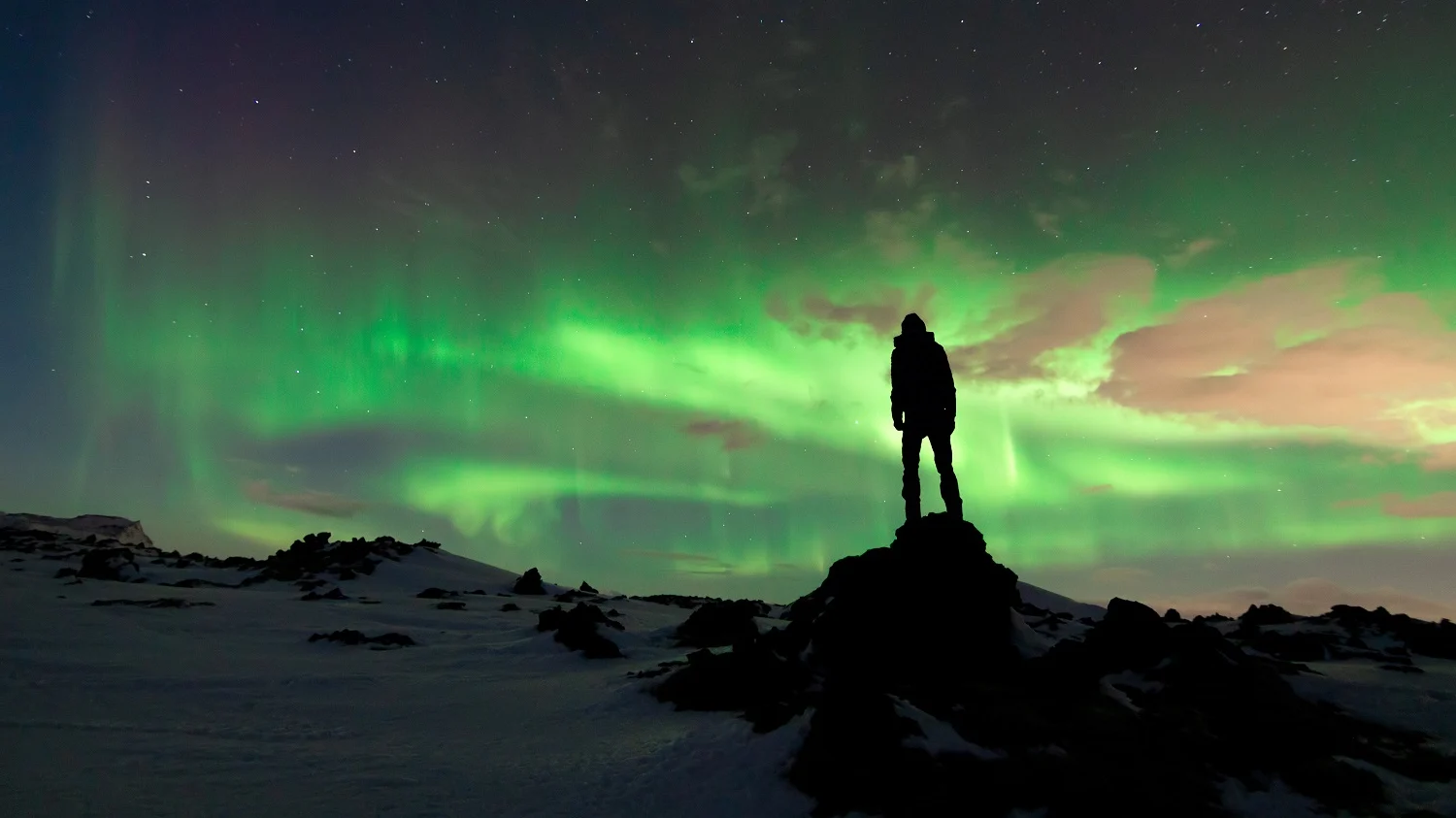
Scientists predict the Solar Maximum in 2024-25 will result in the most frequent and impressive Northern Lights displays in more than a decade.

lofoten_northern_lights_norway_hgr_147476_getty_images-1

What is the Solar Maximum?

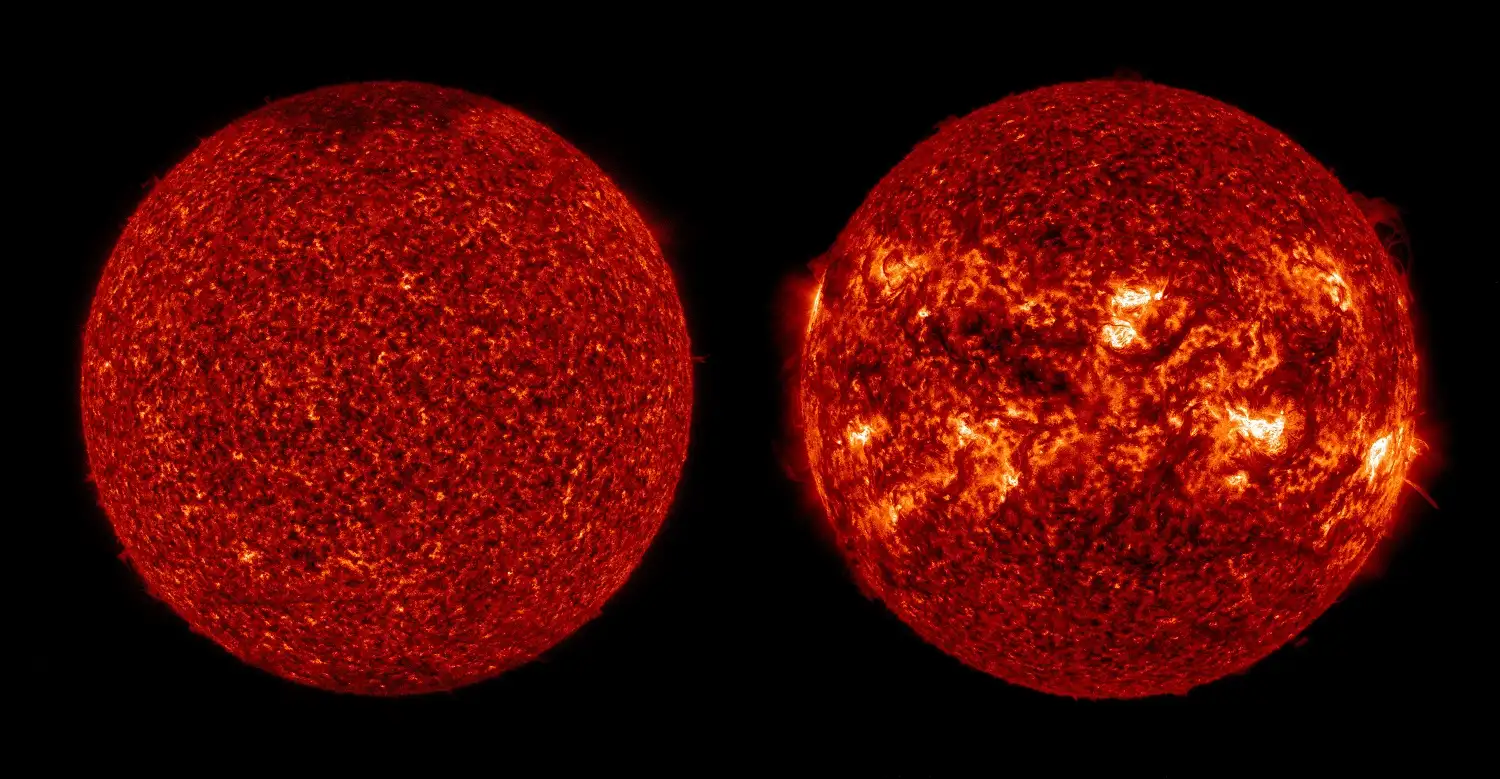
The Solar Maximum occurs when the Sun’s magnetic field flips between north and south. It is an expression of the immense magnetic tension that builds up inside the Sun during the Solar Cycle, which lasts approximately 11 years.

When the Solar Maximum occurs, there are usually a greater number of sunspots on the Sun’s surface. By contrast, during Solar Minimum, which marks the end of one cycle and the beginning of the next, the Sun shows fewer sunspots. The number of sunspots is directly related to the frequency and intensity of enhanced aurora displays.

Our Chief Aurora Chaser, astronomer Tom Kerss reassures us that “the reversal of the solar magnetic field is nothing to be feared. It’s been happening for billions of years, and the tension it releases provides the ingredients for fantastic experiences under the Northern Lights.”

SDO (Solar Dynamics Observatory) images of the Sun at the minimum (left) and maximum of the last solar cycle. Images are taken in ultraviolet, with bright regions showing intense activity associated with sunspots. Credit: NASA, Tom Kerss

When will the Solar Maximum occur?

Scientists are confident that the Maximum of the current solar cycle arrived in late 2024. That means we're now in so-called declining phase, during which sunspot numbers continue to remain high. This results in more turbulent solar wind, and a higher frequency of solar events that give rise to geomagnetic storms, producing powerful auroras.

As a result, the next aurora-chasing season, between September and March 2026-27, will benefit from elevated activity, even as the Solar Cycle progresses steadily towards the next Solar Minimum around 2031.

All of this is great news for anyone considering a Northern Lights cruise in 2026 and 2027. Even as solar activity wanes, Arctic Norway will always be a superb place to access the Northern Lights. So far north, even during quieter periods, auroral displays are an enchanting sight throughout the season, frequently appearing high in the sky or even overhead.

sunspot_data_solar_maximum_space_weather_prediction_center

Chain reaction: sunspots and solar wind

Chain reaction: sunspots, solar wind, and the Northern Lights

Sunspots are dark regions that appear on the Sun’s surface wherever the magnetic field restricts the flow of heat from its interior. Solar flares can erupt around sunspots, releasing magnetic energy into the solar wind. In some cases, giant eruptions called coronal mass ejections will follow, leaping away from the Sun and potentially towards the Earth.

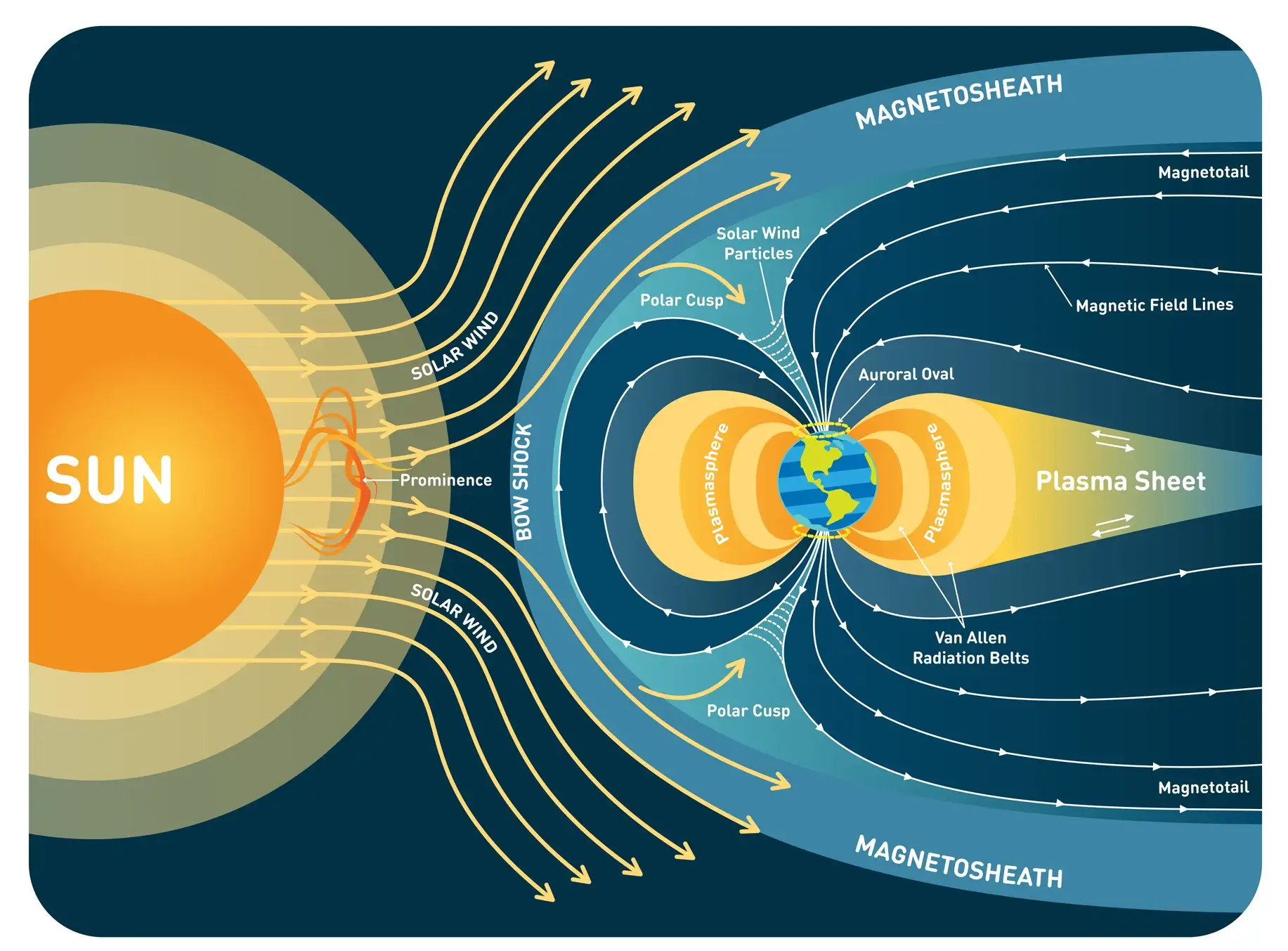
Tom Kerss tells us these flares and storms enhance, speed up and sometimes even “punch holes” in the solar wind, which comprises a constant stream of particles escaping the Sun and flooding the Solar System in all directions. “Churned-up solar wind can increase the likelihood of energy being stored in the Earth’s magnetotail. When it’s inevitably released, it drives the currents that give rise to bright, dynamic auroras.”

A diagram showing the solar wind with the Earth's magnetic field

The Earth’s magnetic field, also known as the magnetosphere, protects us from the harsh radiation environment of the solar wind, but also accelerate trapped particles to incredible energies.

The magnetic field is most dense around the geomagnetic poles. Here, incoming solar wind particles are energetic enough to excite atoms in the ionosphere high above our heads, resulting in the beautiful auroral displays we see in Northern Norway.

By monitoring the Solar Maximum, sunspot activity, solar flares, and solar storms, scientists and aurora-chasers can get a good picture of the solar wind. They also have satellites like DSCOVR and the recently launched IMAP which track the incoming particles. With real-time information about the density, speed, and magnetic properties of the solar wind, they can forecast how active auroras are likely to be throughout the night.

Rainclouds vs. solar flares

Solar flares and the storms they produce create inclement space weather, which is good news for aurora-chasers. However, when it comes to terrestrial weather, we’d prefer it to be mild.

Space weather forecasting has become surprisingly sophisticated. On the other hand, cloud cover is difficult to forecast accurately. But your chances of cloud-free skies are better on a cruise, says physicist and astronomer Dr John Mason.

“You can never guarantee there will be a clear sky but at least on a Hurtigruten voyage, the ship is travelling 12 to 14 knots, so the weather changes often. This means, even if it’s cloudy in one area, the ship will often move on to clear patches of sky, providing many more opportunities to see the Northern Lights.”

How to maximize the Solar Maximum

As well as planning a cruise to see the Northern Lights during the 2024-25 Solar Maximum, there are other steps you can take to increase your chances of catching an auroral display.

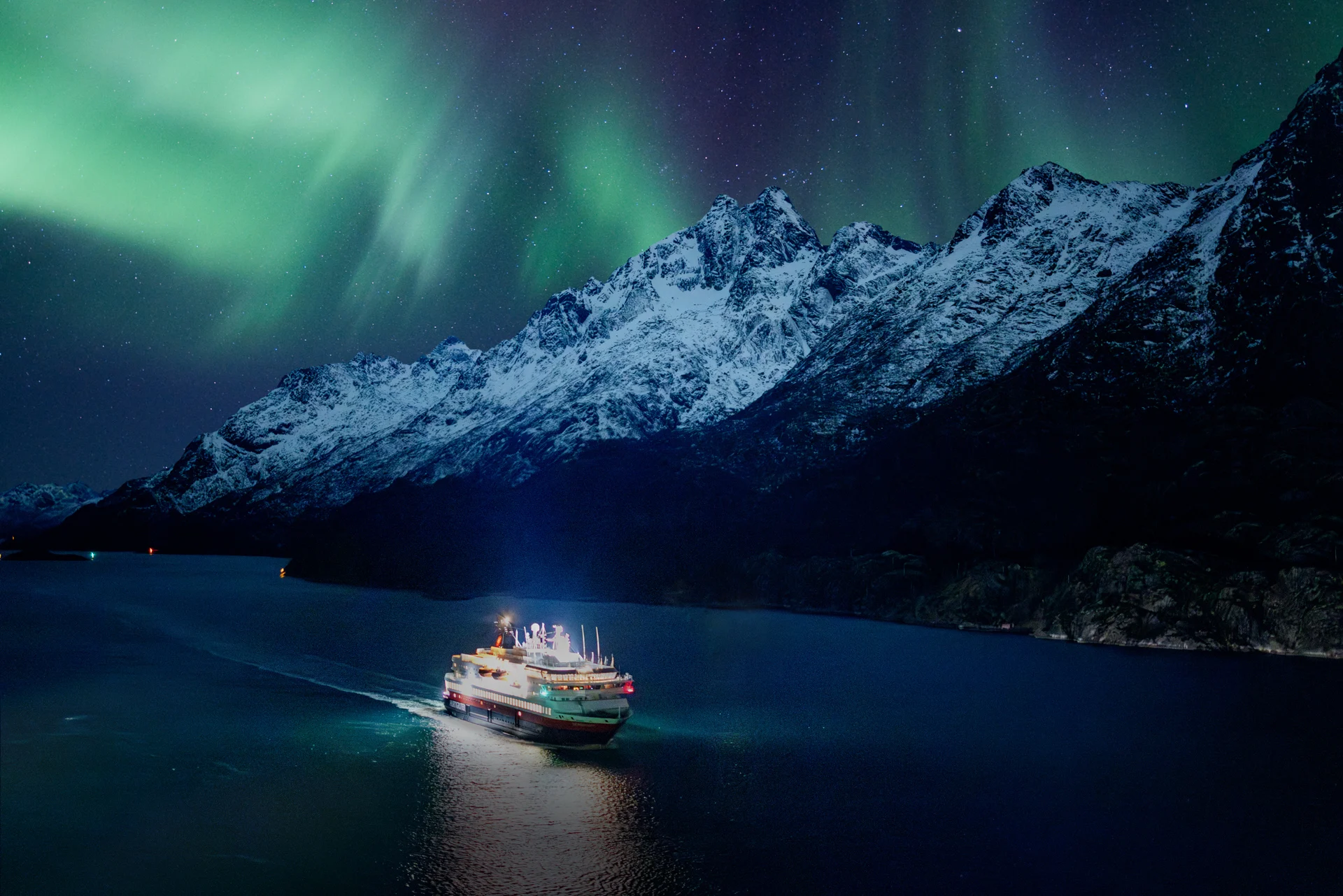
ms-nordkapp-northern-lights-trym-ivar-bergsmo

Sail with us between September and March

This is when the skies are darkest. Northern Norway is directly beneath the Auroral Oval and is consistently ranked as one of the best places in the world for seeing the aurora borealis.

Guests enjoy a hot tub on deck aboard a Hurtigruten cruise beneath the glowing Northern Lights in Norway

Keep your evenings free for sky gazing

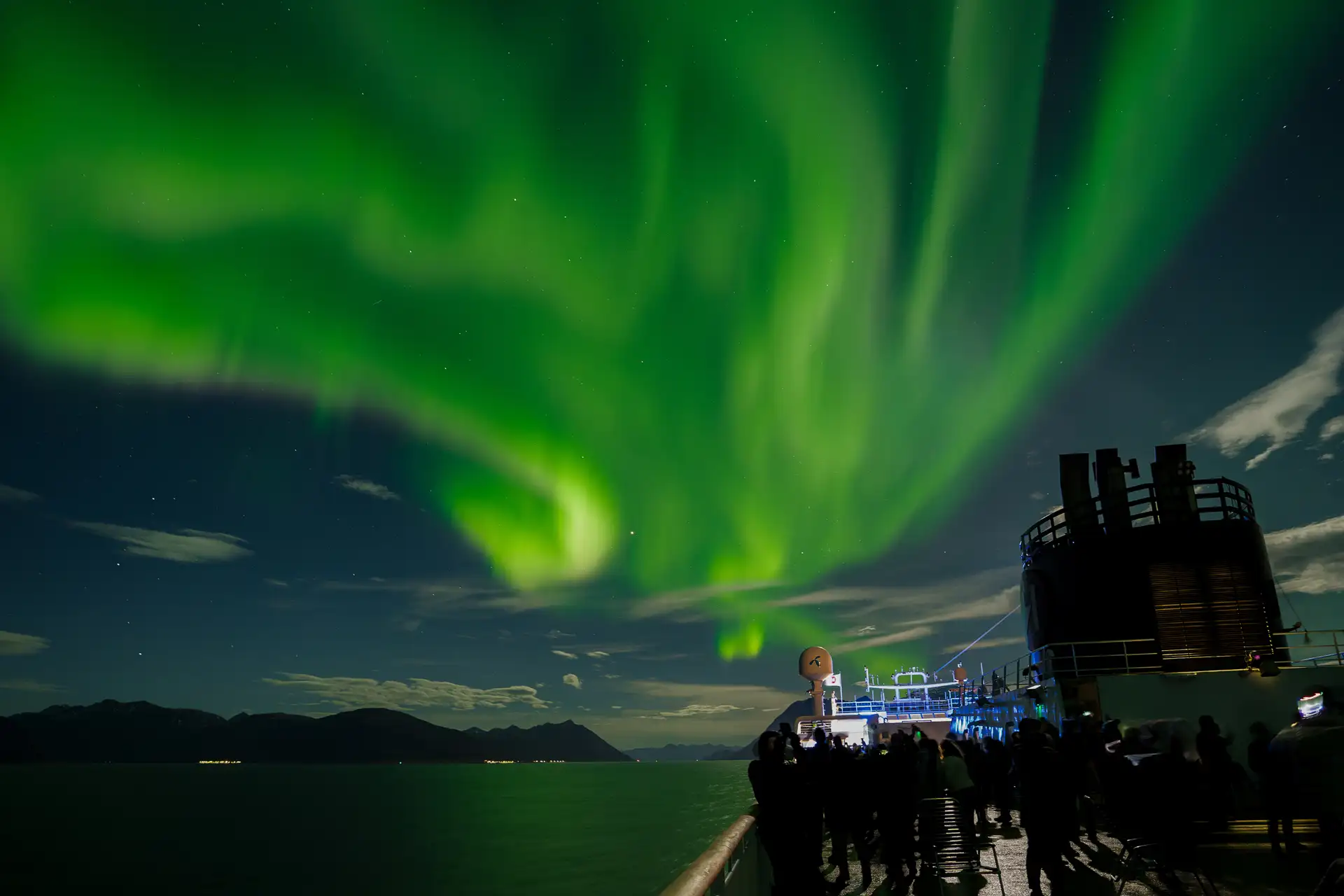

The aurora is most likely to make an appearance between 5 p.m. and 2 a.m. From out on the ship’s deck, you might even see the Northern Lights filling the entire night sky rather than simply glowing on the horizon.

new-moon-wikimedia-commons

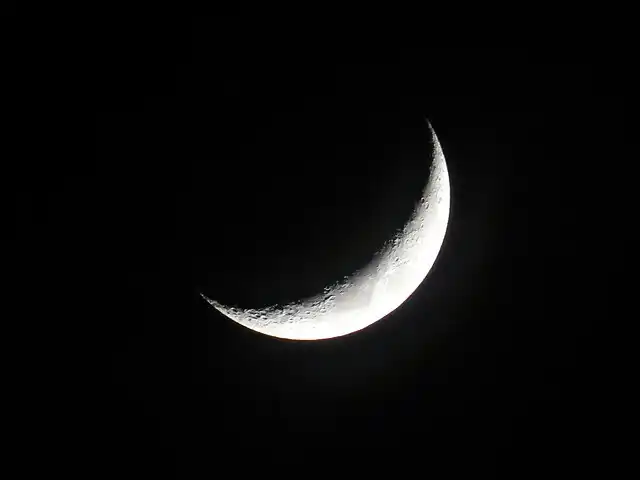
Plan your Northern Lights cruise to coincide with a new moon

The brightness of a full moon can make the Lights seem dimmer by comparison.

Passengers on ship deck watching the northern lights in Norway

Avoid light pollution

Places with wide-open skies and no light pollution are best for seeing the Northern Lights. A cruise is perfect. At sea, light pollution is minimal to non-existent, and the Arctic skies are unobstructed and huge.

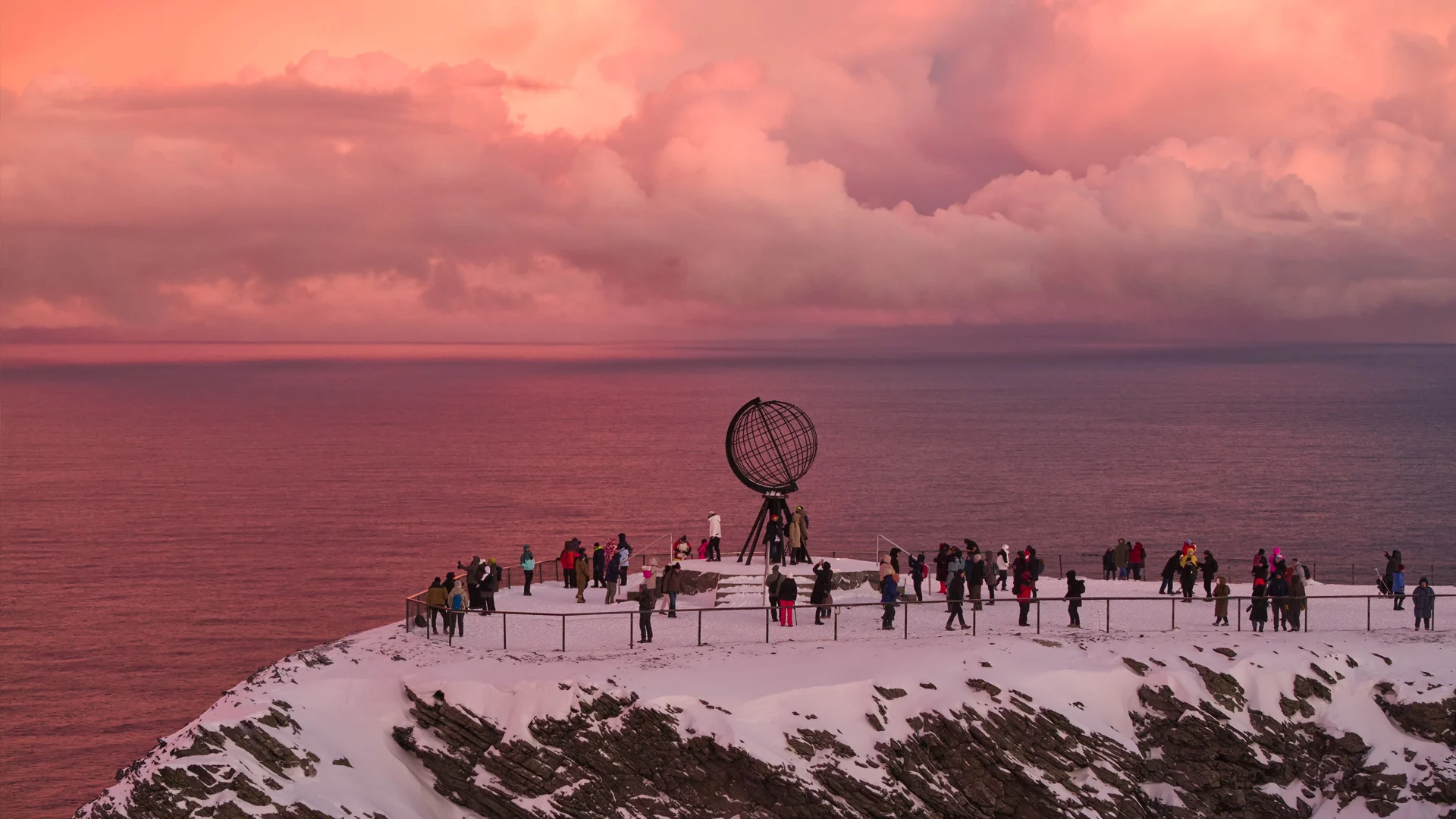
The North Cape Globe Monument under the Northern Lights

Take advantage of our Northern Lights Promise

If the Northern Lights don’t make an appearance during your Northern Lights voyage of 11 days or more, you’ll get another 6- or 7-day voyage for free.

Sign up for our newsletter

Receive special offers, exciting new itineraries and fascinating articles delivered straight to your inbox.

Yes, sign me up!