Sea Zero
Hurtigruten’s Sea Zero project shows that an emission-free coastal cruise ship is possible.
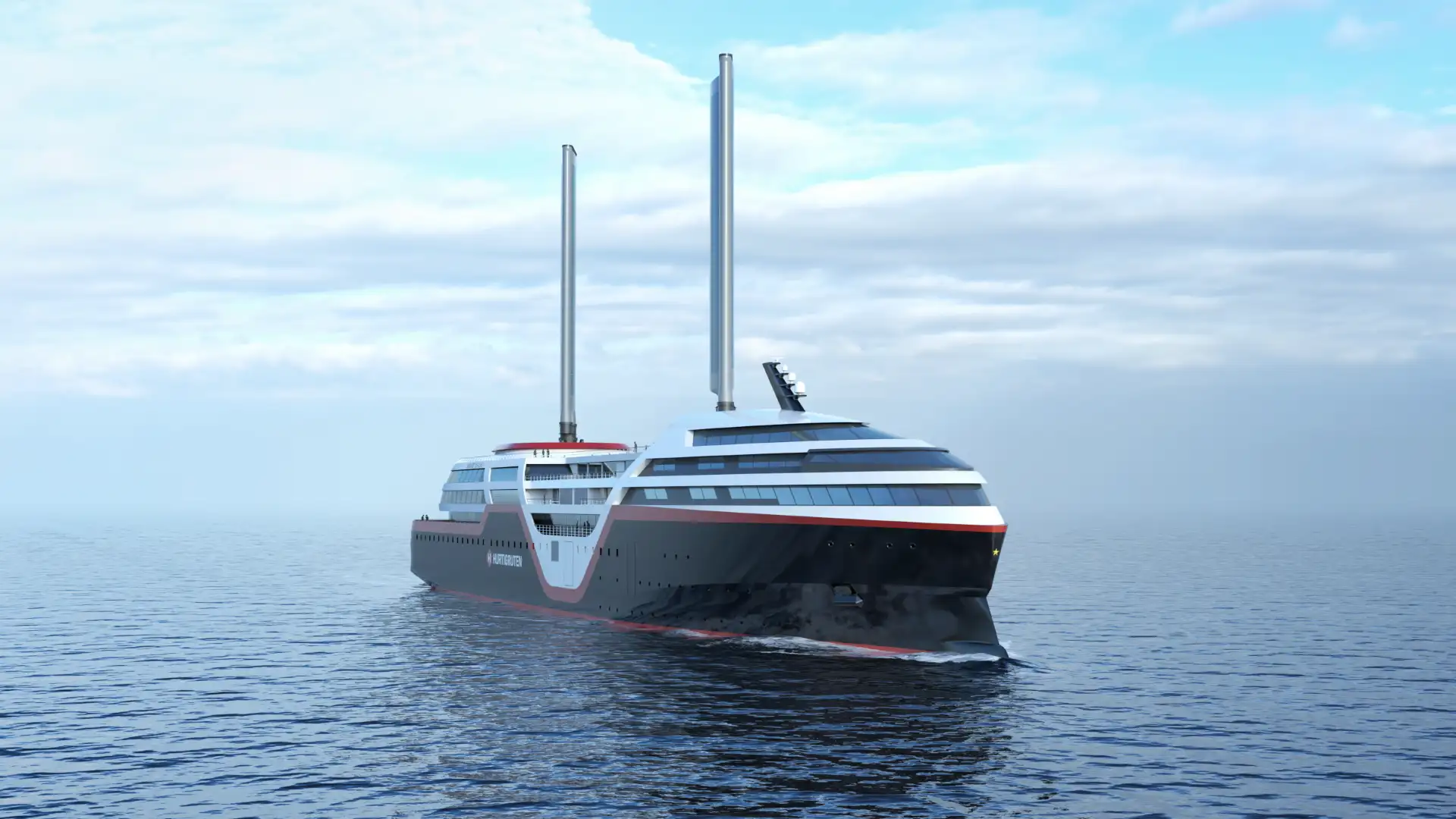
Hurtigruten’s groundbreaking Sea Zero project demonstrates that, by using sails, batteries, contra-rotating propellers, and a range of other innovations, it is possible to build a ship that can operate with zero emissions under normal conditions.
In spring 2026, the research and development phase of the project was completed. The conclusion is that it is possible to design a vessel capable of operating the route between Bergen and Kirkenes with zero emissions during normal service, using batteries as its primary energy source.
Our vision

“Sea Zero shows that emission-free operation of larger passenger ships is no longer just a vision but a realistic goal.
"The knowledge and solutions developed through the project can contribute to the transformation of the entire maritime industry.”
- Hedda Felin, CEO of Hurtigruten
Advancing hybrid electric technology
Advancing hybrid electric technology
Sea Zero is a consortium led by Hurtigruten and SINTEF, with participation from several leading companies and organizations in Norway’s maritime sector.
The extensive research and development project has been underway since 2022 and has been partially funded through the Norwegian government’s Green Platform initiative.
Reduced energy demand
The project’s primary objective is to cut the ship’s energy consumption in half. The final report now shows that energy use can be reduced by around 40-50% through a range of innovative onboard solutions.
“I don’t think there’s any ship we’ve been involved with that has been analyzed this thoroughly. And the results show a dramatic improvement in energy efficiency of around 44%. We were actually surprised that the design performed even better in model tests than we had estimated beforehand,”
- Trond Andreas Vikan Johnsen, project manager, SINTEF Ocean
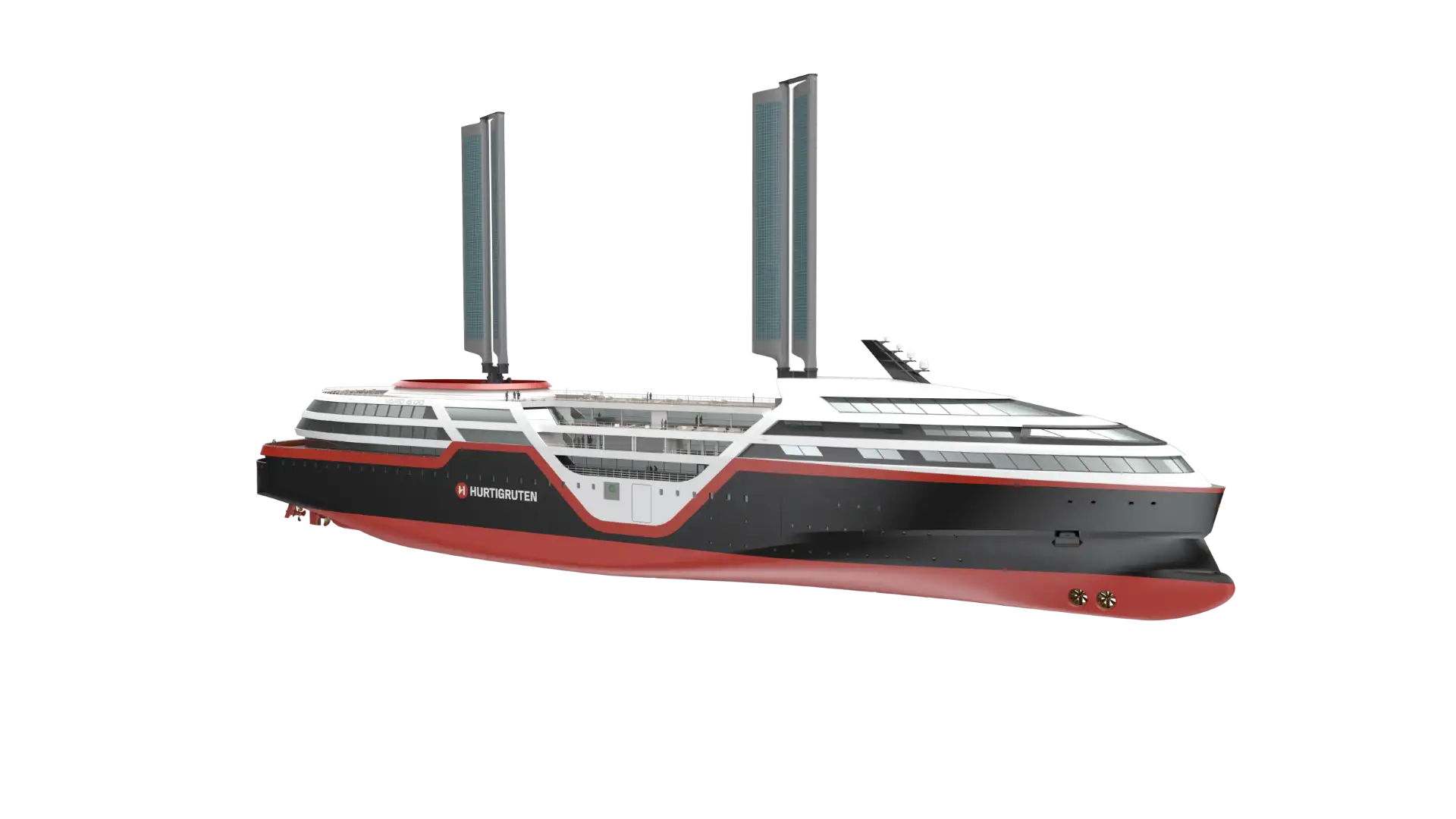
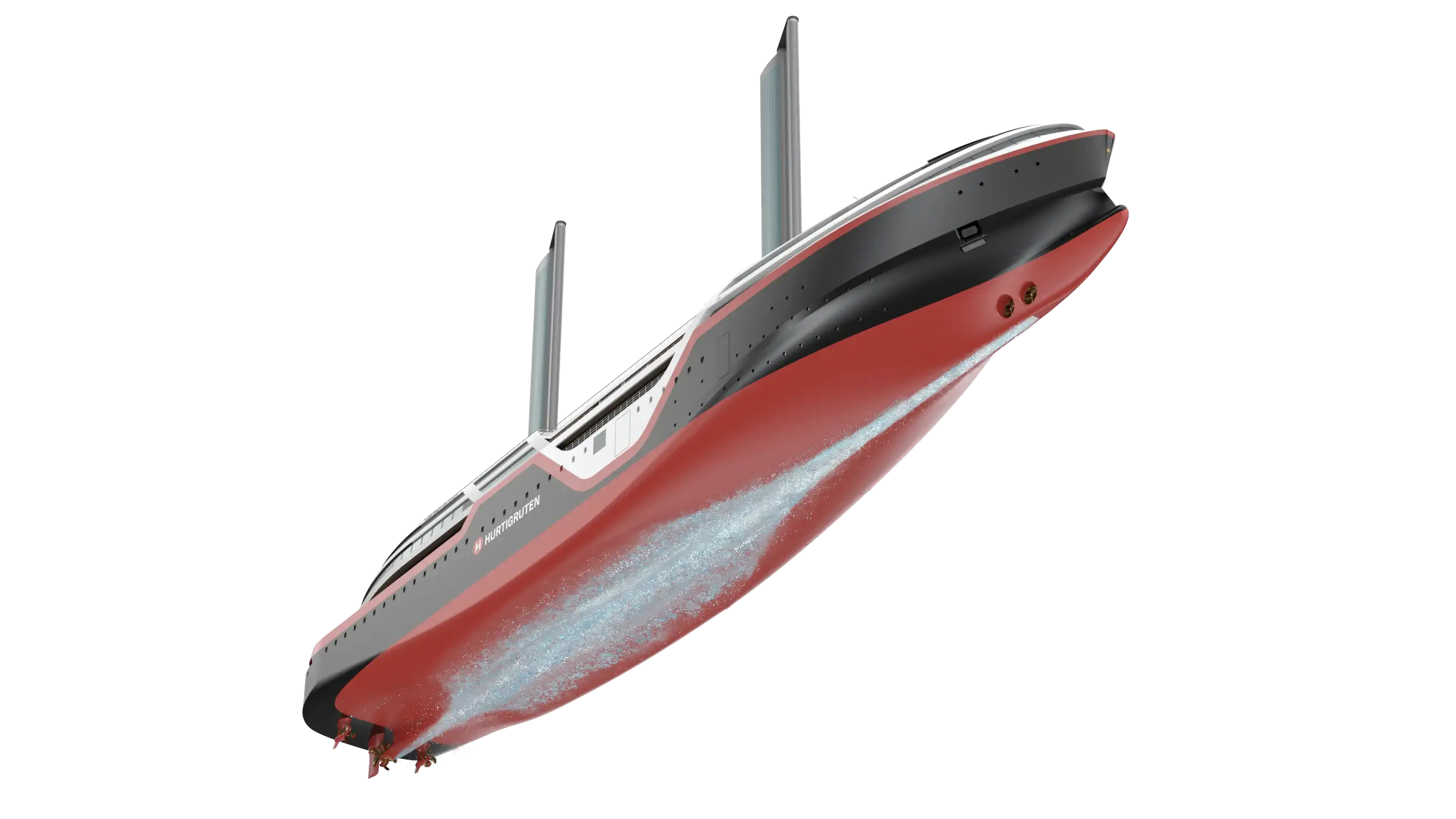
Two large retractable sails, contra-rotating propellers, a modern hull design, air lubrication, frequent hull cleaning using a robotic system, and more efficient heating and ventilation systems all contribute to lowering the vessel’s energy requirements.
Advanced testing
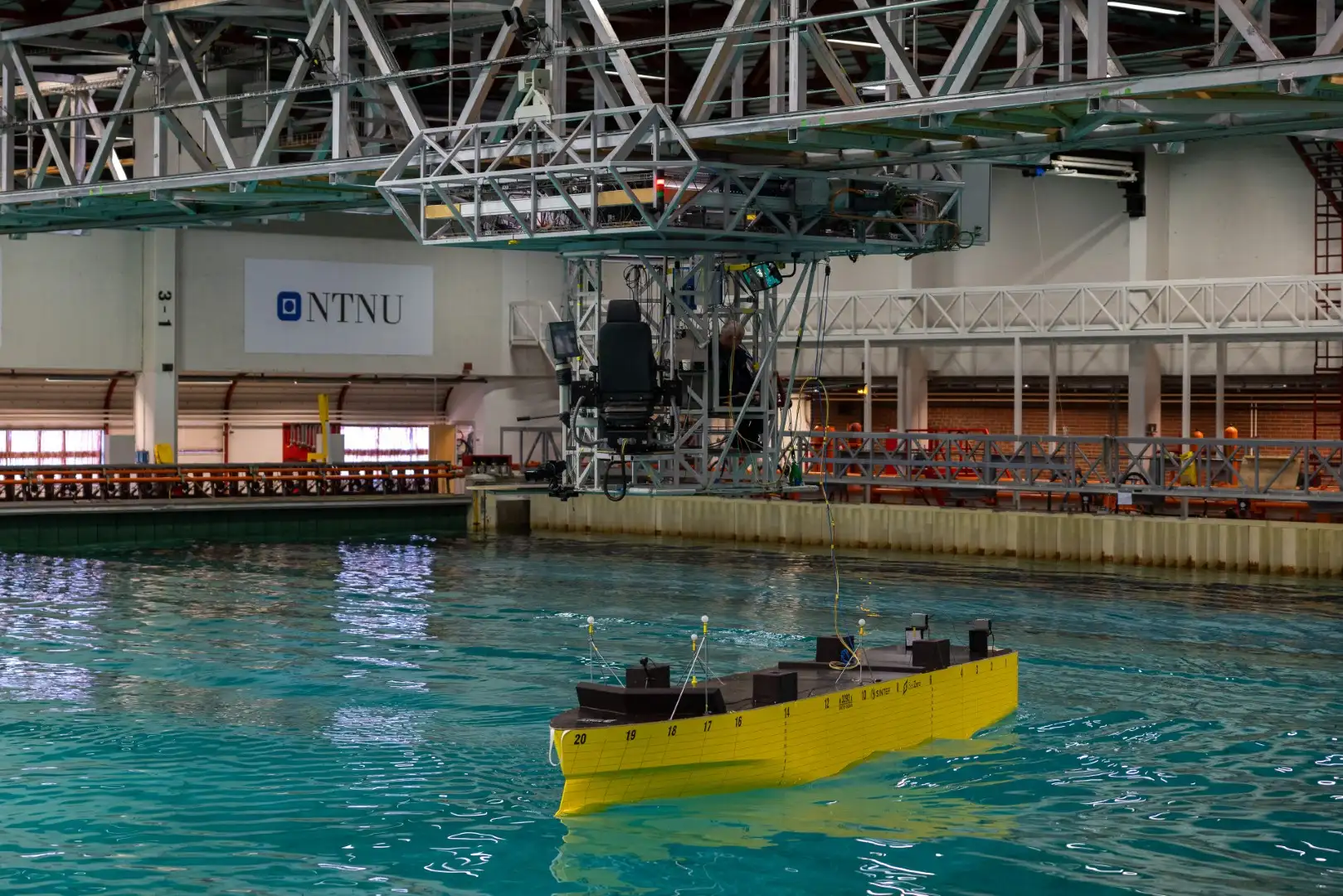
Over the past several years, advanced testing has been carried out in SINTEF’s laboratories in Trondheim. The results show that the sails, contra-rotating propellers, and hull design all significantly reduce energy consumption in practice.
The simulations were conducted both digitally and using an eight-meter model tested in ocean basins and towing tanks at SINTEF Ocean. In addition, the performance of the propellers and the air lubrication system was carefully examined in a cavitation tunnel.
Challenges remain
The project has selected 73 MWh of battery capacity as the ship’s primary energy source. This means that charging infrastructure along the coast will be essential to eliminate emissions during normal operation.
“It is possible to charge quickly enough in ports and have batteries large enough to sail the entire Bergen-Kirkenes route without emissions. However, this will require access to electricity in selected ports, and charging infrastructure is the biggest challenge to actually putting such a ship into operation.”
- Hurtigruten COO Gerry Larsson-Fedde
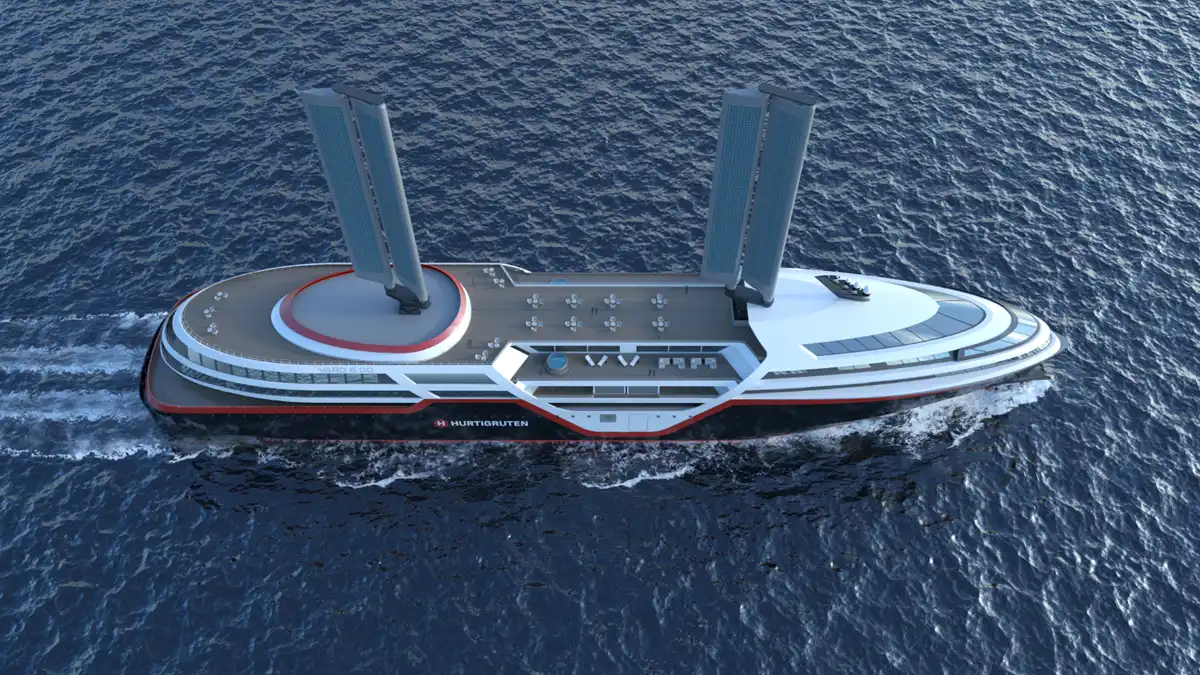
The Sea Zero vessel was designed by Vard Design in Ålesund. The latest illustrations are the fourth iteration of the design and show how it has evolved throughout the research and development process.
The ship will be 143.5 meters long and accommodate approximately 500 berths. It will be five metres longer than MS Finnmarken, currently the longest ship in Hurtigruten’s fleet.
Sea Zero facts
Goal: Build the world’s most energy-efficient ship.
Uses Brunvoll contra-rotating propellers for propulsion, with pods for maneuvring. By using two propellers that rotate in opposite directions, the ship requires less energy to move forward.
Equipped with two large sails fitted with solar panels. The sails can be raised or lowered as needed, for example when passing under bridges.
Features an air lubrication system, where small air bubbles are pumped beneath the hull to reduce water resistance.
Includes energy-efficient heating and cooling systems.
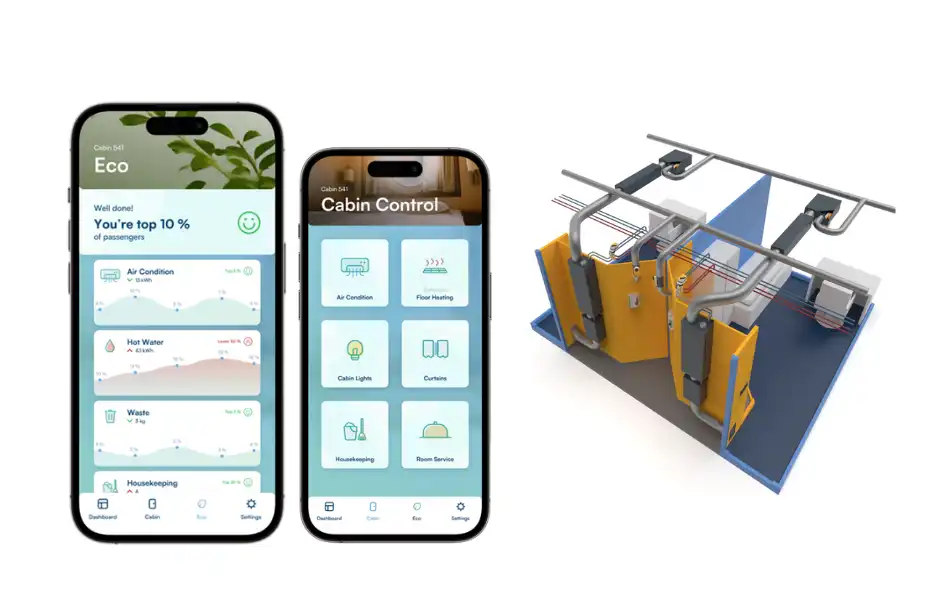
Uses smart cabins to better monitor and manage energy consumption. Calculations indicate potential energy savings of 40-50% compared with today’s ships.
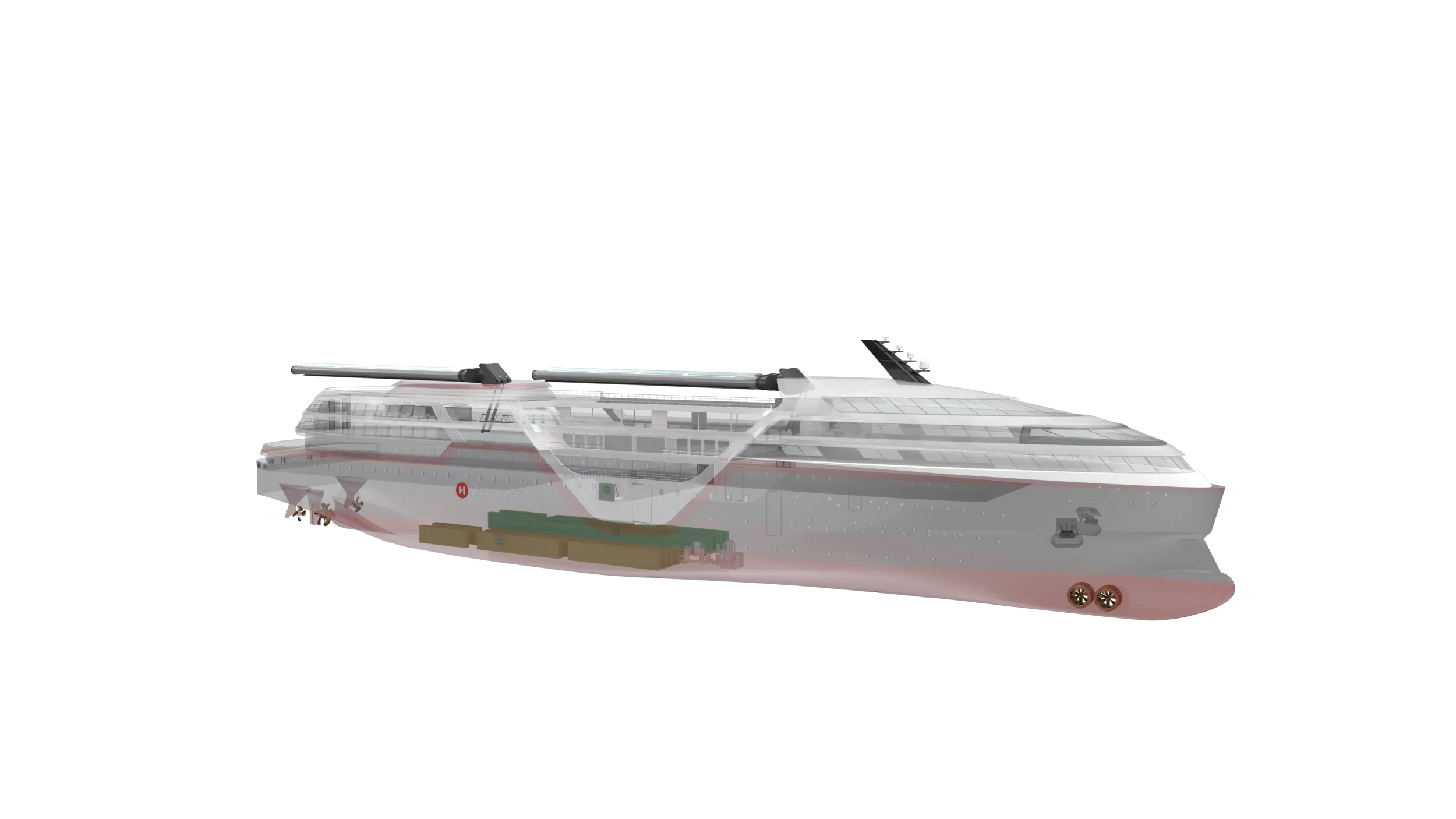
Planned with 73 MWh of battery capacity. The batteries provide sufficient range to recharge at selected ports along the route, although the specific ports have not yet been determined.
Sea Zero is a research and development project in which Hurtigruten collaborates with partners including SINTEF, Cavotec SA, Vard Design, DNV, Brunvoll, Plug, Corvus Energy, Teknotherm, Sustainable Energy Catapult, Jotun, the Norwegian Maritime Authority, Norwegian Ports, and the Port of Bergen.
Sea Zero: Key features
Here are a few of the ground-breaking innovations that have been looked at and tested so far in the Sea Zero project.
Wind and solar sails
Two retractablewing-rigs will be able to contribute added propulsion. These sails can also be covered in solar panels for a total surface area of over 16,000 sq ft.
Come summer, our ship can be superpowered by northern Norway’s Midnight Sun that shines for 24 hours a day in summer.
Battery banks
Renewable energy from ports where the ship plugs in to charge is safely stored in the ship’s 73MWh-strong battery system.
At the same time, we are making sure that any batteries we use consist of chemistries that are free from cobalt and that keep nickel to a minimum.
AI guided bridge
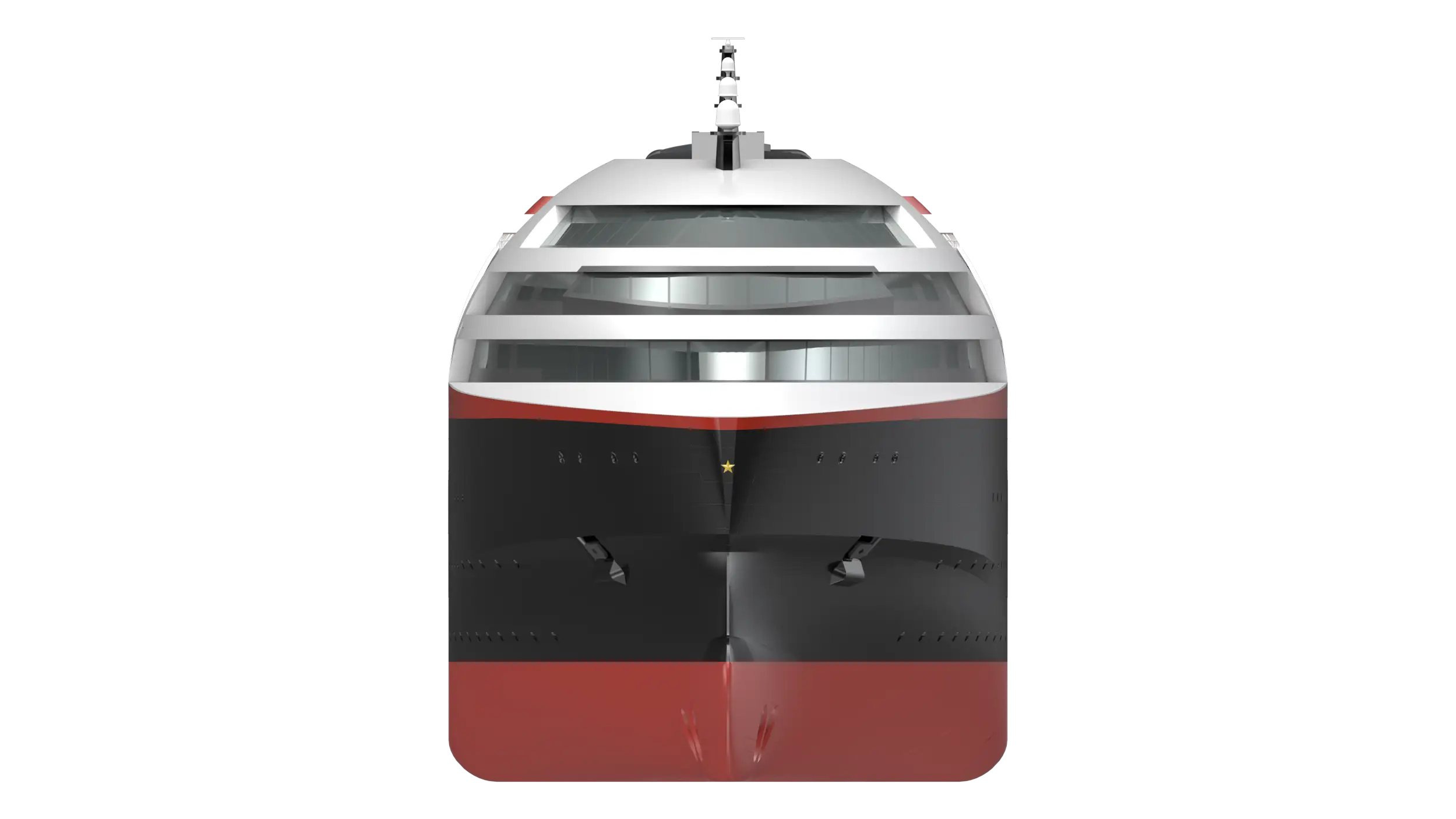
With the ship equipped with dozens of exterior sensors and cameras, and manoeuvring aided by the onboard AI, the size of the bridge can be slimmed down, having a setup like an airplane cockpit.
Not only does this mean a more aerodynamic hull at the bow of the ship, but it also means we can give our guests more living space and viewing areas on the upper decks.
Contra-rotating propellers
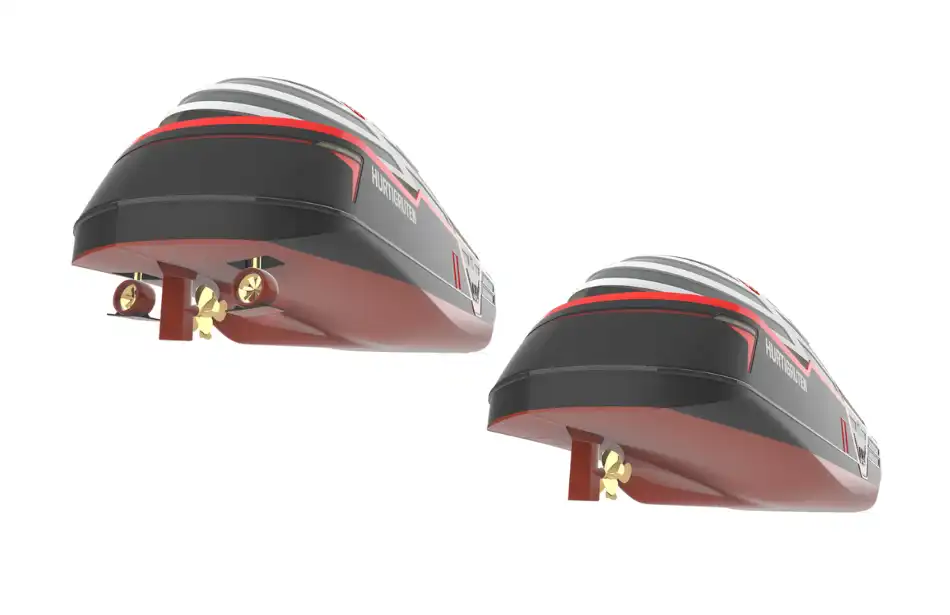
By using two propellers that rotate in opposite directions, the ship can use less energy to move forward. SINTEF has designed and manufactured new measuring equipment for model testing of contra-rotating propellers.
The rigorous tests show that efficiency increases when the energy lost from the front propeller at the same time as the rear propeller gets better water flow, meaning significant savings of energy.
Two additional thrusters at the stern of the ship and tunnel thrusters at the bow will make sure that the ship is manoeuvrable in and out of port.
Underwater air lubrication
To reduce underwater drag, we are further developing solutions that will allow the ship to ‘surf’ on a carpet of air bubbles.
These streams of air would project out from the ship’s hull, helping to reduce water resistance.
Smart cabins
Heating and cooling throughout the ship will be taken care of by intelligent heat exchange pumps and a network of insulated distribution systems.
These data-driven systems will enable our guests to monitor and control energy use in their individual cabin through an app on their phone.
Hurtigruten at heart
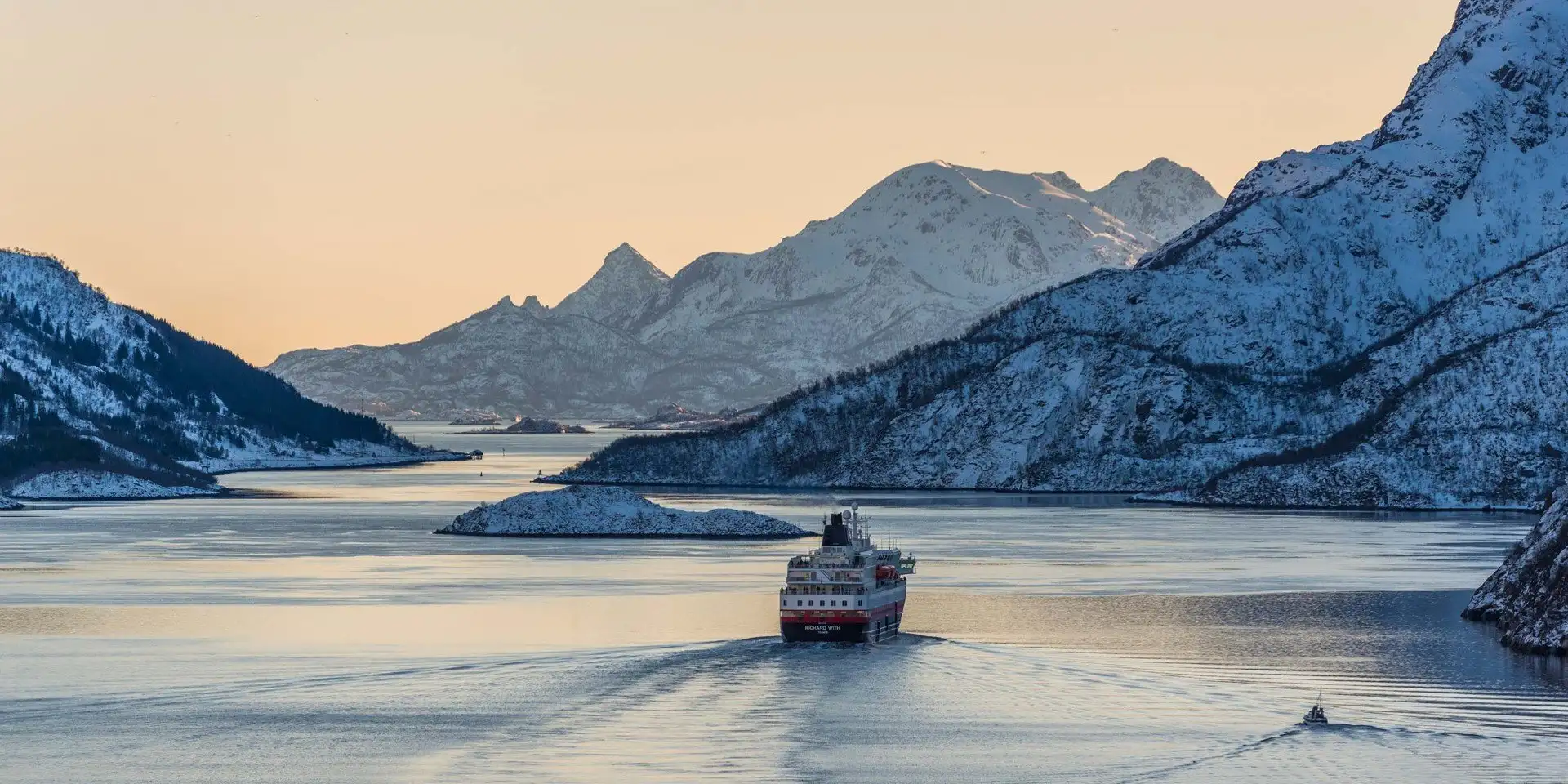
It’s not just our iconic black, red, and white livery that makes this new Sea Zero ship follow in the wake of Hurtigruten ships past and present.
The ship is a similar size to the ones in our current fleet, ensuring we retain the intimate onboard experience we are loved for.
A large cargo hold and the ability to transport cars is also included in the design, in keeping with our faithful 130-year service transporting local passengers, cargo and tourists alike to communities on the Norwegian coast.