Norway’s stave churches: masterpieces of medieval craftsmanship
Discover Norway’s medieval stave churches – remarkable wooden wonders from the end of the Viking age famed for their intricate carvings, dragon-headed roofs and masterful craftsmanship.
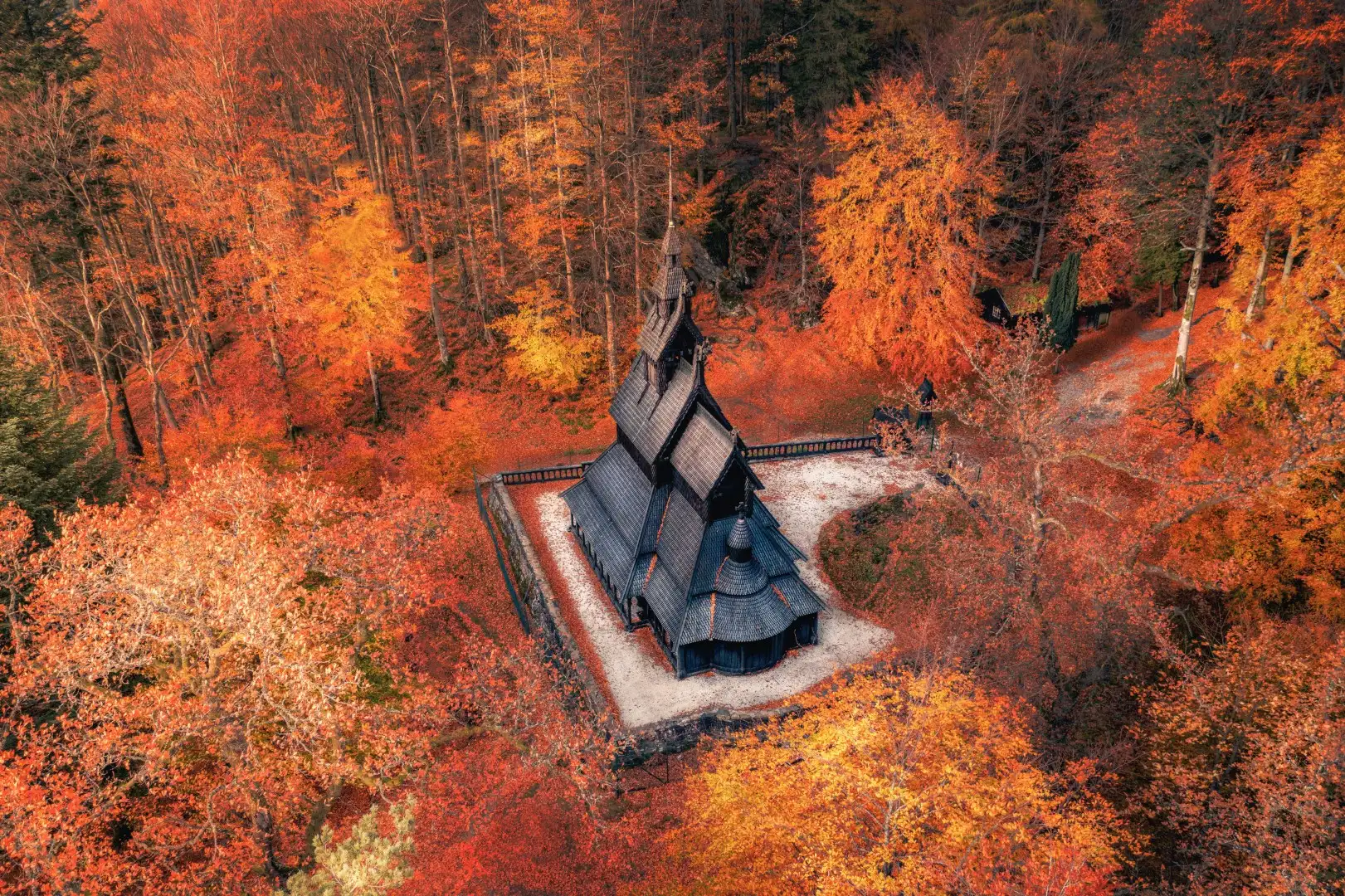
Scattered across some of Norway’s most hidden valleys and fjords, slender wooden towers rise from the landscape like something imagined rather than built. Their dark timber walls lean inward, carved dragon heads curl against the sky, and their steep, shingled roofs seem to point toward the heavens.
These are Norway’s stave churches, and they represent some of the oldest wooden buildings in Europe while being among the most extraordinary expressions of medieval craftsmanship anywhere in the world. And the remarkable thing is they were constructed without using a single nail.
To stand before a stave church is an experience that invites quiet awe. The tarred pine exterior, the weight of centuries in the timbers, and the structure’s ability to endure harsh weather all speak to its craftsmanship. These are not vast stone cathedrals, but wooden churches shaped by Norway’s natural surroundings and built by skilled hands experienced in both carpentry and shipbuilding. For visitors to Norway today, they offer a link between the Viking age and the modern world.
From ships to spires: the origins of stave churches
The story of Norway’s stave churches begins during a time of transition.
In the 8th and 9th centuries, Norway was defined by the Viking age. It was a culture of seafarers, traders and explorers whose longships travelled from Scandinavia to the British Isles, Ireland and even as far as Byzantium. Their religious beliefs centred on the Norse gods – Odin, Thor and Freyja – and rituals were performed in open-air sacred spaces or in a wooden temple known as a hof.
But by the late 10th and early 11th centuries, at the end of the Viking age, Christianity began to take root. Norwegian kings such as Olav Tryggvason and Olav Haraldsson (later Saint Olav) promoted this new faith, sometimes peacefully, sometimes not so peacefully. Christian churches began to replace Pagan temples as this new religion swept in, and so began the era of the stave church.
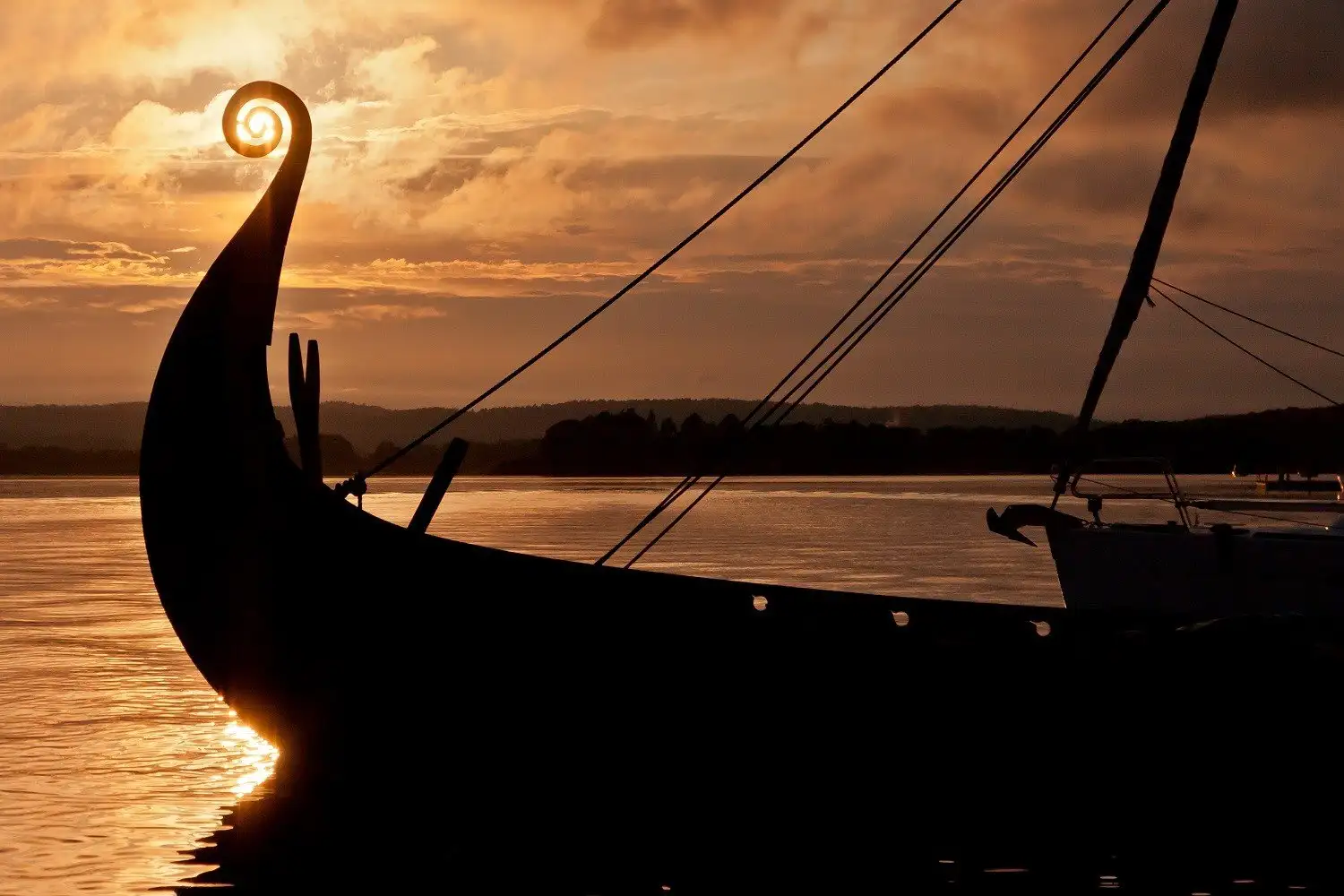
The earliest of these Christian churches in Norway were simple wooden structures. Stone was scarce and difficult to work with in remote regions, but timber was abundant and easy to cut. Norwegians were already master woodworkers, their skills honed by centuries of shipbuilding. The techniques used to construct longships – flexible frames, interlocking joints, curved lines – were adapted to this new form of sacred architecture.
The name ‘stave’ comes from the Old Norse word stafr, meaning “post”. These vertical wooden posts formed the structural skeleton of the building. Unlike earlier log churches, stave churches used a sophisticated frame construction: upright corner posts supported horizontal wall planks, resting on stone foundations to protect against rot.
At their peak, between the 12th and 13th centuries, it is believed that more than 1,000 stave churches stood across Norway.
Stave church architecture: a forest of carved dragons
To step inside a stave church is to enter an earlier world.
From the outside, their layered roofs rise steeply, tier upon tier, often crowned with dragon-head carvings in a clear echo of Viking longships. These dragons were not decorative whimsy; they were protective symbols, intended to ward off evil spirits. Even as Christianity took hold, elements of Norse mythology lingered on in the wooden ornamentation.
The buildings, for the most part, rest on stone foundations, with wooden posts supporting a rectangular nave. In larger churches, additional inner posts create a raised central space, almost like a basilica, allowing light to filter in from high openings beneath the roof.
Exterior walls and roof shingles were coated in tar, giving them their distinctive dark sheen and protecting the wood from insects and harsh weather. Over the centuries, this tar-black finish has become part of their identity – stark against the snows of winter, warm against green valleys of summer.
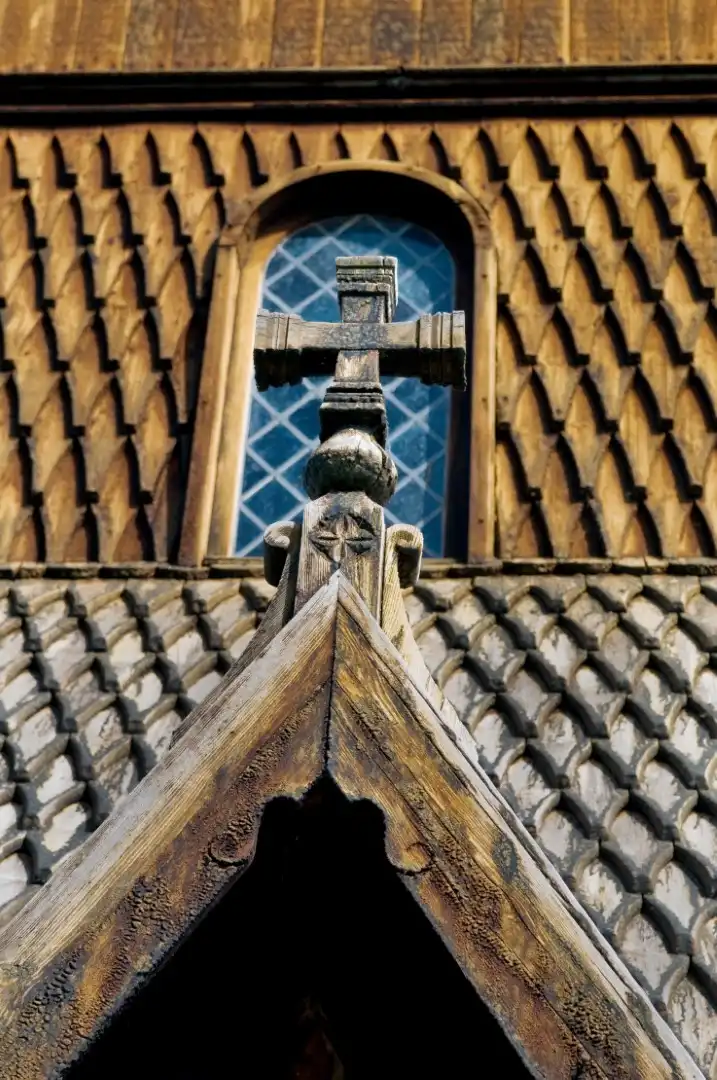
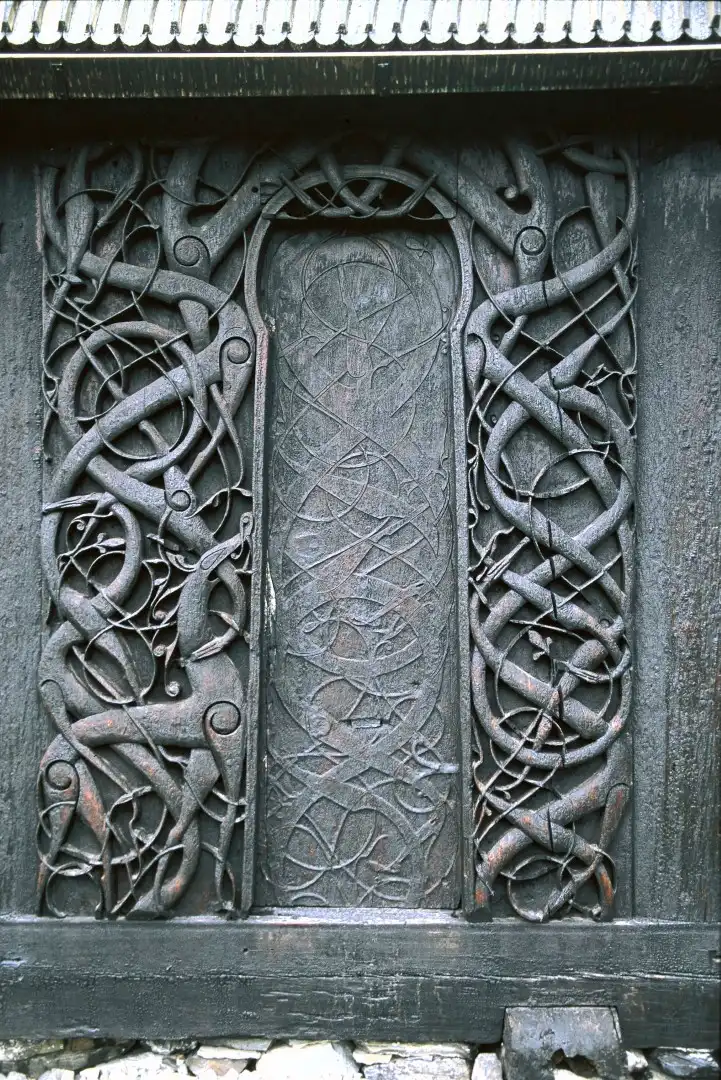
The carvings are perhaps their most extraordinary feature. Doorways and portals are often framed with intricate interlacing vines, serpents and animals – designs rooted in Viking art traditions. Some carvings depict scenes from Norse legend, while others show biblical motifs. The result is a visual dialogue between two belief systems, etched in timber.
Inside, the atmosphere is intimate and quiet. Light enters sparingly and the scent of aged wood lingers. Medieval altarpieces, painted panels and carved pulpits remain in some churches, while others have simpler interiors shaped by centuries of worship.
What makes stave churches so remarkable is not only their age, but their survival. Wooden buildings rarely endure for long in harsh climates, yet these have stood for 700 or 800 years, their structures flexible enough to withstand wind and snow. They are living proof of medieval engineering, and of Norway’s enduring relationship with wood.
Decline and disappearance: the Black Death
The flourishing of stave churches came to an abrupt halt in the mid-14th century.
In 1349, the Black Death reached Norway. The plague devastated the population, killing perhaps two thirds of the country’s inhabitants. Communities were emptied, farms were abandoned, and skilled craftsmen were lost. This marked the end of an era, and the construction of new stave churches ceased.
Over the centuries that followed, many existing churches fell into disrepair. As Norway modernised in the 17th and 18th centuries, larger wooden churches were built to accommodate growing congregations. Older stave churches were considered outdated or impractical. Some were dismantled; others were replaced entirely. By the 19th century, only a few remained.
Ironically, it was the rise of Norwegian nationalism in the 1800s that saved them. As Norway sought to define its cultural and political identity, scholars, romantics, antiquarians and artists began to value the stave churches as examples of uniquely Norwegian heritage. Restoration efforts began, and conservation replaced demolition.
Stave church restoration: Guardians of the past
Today, only 28 original stave churches remain in Norway.
They are scattered primarily across the western and central parts of the country; in valleys, near fjords, and in rural communities that once formed the backbone of medieval life. Some are still used for worship, while others function as museums open to visitors during the summer months.
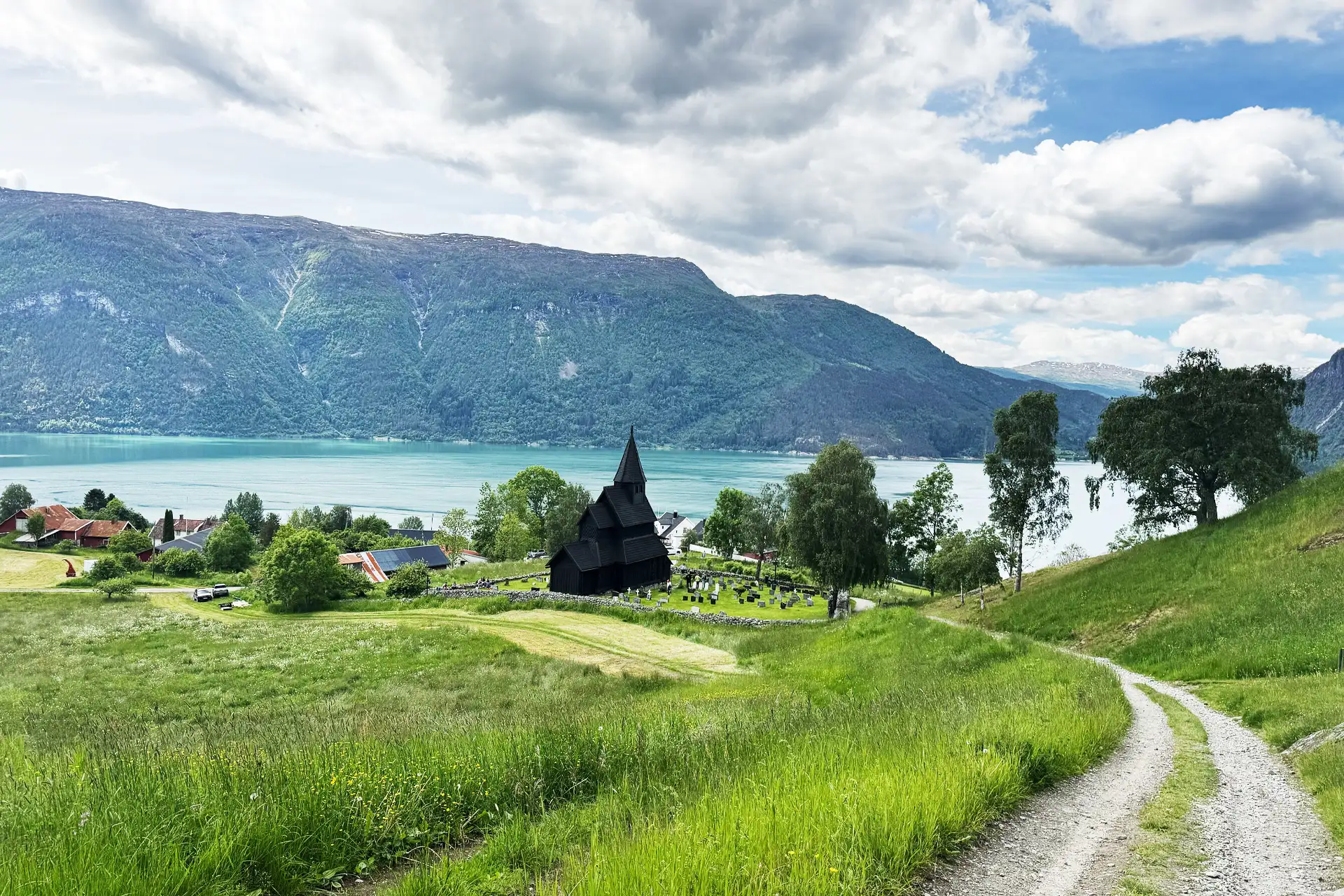
Several stave churches are protected by UNESCO. Most notably, Urnes Stave Church – which you can visit on our Inner Fjords Explorer voyage – is listed as a UNESCO World Heritage Site and recognised for its exceptional architectural and artistic value.
Visitors can step inside many of these churches during the summer season. Conservation is taken seriously: climate control, restricted visitor numbers and careful restoration ensure their preservation for future generations.
Stave churches along the Norwegian coast
You can visit several stave churches with Hurtigruten on voyages along the coast, each offering a distinct chapter in Norway’s story.
A coastal sanctuary
Kvernes Stave Church
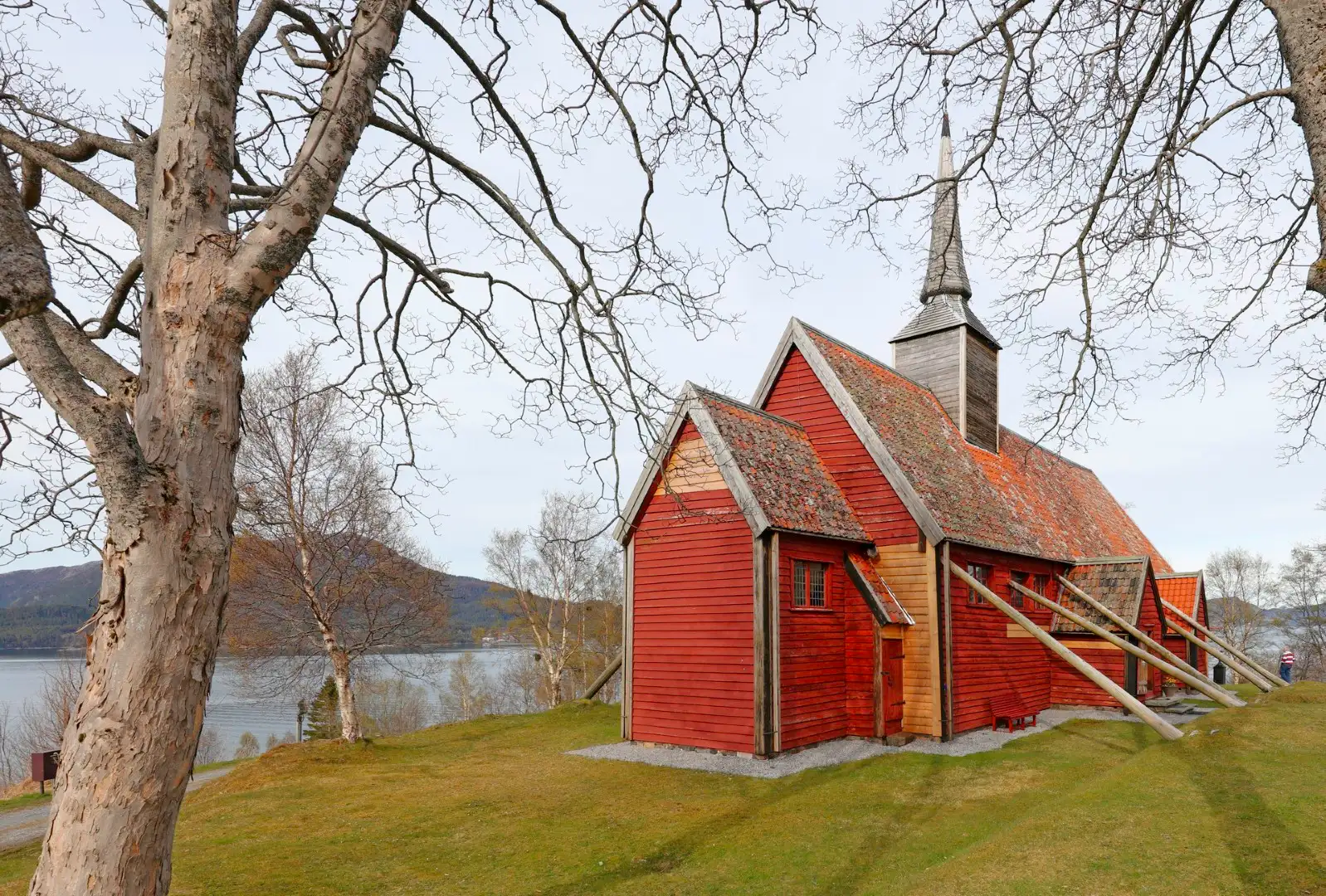
Near Kristiansund, Kvernes Stave Church stands overlooking the fjord, its setting as compelling as the structure itself.
Dating from around 1300, Kvernes is among the youngest of the surviving stave churches. Its location near the Atlantic has shaped its character: think wind-swept, resilient and quietly dignified. The church’s exterior retains its dark tarred wood, while inside, painted panels and medieval features hint at its long religious history.
From here, the sea stretches outward, a reminder that Norway’s faith and trade routes were always intertwined. For travellers journeying along the coast, Kvernes feels perfectly placed – a sacred space shaped by maritime life.
A story of loss and renewal
Fantoft Stave Church
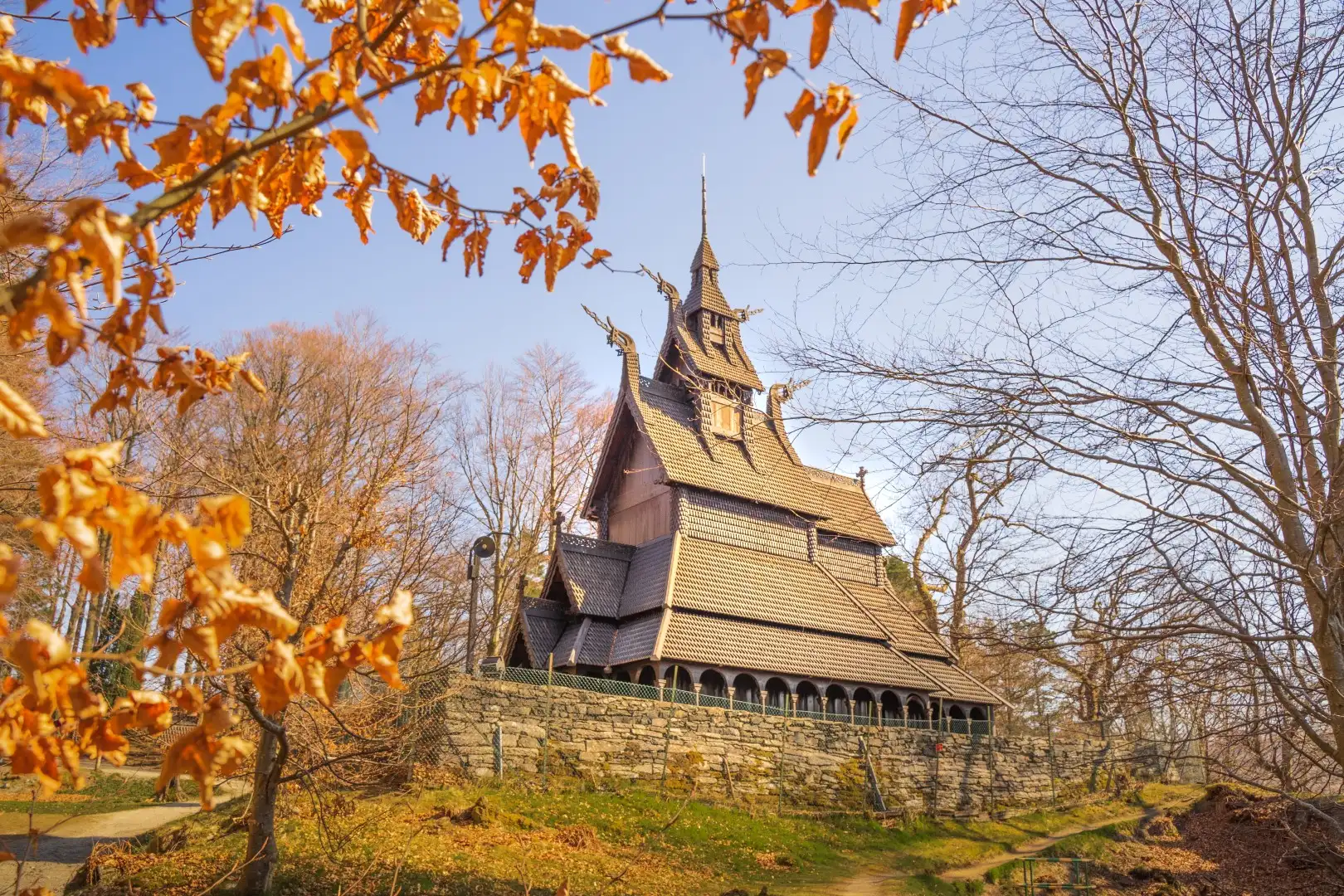
Originally built in the 12th century in Fortun, Fantoft Stave Church now stands just outside Bergen.
In 1992, the church was destroyed by arson – a devastating loss for Norwegian heritage. But in an extraordinary act of reconstruction, it was rebuilt using traditional methods and reopened in 1997.
Fantoft today stands not as an untouched medieval relic, but as a testament to Norway’s commitment to preserving its past. It reminds visitors that heritage is not static; it requires care, effort and renewal.
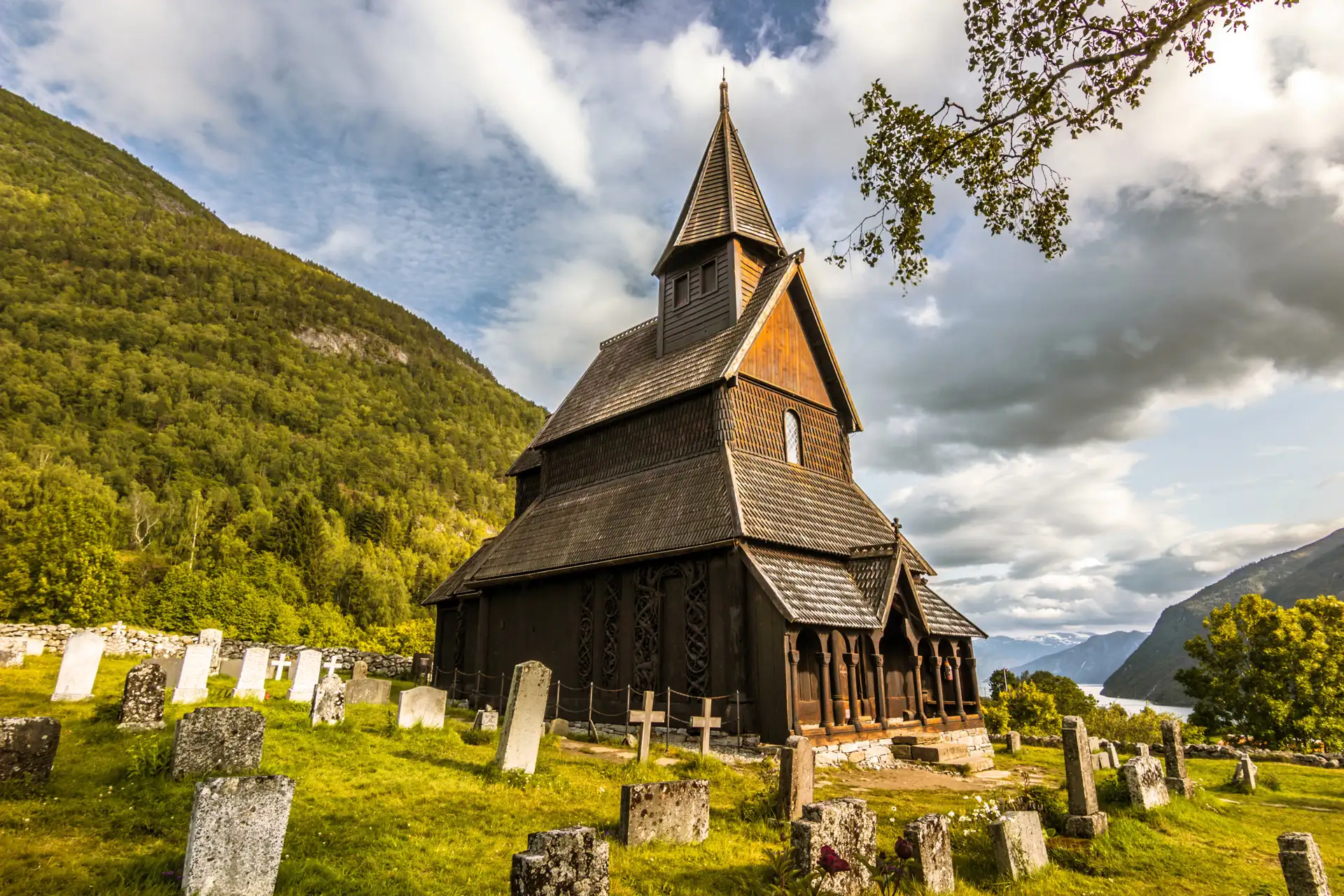
A UNESCO treasure
Urnes Stave Church
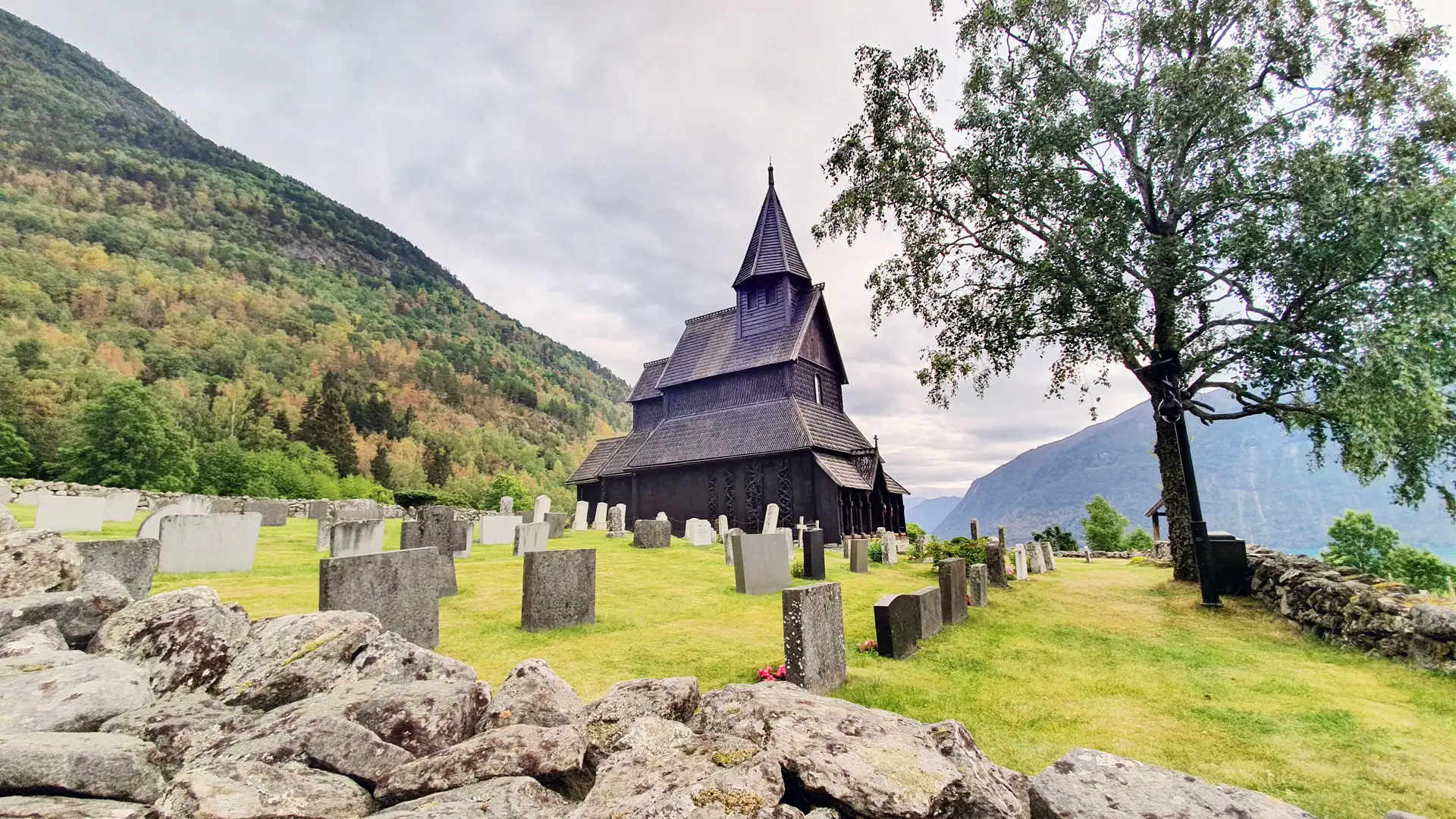
Perched above Lustrafjord near Skjolden, Urnes Stave Church is perhaps the most celebrated of all.
Built around 1130, it is Norway’s oldest surviving stave church and the only one listed as a UNESCO World Heritage Site. Its carvings are masterpieces of medieval art. The famous “Urnes style” – characterised by slender, intertwined animals and serpents – represents the final flowering of Viking artistic tradition merging with Christian symbolism.
Standing at Urnes, overlooking the fjord, you sense continuity rather than rupture. Viking artistry did not vanish with Christianity; it transformed. In Urnes, that transformation is carved into wood.

The northern stone sentinel
Trondenes Church
Although not a true stave church, it’s also worth mentioning Trondenes Church near Harstad, which possesses a special medieval heritage.
Built in the 13th century, it is the northernmost surviving medieval stone church in the world. Its presence marks the northern reach of Christianity in Norway. Inside, richly carved altarpieces and religious art reflect centuries of devotion.
Set on a peninsula overlooking the fjord, Trondenes connects the coastal landscape with Norway’s medieval past – a reminder that faith travelled north alongside trade and exploration.
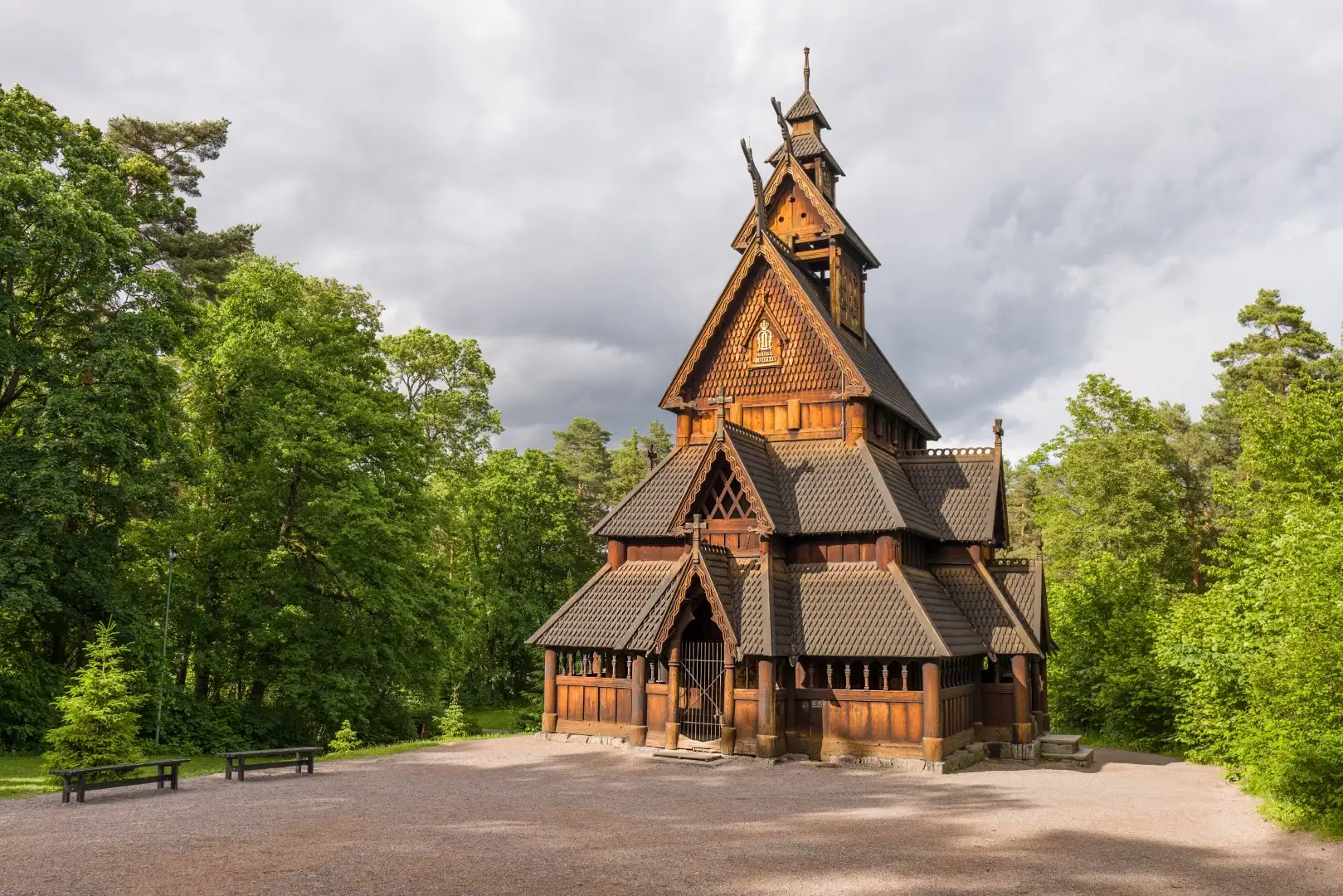
Oslo’s iconic gem
Gol Stave Church
If you’re in Oslo there's a remarkable stave church that’s within easy reach of the city centre. Gol Stave Church can be found within the open-air Norsk Folkemuseum on the Bygdøy peninsula and is one of the many historical buildings that can be seen there. Built around 1200 in the village of Gol, Buskerud County, the original church was saved from demolition in the mid-19th century and moved piece-by-piece to Oslo. Financed by King Oscar II, it was completed in 1885.
Today, Gol Stave Church has become an icon, with several replicas existing worldwide.
Stave Church FAQs
Stave churches are medieval wooden churches built using a distinctive timber-framed construction known as stave building. Richly decorated with intricate carvings that blend Christian and Norse influences, they are among Norway's most remarkable architectural treasures.
Norway’s stave churches are not grand monuments in the sense of Notre Dame in Paris or St Peter’s in Rome, instead they are relatively modest in scale. But that is part of their power.
To visit one is not to stand among crowds in a vast cathedral, it is to stand quietly in a wooden space shaped by skilled woodworkers and centuries of belief.
Not quite. Most stave churches were built between the 12th and 13th centuries, after the Viking Age had ended, although many were crafted by descendants of Viking shipbuilders using similar woodworking skills.
Around 28 original stave churches survive in Norway today, making them exceptionally rare examples of medieval wooden architecture.
Many were replaced by larger churches as congregations grew, while others were demolished, rebuilt or lost to fire and decay over the centuries.
Norway has preserved more medieval stave churches than any other country. Their distinctive construction, remarkable craftsmanship and richly carved decoration make them unique survivors of Europe's medieval heritage.
Yes. Several Hurtigruten itineraries and optional excursions include opportunities to visit stave churches, depending on the season, including the UNESCO-listed Urnes Stave Church in The Inner Fjords Explorer itinerary.
It depends on the church and the season. Some can be visited independently, while guided tours and popular sites may require advance booking during the summer months.
There is no formal dress code, but as active places of worship and important heritage sites, visitors are asked to dress respectfully and behave considerately.
Accessibility varies. Some churches are close to roads and visitor facilities, while others are in rural locations and may have uneven paths or steps.