Bergen – Kirkenes – Bergen (Roundtrip)
The Coastal Express
The original Norwegian coastal voyage – connecting fjords, towns & people since 1893
- Regular departures
- 12 days
- 34 Places
- Full board (breakfast, lunch, dinner)
The Norwegian coastline is one of the best places in the world for whale watching – making our ships top viewing platforms for seeing these majestic sea mammals in the wild.
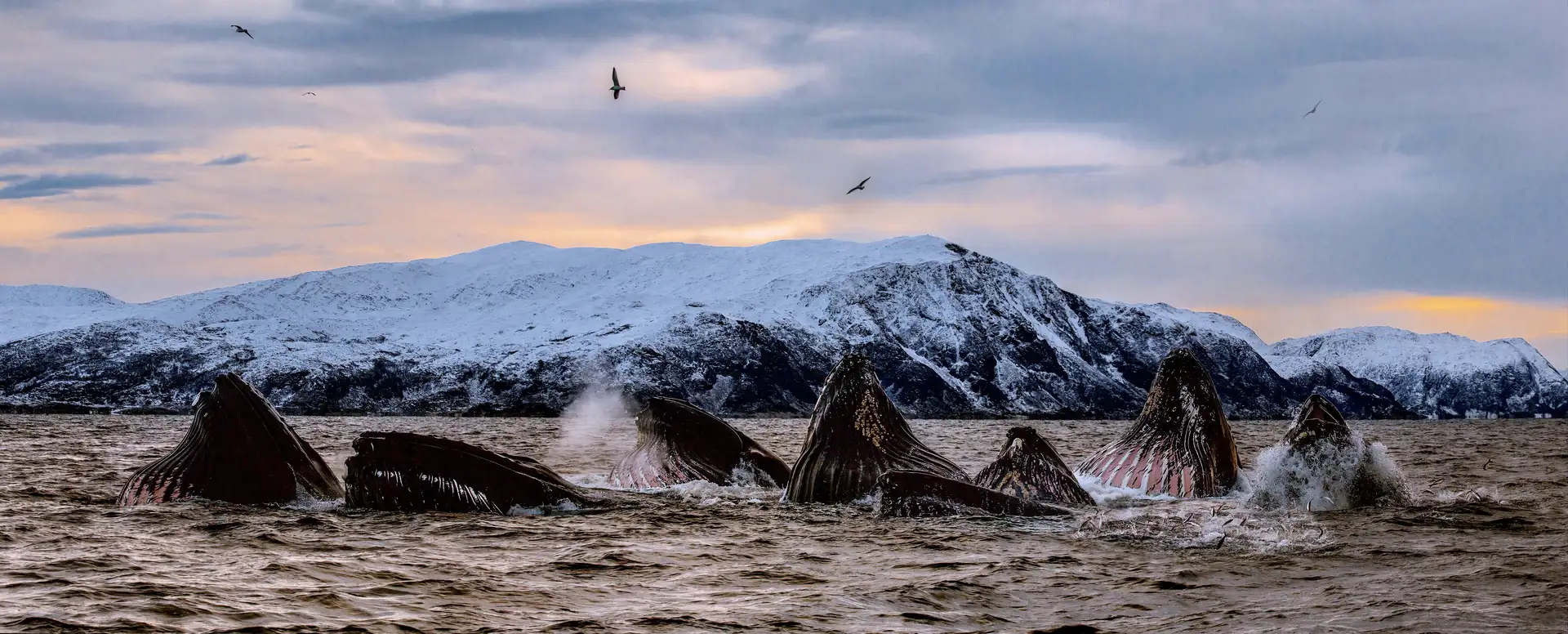
Here in Norway, we’ve shared our seas with whales since time immemorial. Or perhaps that should be they’ve shared their seas with us.
A range of whale and dolphin species swim in these waters all year round, making Norway a top destination for whale-watching experiences. The types of whales you can see in Norway include sperm whales and orcas, as well as the iconic humpback whale.
Sailing the Norwegian coast every day of the year gives us an advantage for seeing whales – it’s even possible to see whales from the deck of Hurtigruten ships. When this happens, our crew are sure to let you know. The most common sightings are humpback whales, orcas and minke whales, with the gigantic blue whale occasionally seen near Svalbard. And while you’re on deck or gazing through your ship’s panoramic windows, keep a look out for other wildlife such as porpoises and puffins.
For near-guaranteed sightings of whales, you can also join a whale-watching tour. Smaller boats and highly experienced guides take you closer to the action, often seeking out locations where whales are frequently spotted.
Whether you witness a humpback’s fluke cresting the waves or see a pod of orcas hunting herring, any encounter with Norway’s whales and dolphins is unforgettable.

An archipelago of 1,330 islands in Northern Norway, Vesterålen is only 10 kilometres from the continental shelf, where the water becomes exceptionally deep and the whales, such as humpback, minke and pilot whales, can dive and play. In fact, Vesterålen is one place in Norway where you’re virtually guaranteed to see whales all year round.
Andenes – a small village on the island of Andøya – is this region’s top whale-watching spot. It’s close to an underwater canyon called Bleiksdjupet, where sperm whales visit in large numbers to feast on giant squid in the nutrient-rich waters. We sail year-round to the Vesterålen archipelago on The Coastal Express, calling at Stokmarknes and Svolvær.

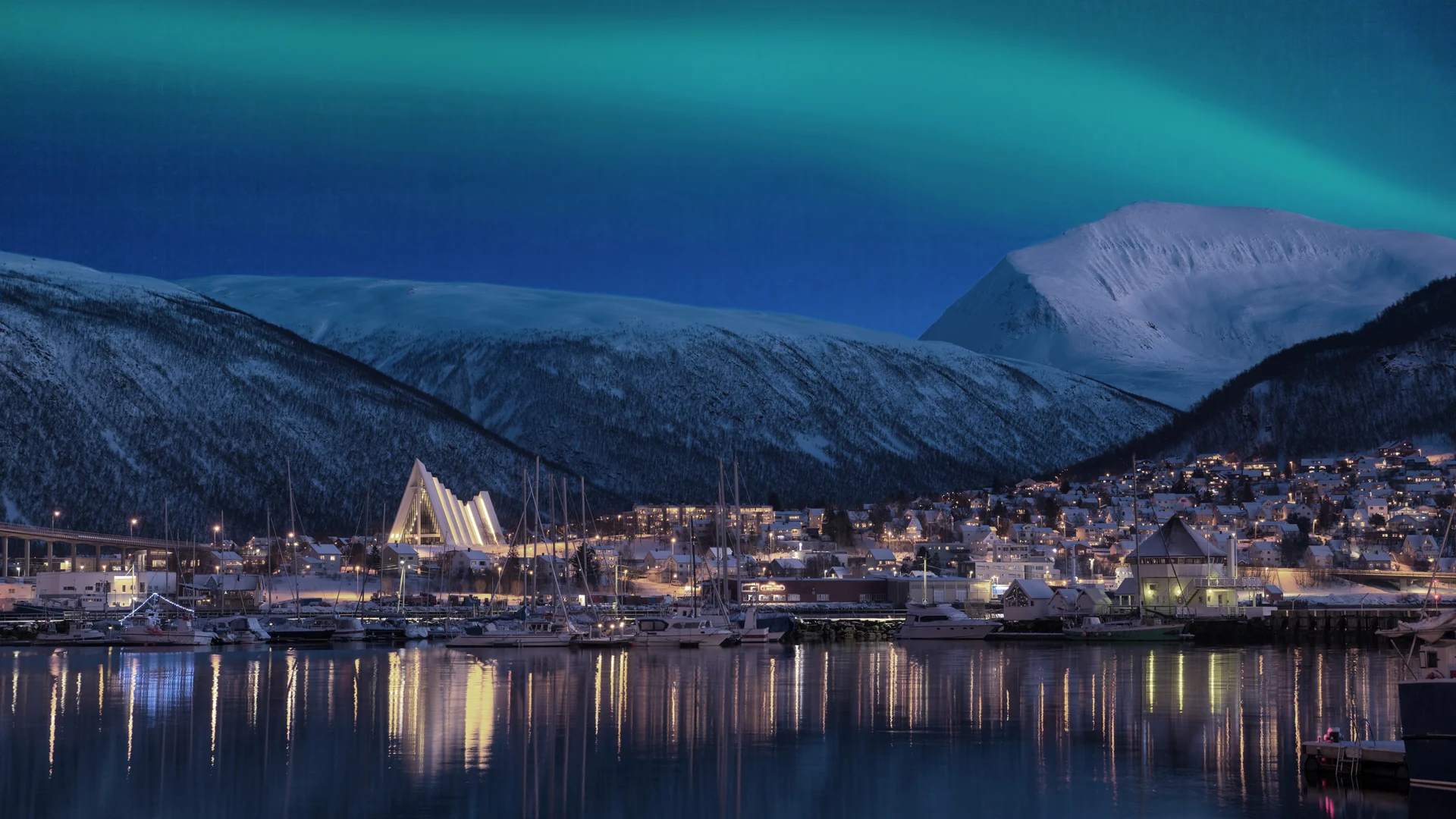
Set some 350 kilometres north of the Arctic Circle, Tromsø is a hub for Arctic adventures, such as skiing and dog sledding, as well as Northern Lights viewing and whale watching tours. November to January is whale watching season in Tromsø, with humpbacks, orcas and minke whales being the most seen species.
The whales visit here every winter season to feed on migrating herring. Several local outfits in the city run whale-watching excursions with experienced guides who know the best locations to try and see whales. Our Arctic Circle Explorer voyage begins and ends in Tromsø, giving you plenty of time either side of your trip to go whale watching.

Closer to the North Pole than Central Europe, Alta is perfectly positioned for Arctic whale watching. Between November and January, humpback whales and orcas visit the waters by Alta to feast on migrating herring stock. This, alongside the frozen landscapes and the ethereal darkness of the Polar Night, make Alta one of the best regions for whale watching in Norway.
Back on land, visit the famous ice hotel, go dog sledding with trained huskies, or go chasing the Northern Lights – this is the ‘city of the Northern Lights’ after all. You can spend the night in Alta on our new Arctic Line itinerary, either sailing northbound from Copenhagen, or southbound from Tromsø.

Rugged landscapes and wild encounters await in Svalbard. This remote archipelago is located deep within the Arctic Circle and can only be reached via plane or ship, like on our Svalbard Line voyage. In the summer months, the Midnight Sun phenomenon provides endless daylight as the backdrop for your whale-watching endeavours.
Humpback, fin, bowhead and beluga whales have all been recorded in Svalbard’s waters. If you’re lucky, it’s even possible to see the biggest creature on earth – the blue whale. These underwater behemoths often feed in the deep ocean near the archipelago’s main island, Spitsbergen.
Sail Norway's epic coastline, its peaks, fjords and islands, with the chance for whale watching in the far north.
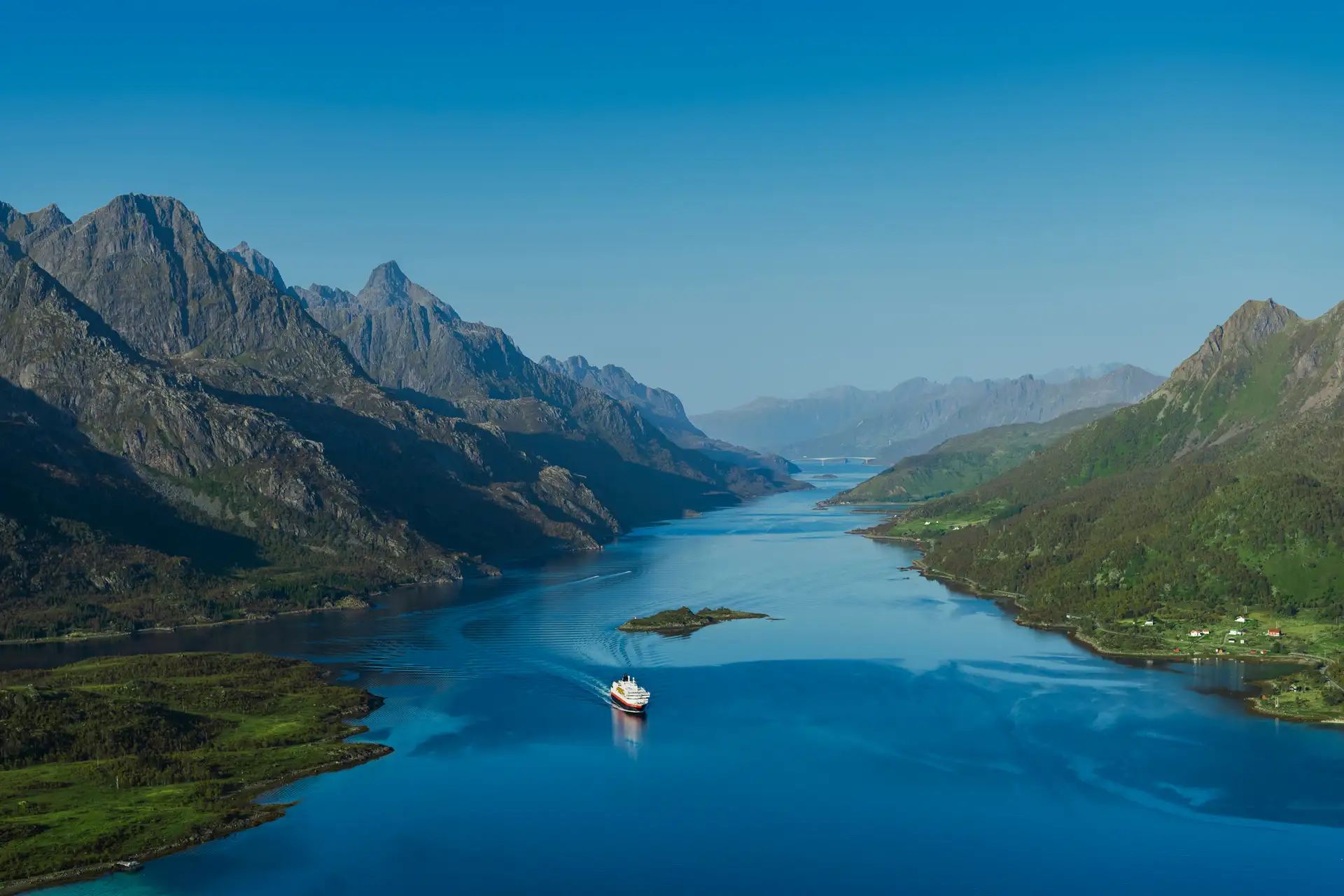
Our Original coastal route, The Coastal Express, visits some of Norway’s most iconic fjords and top whale-watching destinations – in one convenient journey.
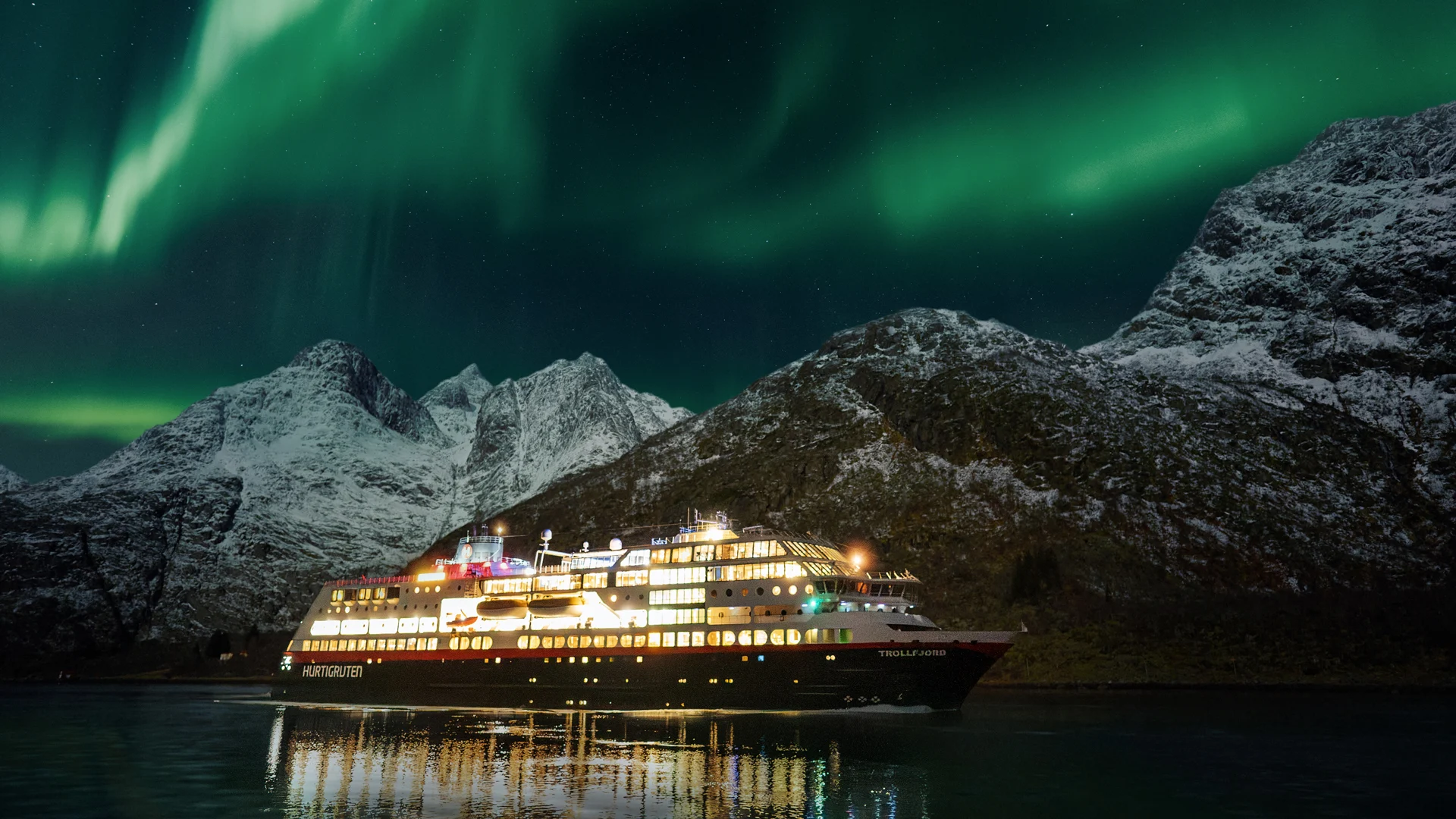
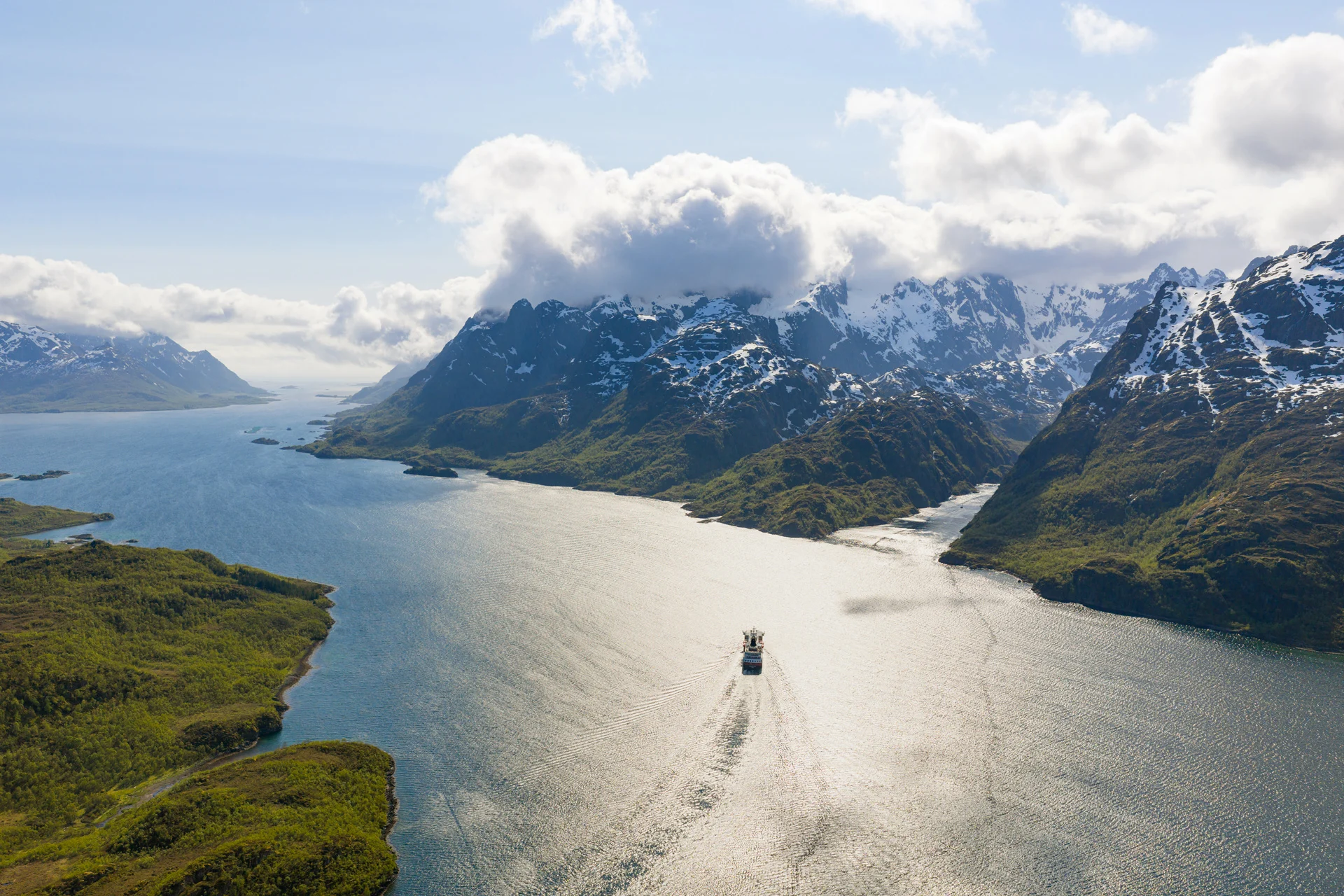
Experience the magic of the fjords as we sail into the Hjørundfjord, Geirangerfjord and Trollfjord, before visiting the wildlife-rich waters of Vesterålen and Tromsø.
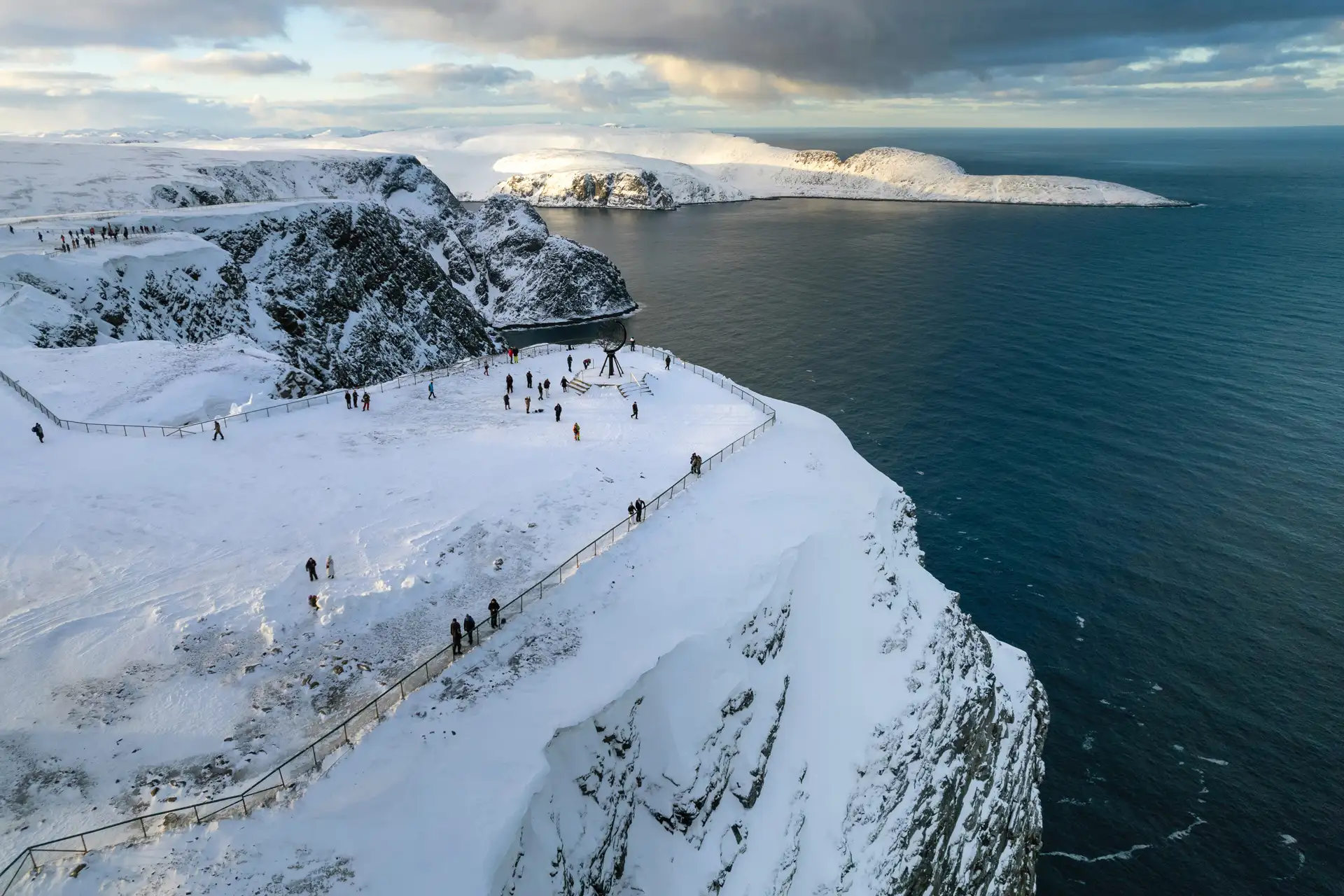
For an all-inclusive winter adventure, sail The North Cape Line in prime whale-watching season, visiting Åndalsnes (within the Romsdalsfjord) and Trollfjord, as well as Tromsø and Alta.
As one of our Signature voyages, this route features all-inclusive food and drink, a six-person onboard Expedition Team and longer stays in port – meaning more time to join a whale-watching excursion.
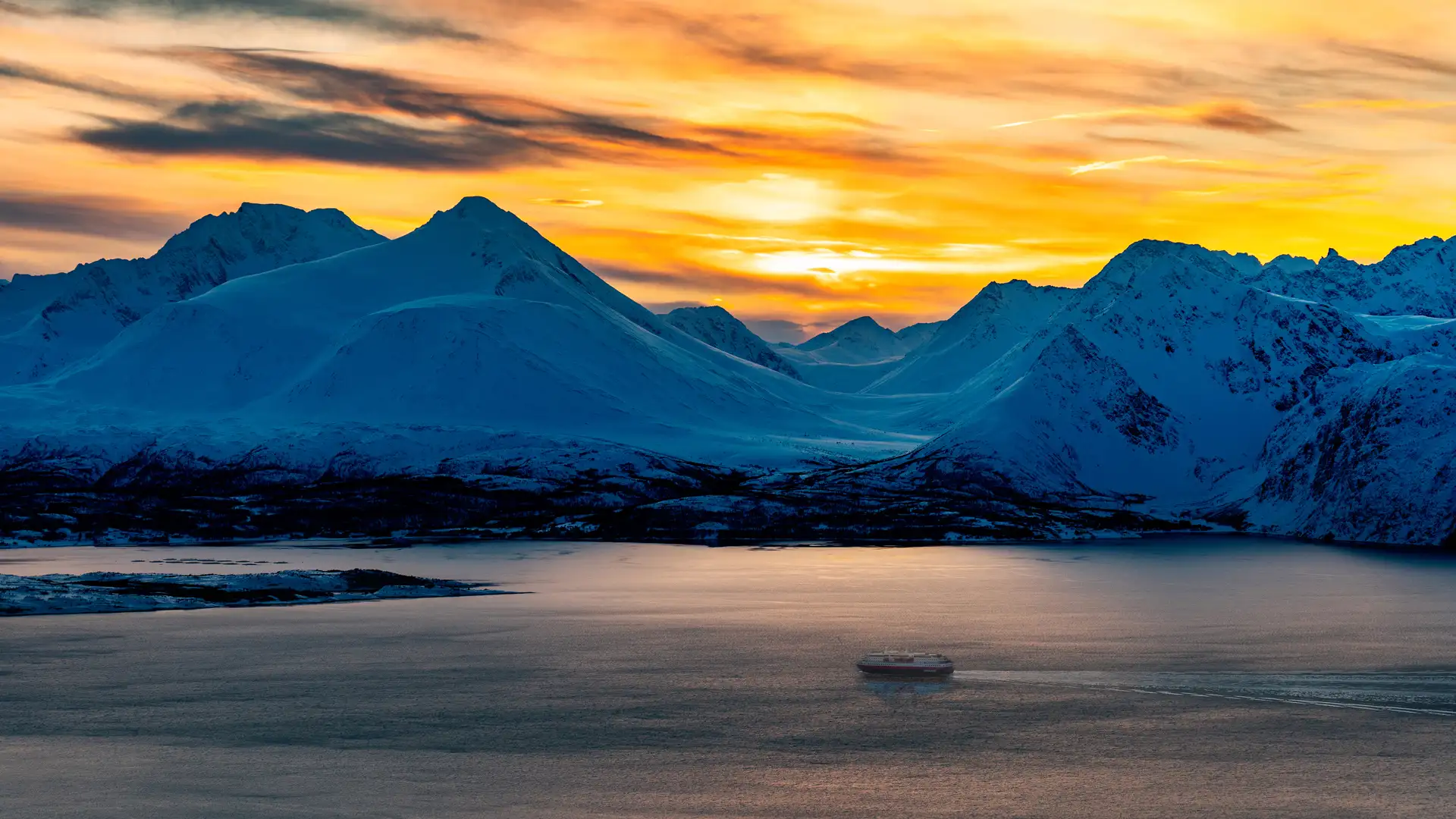
Set sail on a circular cruise around the highlights of the Arctic in winter, starting and ending in one of Norway's whale watching hubs: Tromsø. Expect frosty fjords, snow-covered peaks and Northern Lights skies.
This 8-day Signature voyage includes all-inclusive dining with unlimited selected drinks, an enhanced guiding programme with the onboard Expedition Team, and an overnight port stay in Alta, another hotspot for whales.
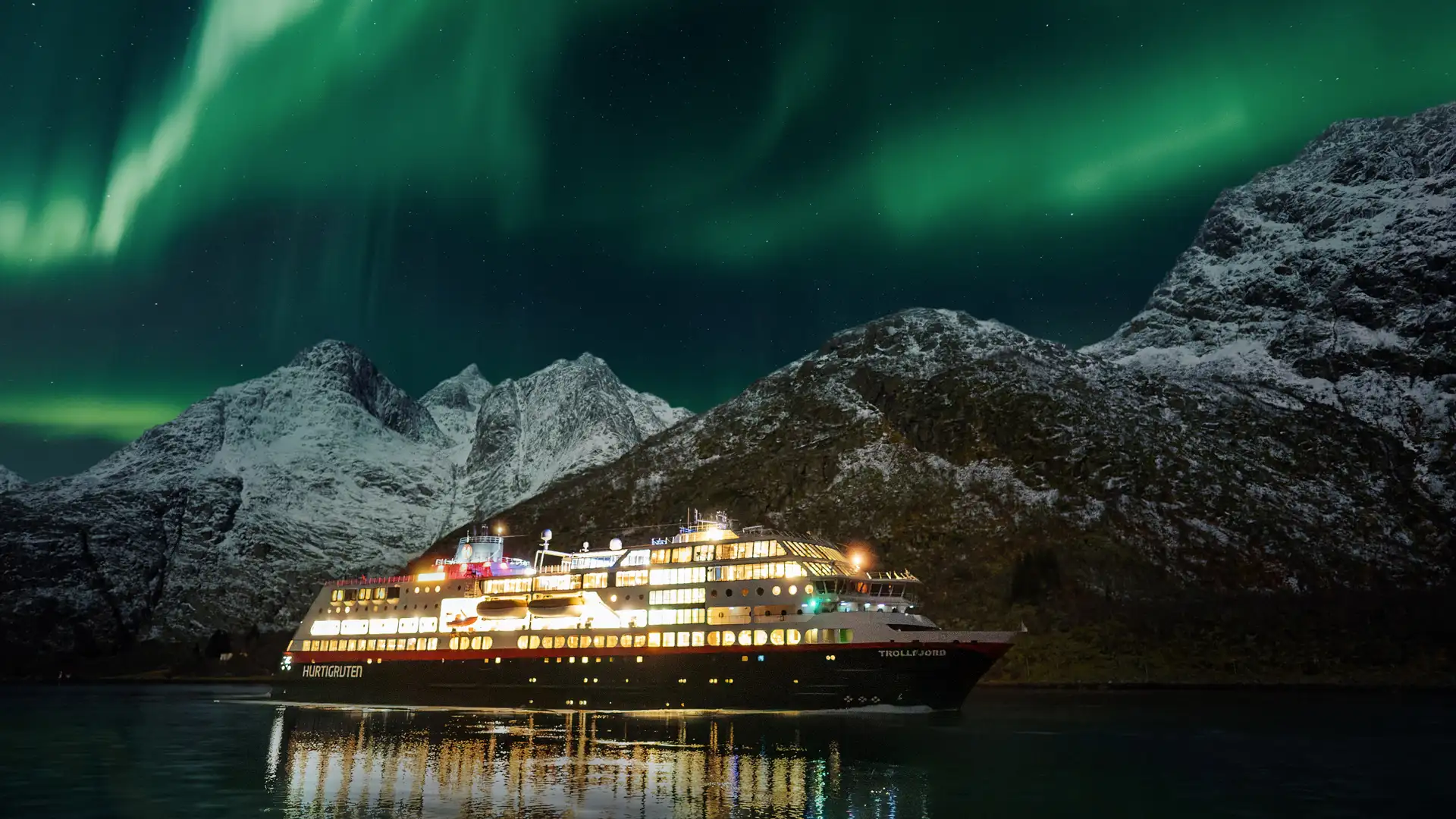
Journey from one nation to another on the far-reaching Arctic Line voyage. Sailing between Copenhagen and Tromsø, this 11- or 12-day Signature voyage takes you along Norway’s coast in winter and early spring.
As well as scenic fjords and nightly opportunities to see the Northern Lights, this route sails into the heart of Norway's whale watching regions, calling at the Lofoten Islands, Alta and Tromsø.

Up to 16m long and weighing up to 40 tonnes, the humpback whale is famously musical. The males produce complex songs that can travel vast distances.

Up to 17m long and weighing up to 57 tonnes, sperm whales are masters of the deep. They can dive up to 2,000m in search of their favourite prey: squid.

Typically 5-8m long and weighing up to 6 tonnes, these apex predators are also known as killer whales. They work together in family groups, called pods, to catch prey.

Typically 7-9m long and up to 10 tonnes, minke whales are the smallest member of the baleen whale family and can be found throughout the world's oceans.

Up to 25m long and weighing as much as 80 tonnes, the fin whale is the second-largest whale in the word, just behind the blue whale, and the largest found along Norway's mainland coastline.

Up to 7m long and up to 3 tonnes, pilot whales are technically dolphins, which fall into the toothed whale category. They are social creatures that can live in pods with up to 100 others.

Typically 3.5-5.5m long and around 1.5 tonnes, beluga whales are instantly recognisable by their rounded forehead and (in adults) a striking white body.
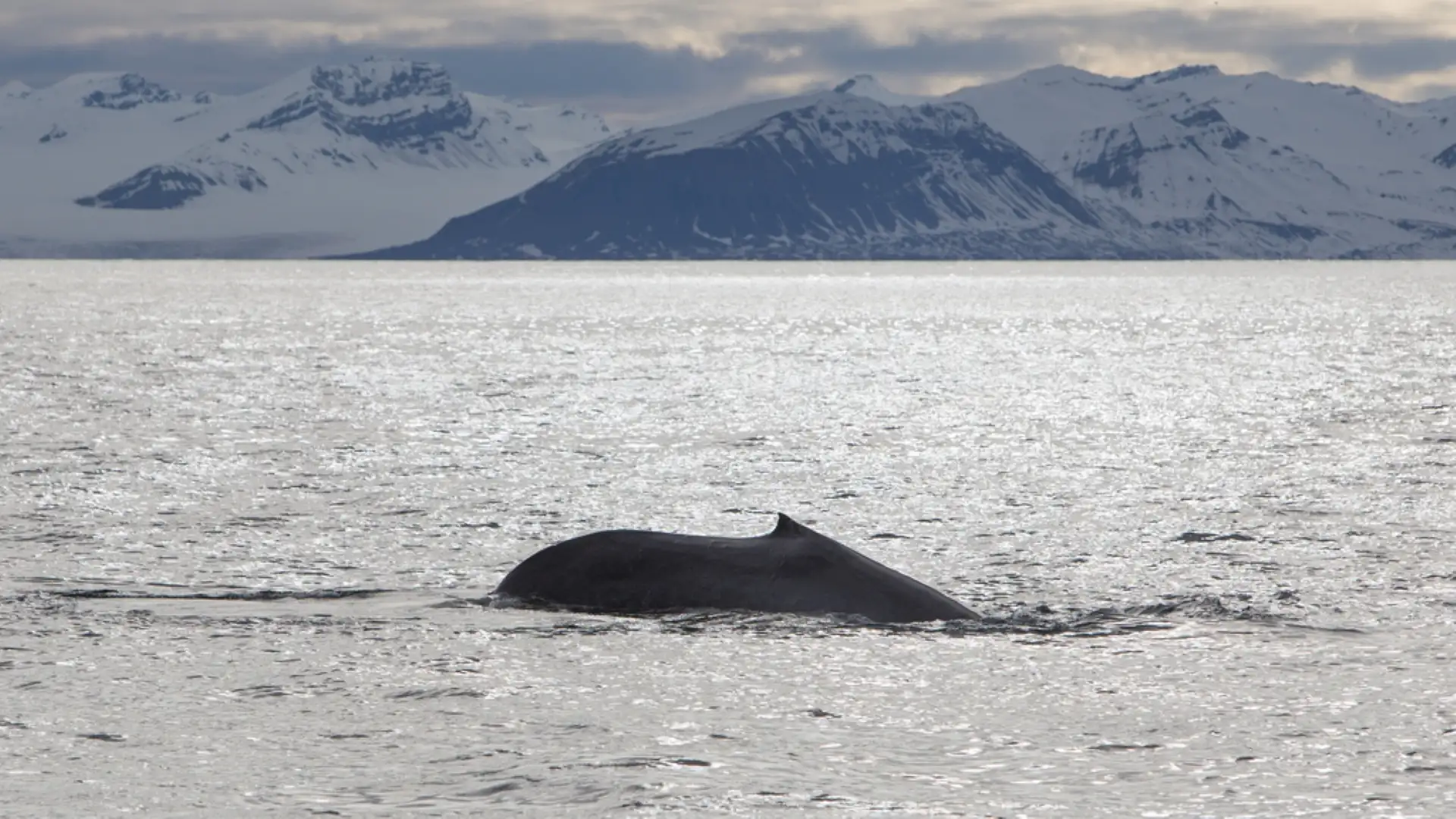
Growing up to 30m long and weighing more than 150 tonnes, the blue whale is the largest animal ever known to have lived. They can be seen in the waters near Svalbard.

Growing up to 4-5m long, excluding the tusk, narwhals are uniquely adapted to life beneath the Arctic sea ice. They are famous for their long tusk, which is actually an enlarged tooth.
The waters off Norway and Svalbard are some of the richest whale habitats on Earth, and whales have been part of coastal life here for thousands of years. From immense blue and humpback whales to eye-catching orcas, find out more about whales in Norway: which species live here, why they come and how they survive.
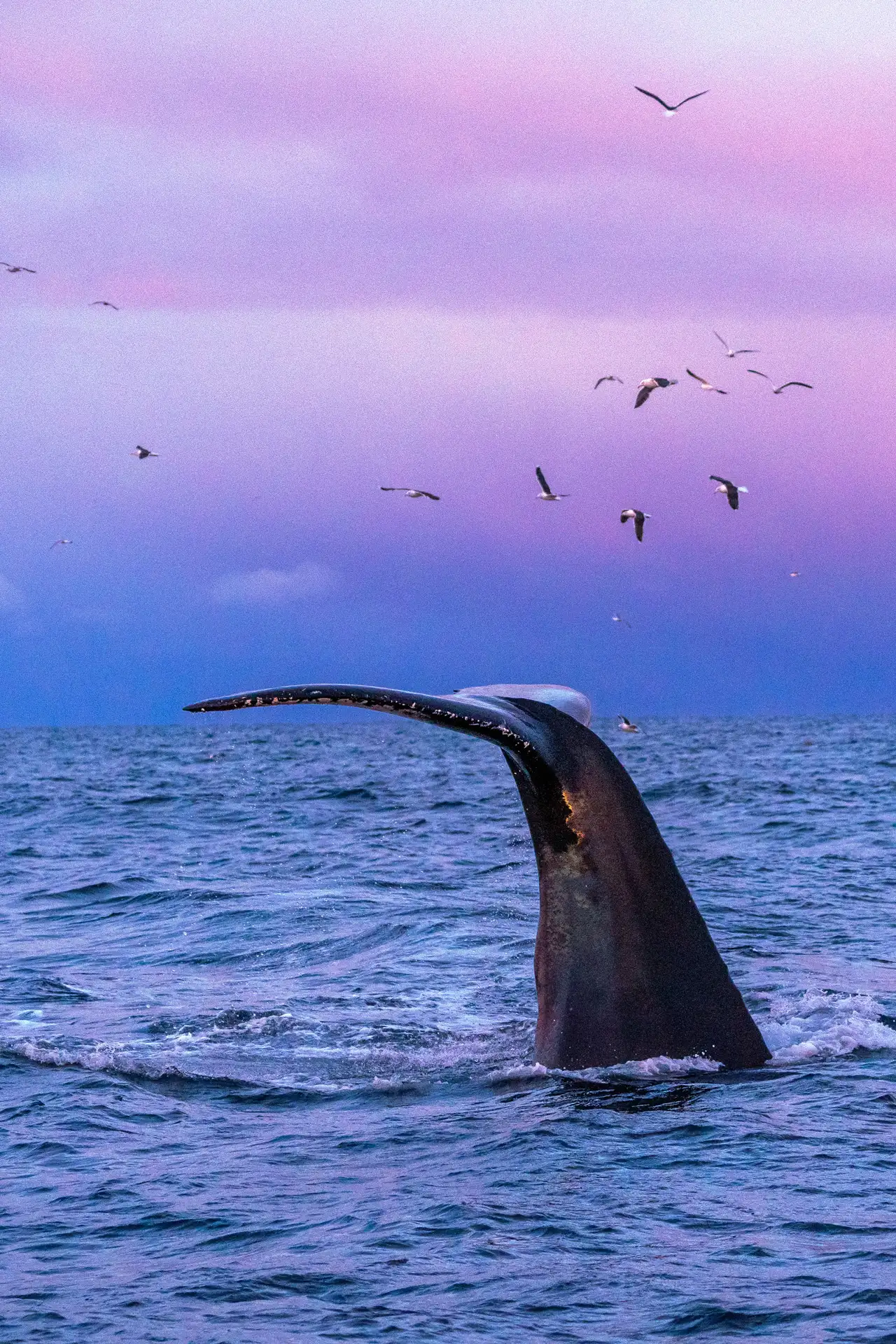
Whales are migratory mammals, so what you see will depend on the time of year. The winter whale-watching season in Norway runs from January to April, with the summer season from May to November. However, this said, some destinations – notably Vesterålen – almost guarantee sightings 12 months of the year.
| Species | Best place to see | Best time to see |
|---|---|---|
Humpback whale | Vesterålen and Tromsø | Year-round but more likely in winter |
Sperm whale | Andenes (Vesterålen) | Year-round but more likely in summer |
Fin whale | Svalbard | Summer |
Minke whale | Vesterålen | Summer |
Blue whale | Svalbard | Summer |
Orca | Vesterålen and Tromsø | Year-round but more likely in winter |
Pilot whale | Vesterålen | Summer |
Beluga whale | Svalbard | Summer |
Narwhal | Svalbard | Spring or summer |
In summer, Midnight Sun brings 24 hours of non-stop daylight, meaning even more time to look for whales while admiring Arctic landscapes bathed in a golden glow.
But whale watching in winter also gives you the chance to see the Northern Lights, meaning you could tick off two bucket-list experiences in one cruise along Norway’s coast.
Think of whale-watching tours as being a guest in someone’s home. Like any good guest, you’ll want to avoid disturbing or upsetting your host. Try to keep noise to a minimum and respect your host’s personal space.
Ideally, choose a tour on a hybrid-electric catamaran. The vessel switches into silent mode when it approaches any pods. For the whales, this means the boat minimises disruption and doesn't affect their listening or communication. And for you, it creates a sense of complete immersion in nature.
It’s worth noting that many whale species are endangered. However, whale-watching trips provide a strong incentive to protect and care for the pods as much as possible. And Vesterålen has been certified a ‘Sustainable Destination’, reflecting its efforts to reduce the negative effects of tourism.

Get a unique view of humpback whales and orcas as you cruise peacefully through the icy fjords.
Bergen – Kirkenes – Bergen (Roundtrip)
The original Norwegian coastal voyage – connecting fjords, towns & people since 1893
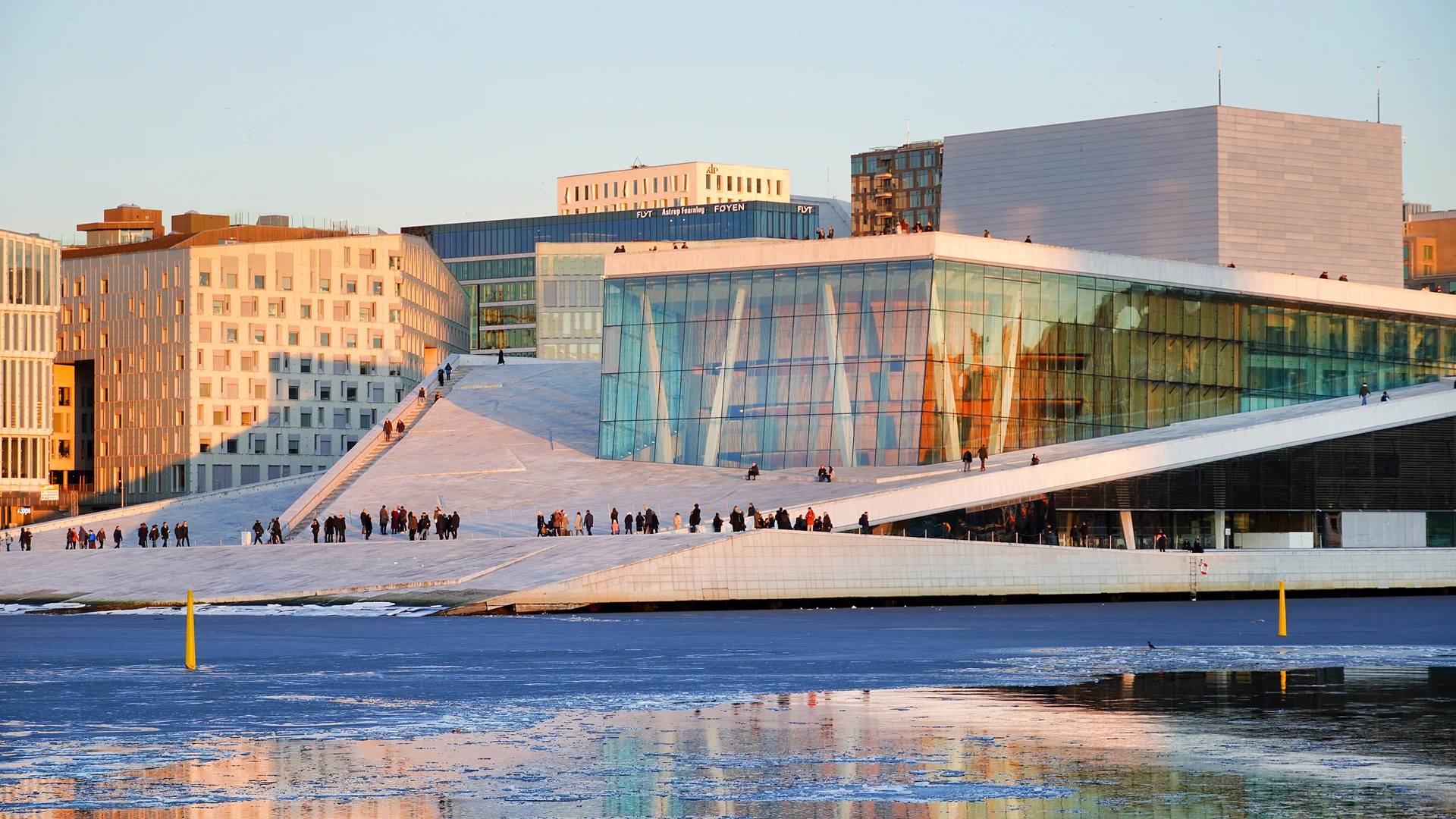
Oslo - Honningsvåg - Oslo (Roundtrip)
All-inclusive winter cruise to Norway’s North Cape, chasing the Northern Lights
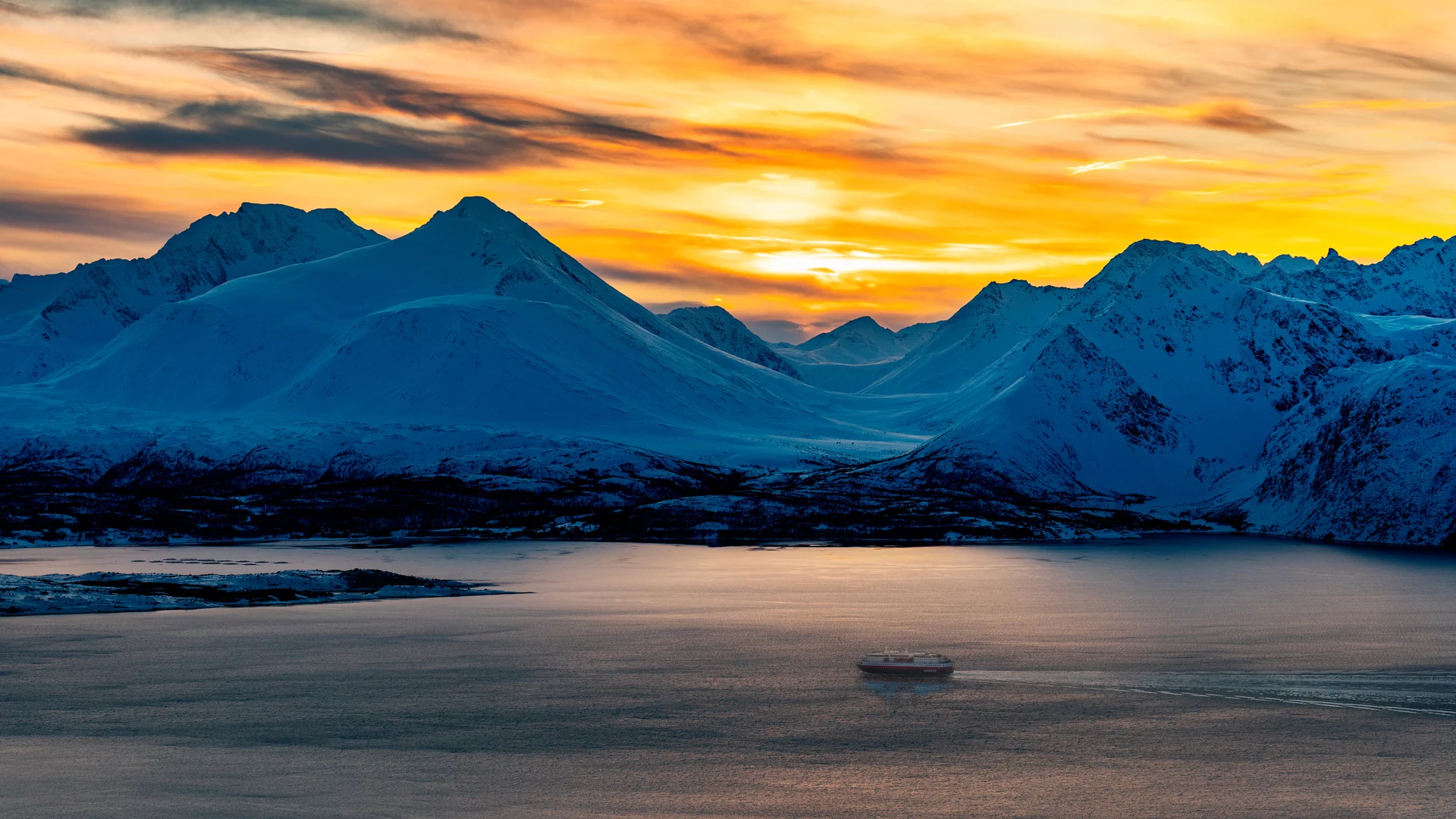
Tromsø - Honningsvåg - Tromsø (Roundtrip)
Limited Collection voyage around the far north, chasing the Northern Lights
Bergen - Svalbard - Bergen (Roundtrip)
All-inclusive Arctic cruise to Svalbard & back, with fjords, wildlife & Midnight Sun
Receive special offers, exciting new itineraries and fascinating articles delivered straight to your inbox.