Oslo - Honningsvåg - Oslo (Full-trip)
Astronomy Cruise on The North Cape Line with Tom Kerss
Our classic all-inclusive winter cruise, with an expert astronomer and exclusive excursions
- March 2027
- 15 days
- 13 Stops
- All meals & unlimited select drinks
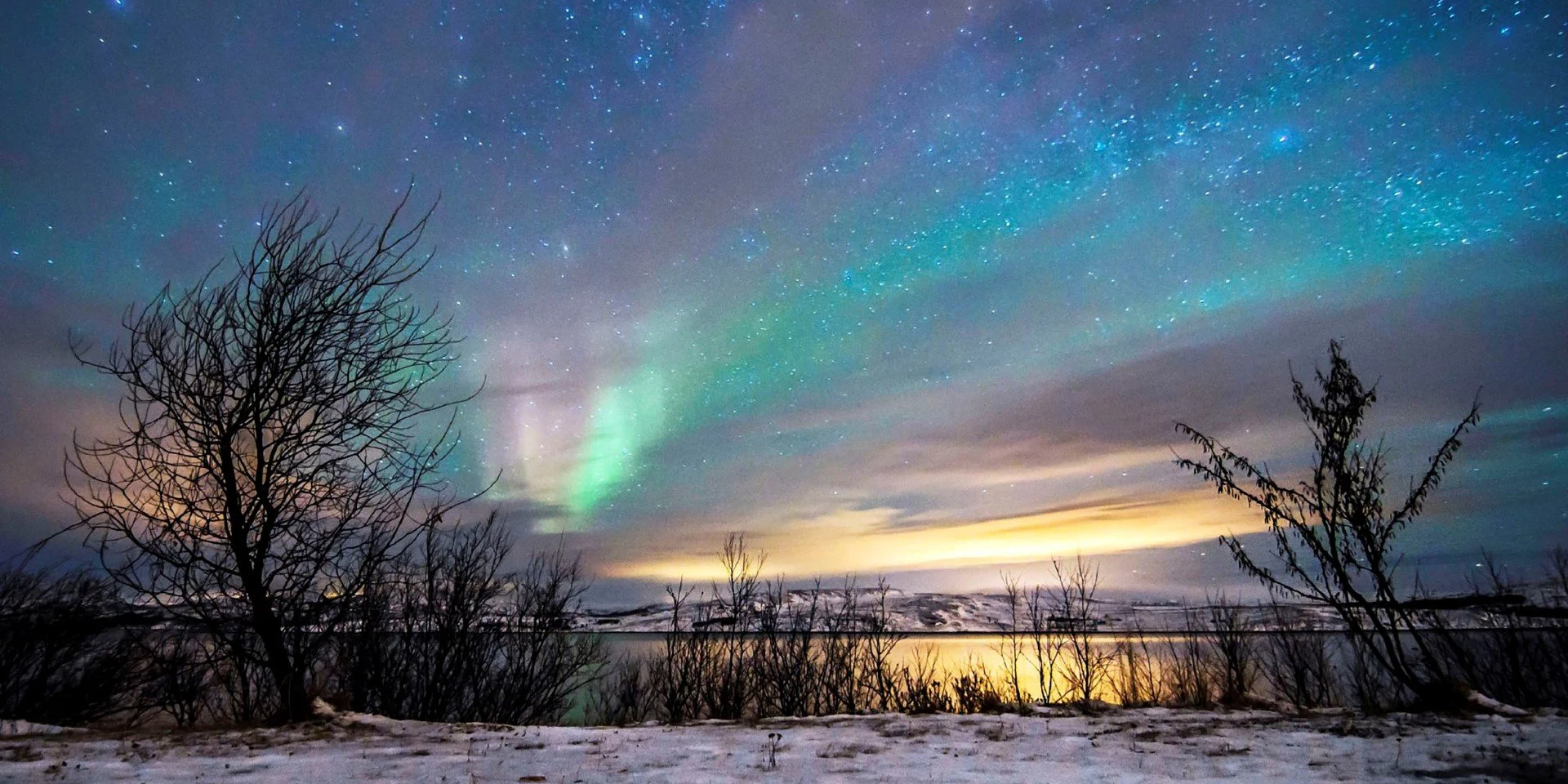
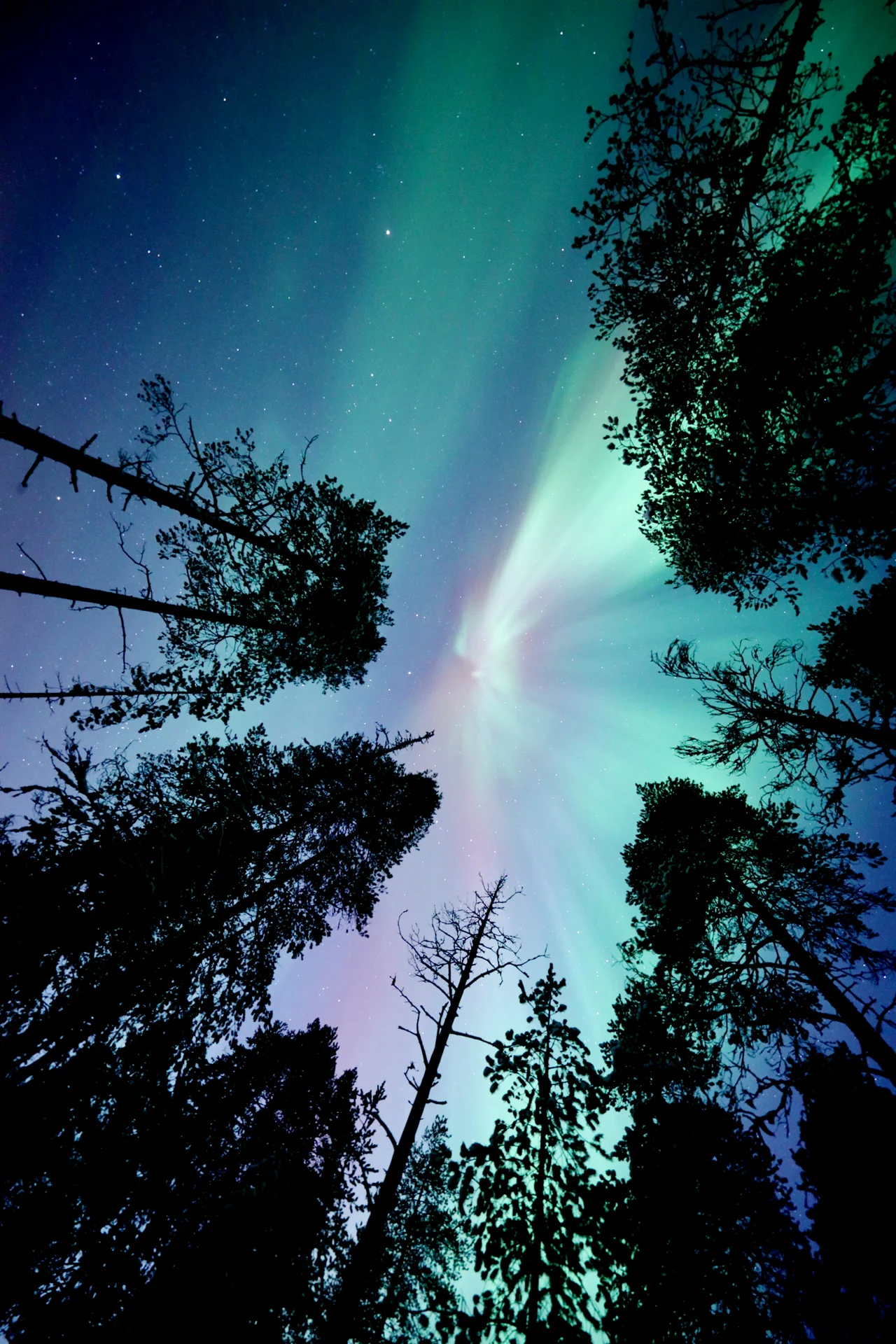
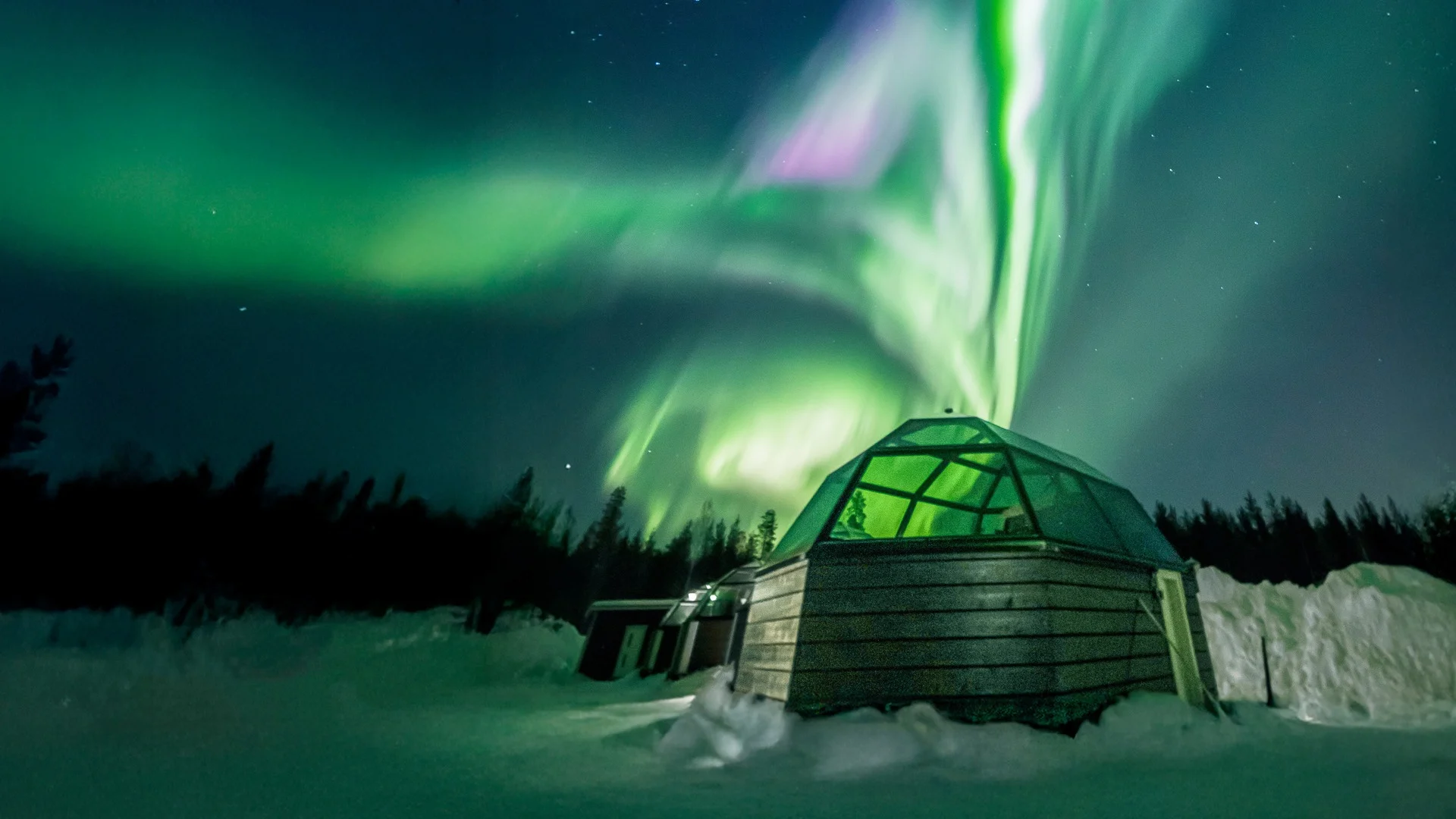
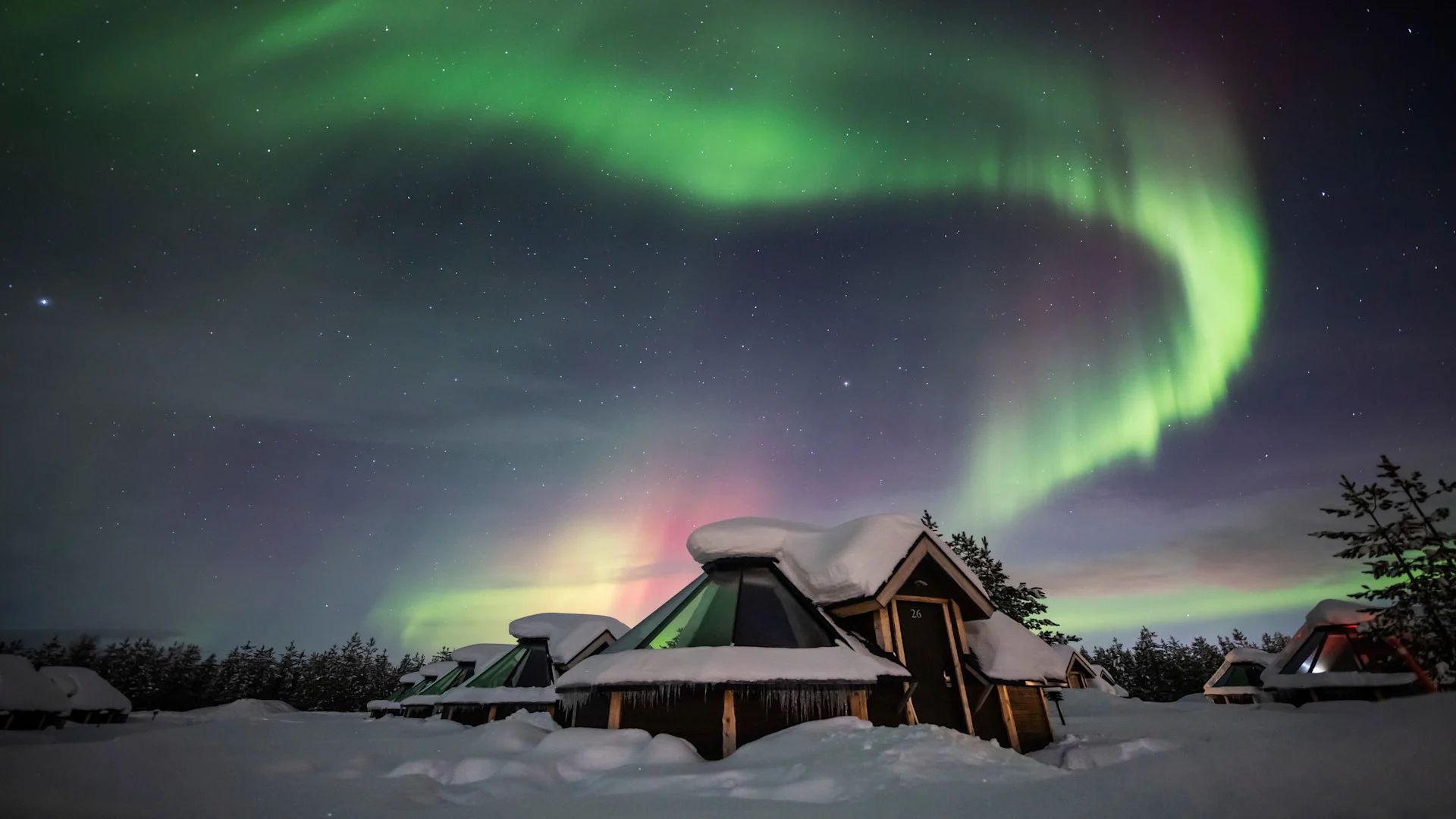
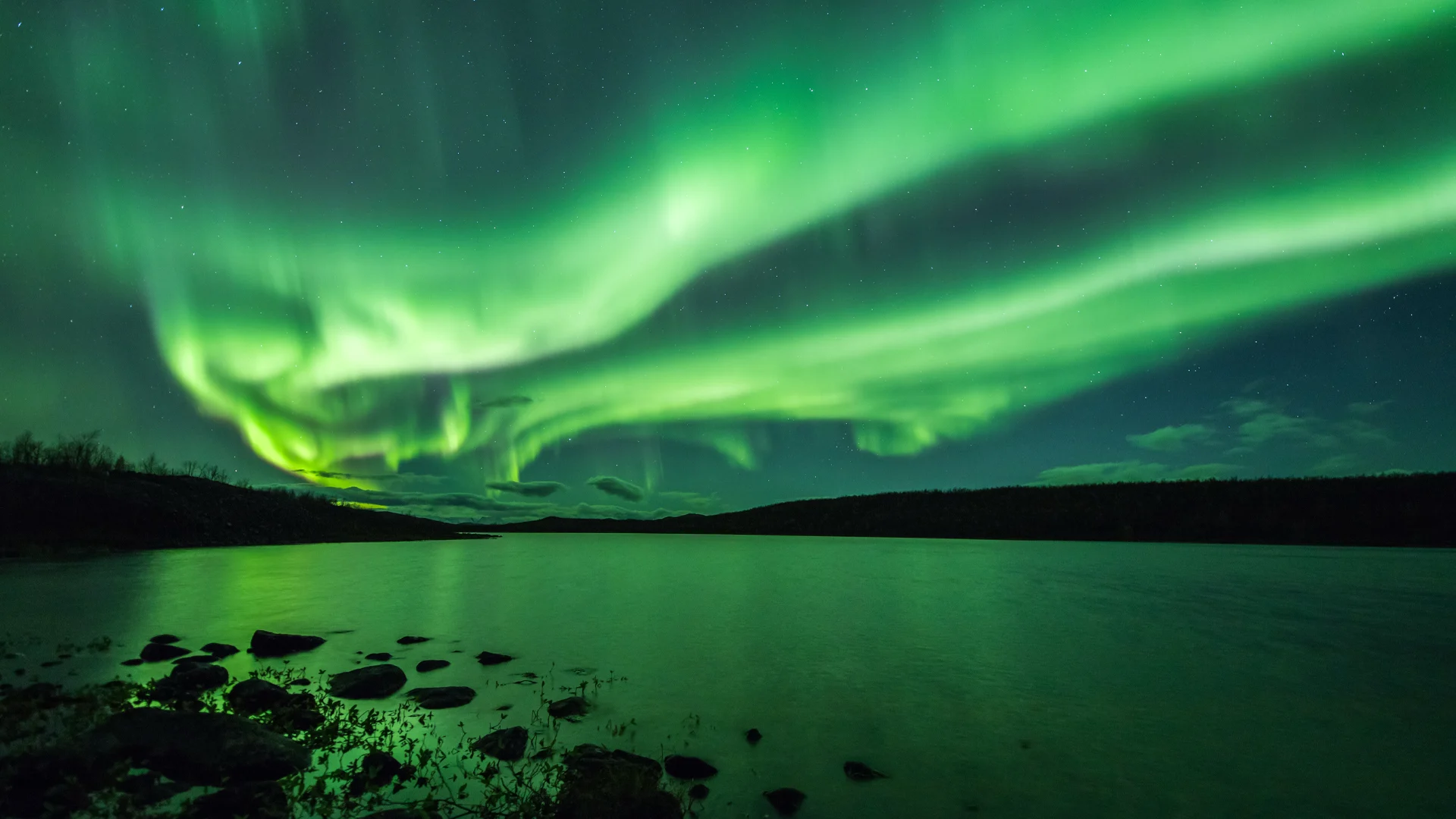
Magic and science. Hypnotic and exhilarating. A photographer’s dream. The Northern Lights in Norway are all these and more. Explore the many wonders of nature’s greatest lightshow.
Put simply, the Northern Lights appear when solar particles collide with the Earth’s magnetic field. As the incoming particles collide with atoms and molecules of oxygen and nitrogen in the Earth’s upper atmosphere, they excite them to produce light – the light of the aurora. In the Northern Hemisphere this is called the Northern Lights or aurora borealis, while in the Southern Hemisphere it's known as the Southern Lights or aurora australis.
We asked scientists and astronomers to explain the Northern Lights in a way we could understand. Follow the link below to read our detailed guide on the science behind the Northern Lights, solar activity, magnetic fields, the different types of auroras, and why they come in different colors.


Oslo - Honningsvåg - Oslo (Full-trip)
Our classic all-inclusive winter cruise, with an expert astronomer and exclusive excursions

Bergen - Kirkenes - Bergen (Full-trip)
Our classic route during aurora season, with expert astronomer & exclusive excursions

Bergen – Kirkenes – Bergen (Full-trip)
The original Norwegian coastal voyage – connecting fjords, towns & people since 1893

Oslo - Honningsvåg - Oslo (Full-trip)
All-inclusive winter cruise to Norway’s North Cape, chasing the Northern Lights

Oslo - Honningsvåg - Rovaniemi - Helsinki (Northbound)
Sail, rail and explore the Arctic with glass igloos, ice fishing and Santa Claus Village

Helsinki - Rovaniemi - Honningsvåg - Oslo (Southbound)
Explore Finnish Lapland, sail Arctic Norway and journey south by rail and sea

Copenhagen - Helsinki (Northbound)
A winter Northern Lights adventure visiting Denmark, Norway and Finland by land and sea

Helsinki - Copenhagen (Southbound)
A winter Northern Lights adventure from Finland to Denmark via Norway

Helsinki - Oslo (Southbound)
A winter Northern Lights adventure from Finland to Norway by land and sea
The best time to see the Northern Lights is when the nights grow long and dark. From late September to early April is when they appear most often along the Norwegian coast – especially north of the Arctic Circle, where winter settles in properly. Out at sea, we have the freedom to follow clear skies and leave light pollution behind, giving you the best possible chance to witness the aurora dancing above the horizon.

The coming winters will be especially generous with Northern Lights because of the current Solar Maximum. From September 2026 to March 2027, solar activity will be higher than usual, bringing more frequent and brighter displays along the coast – even as the cycle slowly moves toward its quieter phase later in the decade. In short, these seasons offer some of the very best chances to see the aurora in Norway and across the Arctic.
And with our Northern Lights Promise, you can book a Northern Lights cruise confidently, knowing we’re committed to maximizing your chances of witnessing the world's greatest light show.

Northern Norway sits directly underneath the aurora oval, a ring around the North Pole where aurora activity is most powerful. This makes our entire northern coast prime viewing territory for the Northern Lights.
We've compiled years of experience into a guide to help you get the most out of your aurora chasing with us, including times and locations where you're most likely to spot the lights, and how to best observe their magic if they do appear.
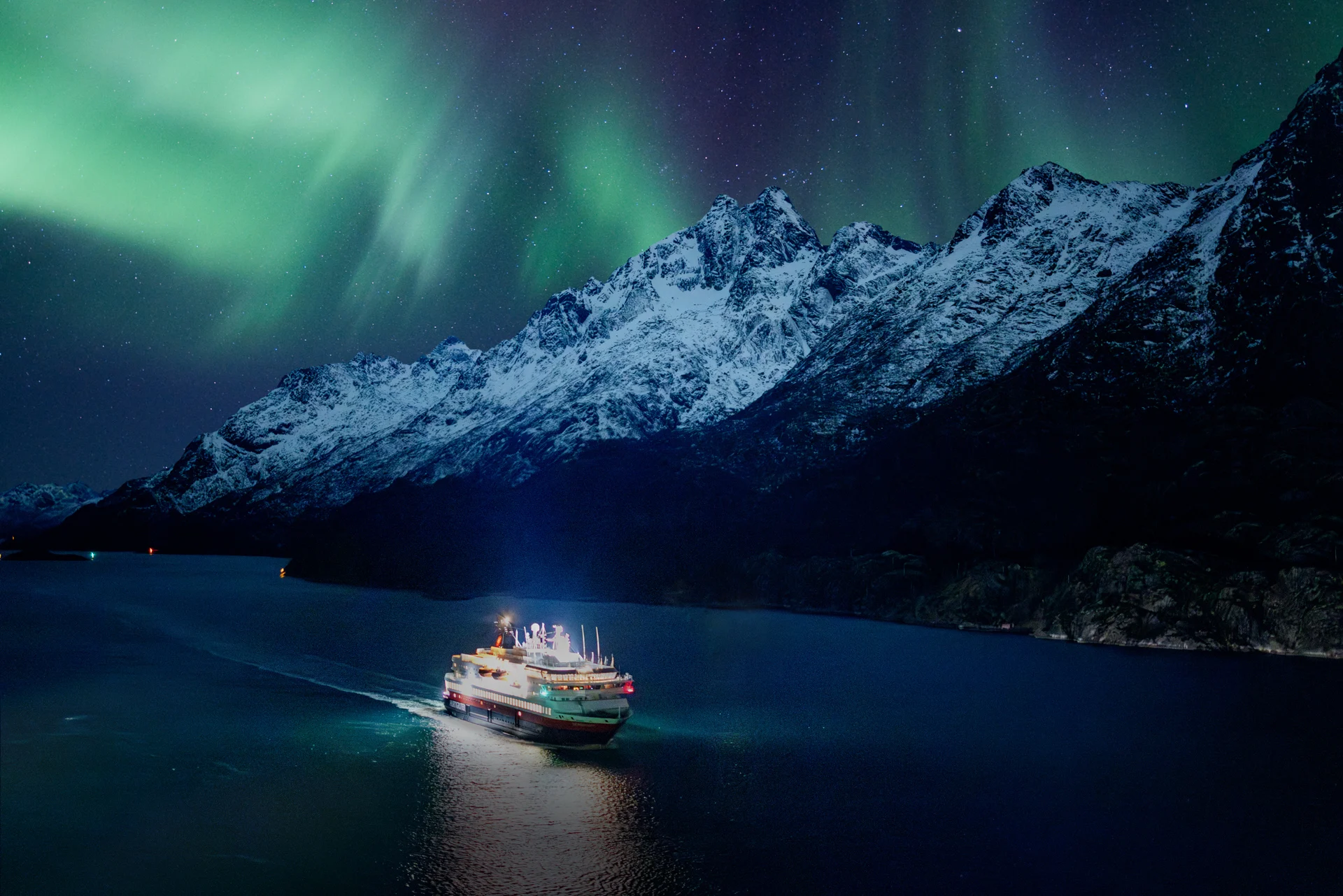
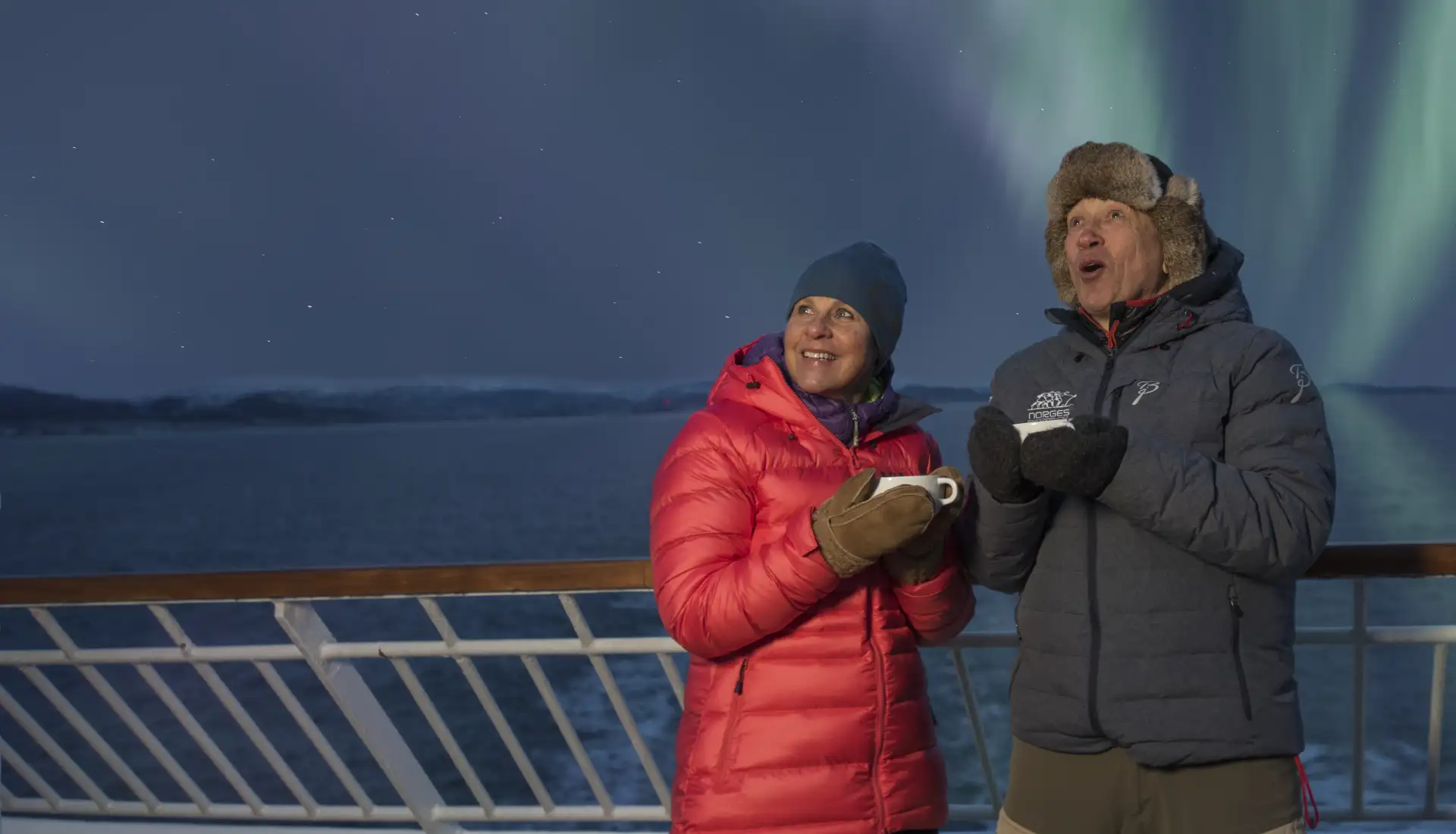
A Hurtigruten voyage along Norway’s coast is one of the best ways to see a life-defining display of the aurora borealis. Here are six reasons why you should embark on a Northern Lights cruise with us.

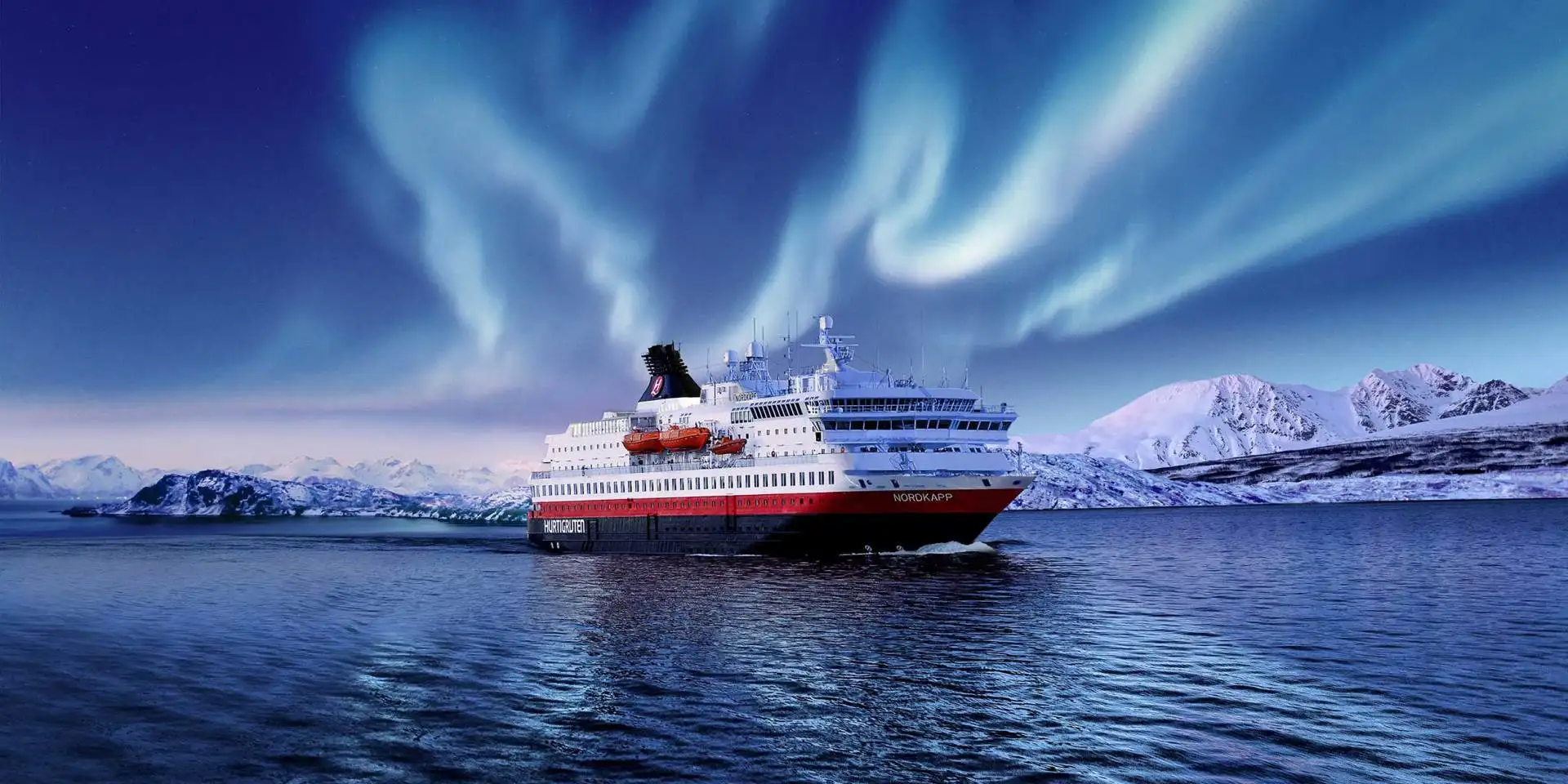
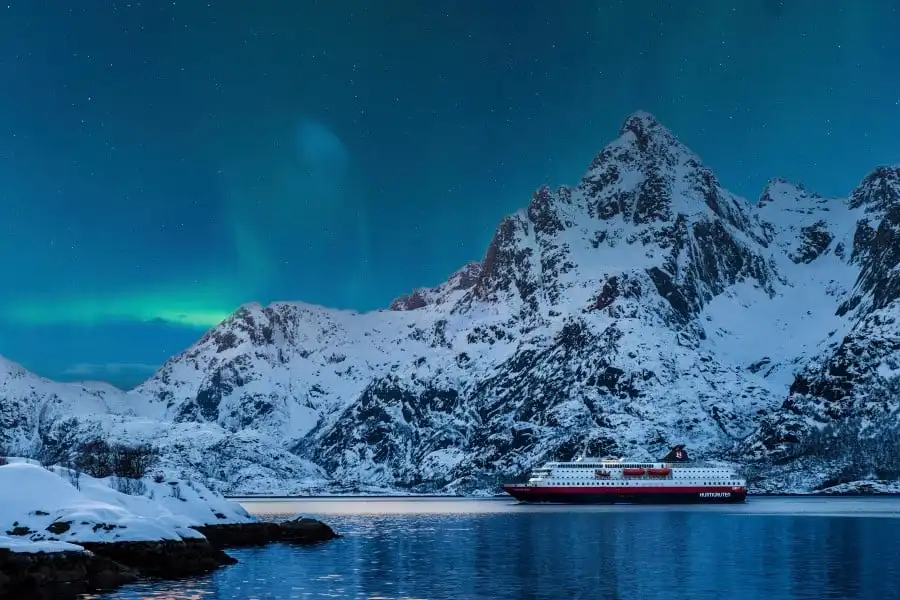
Our ships sail the Norwegian coast, above the Arctic Circle at 66°N, and directly beneath the Auroral Oval, an area of consistently active displays.

Traveling to different parts of the Norwegian coast on the ship increases your chances of seeing the aurora not just once but multiple times.

The advantage of being at sea is that we can quickly sail clear of cloud cover that might be blocking your view of a Northern Lights display.

You don't need to worry about checking the aurora forecast. Our ship’s bridge officers are always scanning the skies and horizon, and will let you know as soon as the Northern Lights appear.

Being at sea avoids the air pollution and the ambient light on land, both of which can dull the colors and vibrancy of a Northern Lights spectacle.

If you sail with us during the Northern Lights season for more than 11 days and don’t see the aurora appear at least once, we promise you a free voyage to try again.

Since 2014, we have promised our guests a free voyage if Norway’s Northern Lights don’t occur on our voyages of 11 days or more between fall and spring.
Our promise starts September 20 and continues through the end of March.
When you see the Northern Lights, it’s only natural to want to capture the spectacle. But photographing their elusive beauty isn’t as simple as point-and-shoot.
To help you, we asked photography experts for their tried and trusted tips on everything from how to photograph the Northern Lights from a ship to shooting the aurora with a smartphone. Check out our Northern Lights photography guide below.


Long before we understood the science behind the aurora borealis, the Northern Lights were wrapped up in myths and legends that still fuel our imaginations today.
The Lights appear in folklore across the world, as omens both revered and feared. These strange green, red, and purple lights dancing across the night skies have inspired some of the most captivating stories on Earth. Once you’ve seen them, it’s easy to understand why.
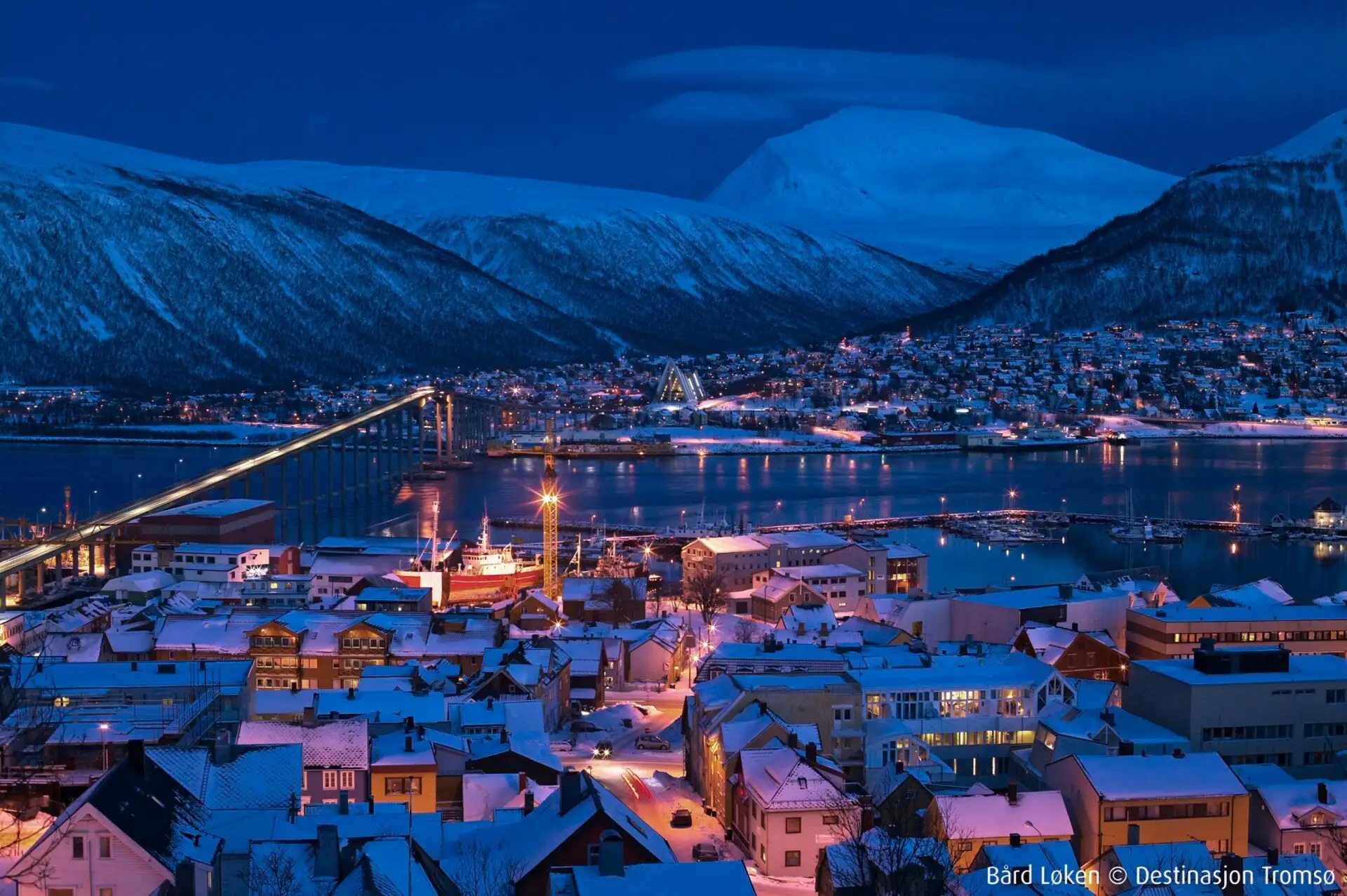
Every winter, northern Norway sinks into starlit darkness. For a few weeks or more, depending on how far north you are, the sun never rises above the horizon. This phenomenon is called the Polar Night – and it’s the perfect time for stargazing, photographing the ‘blue hour’ and chasing the Northern Lights.

We talked to people who live and breathe the Northern Lights about the dreams and desires that drive them. These are their stories.

Astronomer Tom Kerss tells us why he can’t get enough of the Northern Lights in Norway.

Physicist and astronomer Dr John Mason has the answers to all of our questions about the Northern Lights, “truly nature's greatest light show”.

For KrisTina Kramer, few things in life give her as much of a thrill as a Northern Lights chase with us along the Norwegian coast.
Receive special offers, exciting new itineraries and fascinating articles delivered straight to your inbox.